
The perfect tyre pressure for your mountain bike
With the right tyre pressure, you’ll have more fun, grip and control on your MTB. We explain how to find the sweet spot.
More speed, comfort or grip through tyre tuning? Learn how to find your perfect gravel bike tyre here.
Gravel riding is diverse: from road-focused routes with short gravel detours (also called “all-road”) to trail adventures — gravel biking sits somewhere between road cycling and mountain biking. Just as broad as its range of uses are the demands placed on the equipment. There is no single perfect gravel bike tyre, but there *is* your perfect gravel bike tyre. Here you’ll learn how to find your way through the huge gravel bike tyre wonderland.
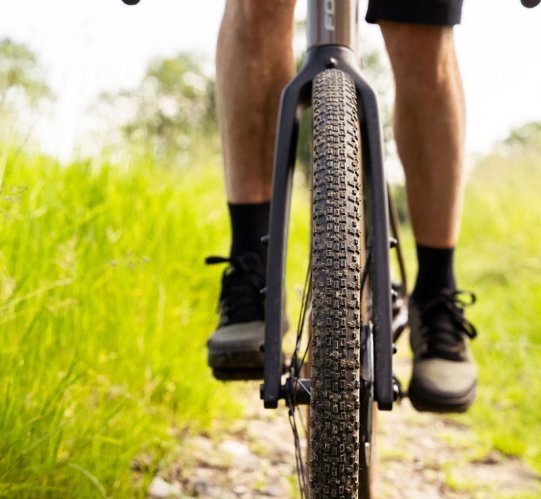
Grip starts up front: your gravel bike tire tread defines how confidently and precisely you ride over gravel and trails.
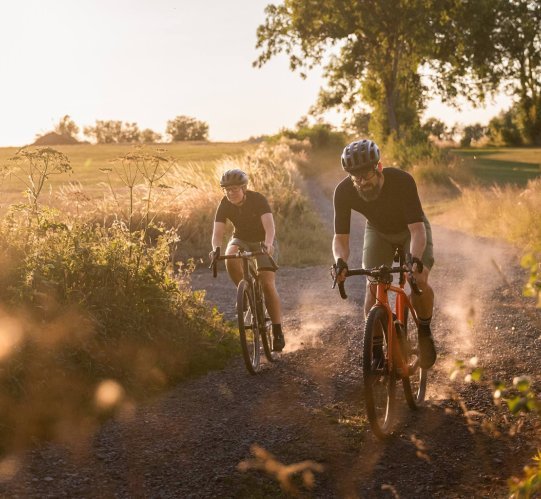
Loose, dry gravel calls for reliable grip and stable handling—especially when the pace picks up and dust fills the air.
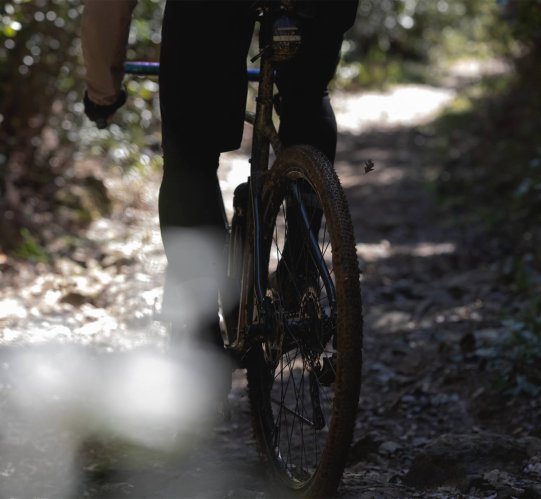
On damp gravel, an open tread pattern with good self-cleaning keeps traction high and handling predictable.
Tyre size labels can be confusing. Depending on the manufacturer and intended use, you’ll find different specifications and units for a tyre’s diameter and width. These three systems are commonly used:
The ETRTO size is the most precise and widely used internationally. It specifies the tyre’s inner diameter (i.e. the rim’s outer diameter) and the tyre width at its widest point in millimetres. Inch sizing indicates the approximate outer diameter of the tyre and its width in inches. You’ll often see this system on mountain bike and wider gravel bike tyres. The French system, on the other hand, states the approximate outer diameter and width — also in millimetres.
Comparison of common diameters:
| ETRTO | Inch | French |
| 559 | 26 | - |
| 584 | 27,5 | 650b |
| 622 | 28/29 | 700c |
Comparison of width specifications using an example:
| ETRTO | Inch | French |
| 40-622 | 28 x 1,5" | 700 x 38c |
Note: In the ETRTO size specification, the tyre width comes before the tyre’s inner diameter. In the French and inch-based designations, it appears after the tyre’s outer diameter.
On a gravel bike, just like on a road bike, you’ll usually find 28-inch wheels (700c / 622 mm). Sometimes 27.5-inch wheels (650b / 584 mm) are also used. While 28-inch wheels are more focused on speed and smooth rolling, 27.5-inch wheels give you more clearance for wide tyres and therefore extra grip and comfort off-road. The smaller 650b wheels are also often fitted to smaller frame sizes. Regardless of the pros and cons of each wheel size, the diameter of your new tyre must match your wheel size.
And don’t forget: the inch measurement describes the approximate outer diameter! 29-inch tyres from the MTB segment have the same inner diameter of 622 millimetres as so-called 28-inch road bike tyres. If you want to run aggressive tread on your gravel bike and the width fits, it’s worth looking there too! The ETRTO size always gives you certainty.
If you’re not lining up at the start of a UCI gravel race, the trend in the gravel bike segment is clearly moving towards wider tyres. As a rule, they offer more comfort, grip and puncture protection without making you slower – unless aerodynamics play a special role for you (that UCI race scenario again).
As long as they fit through your fork and frame, you’re flexible when it comes to tyre width. In practice, you should follow the bike manufacturer’s specifications: tyre width and volume have a strong influence on handling. Tyre clearance and frame geometry are therefore designed for a specific area of use.
As a general rule when choosing tyre width:
Important: You need four to five millimetres of clearance on both sides of the tyre so that mud, small stones in the tread or a slightly out-of-true wheel don’t rub destructively against the frame or fork. The internal width of your rim also affects the actual tyre width. The same tyre can measure a few millimetres narrower or wider depending on the rim. Most manufacturers specify the real tyre size in relation to rim width on their websites.
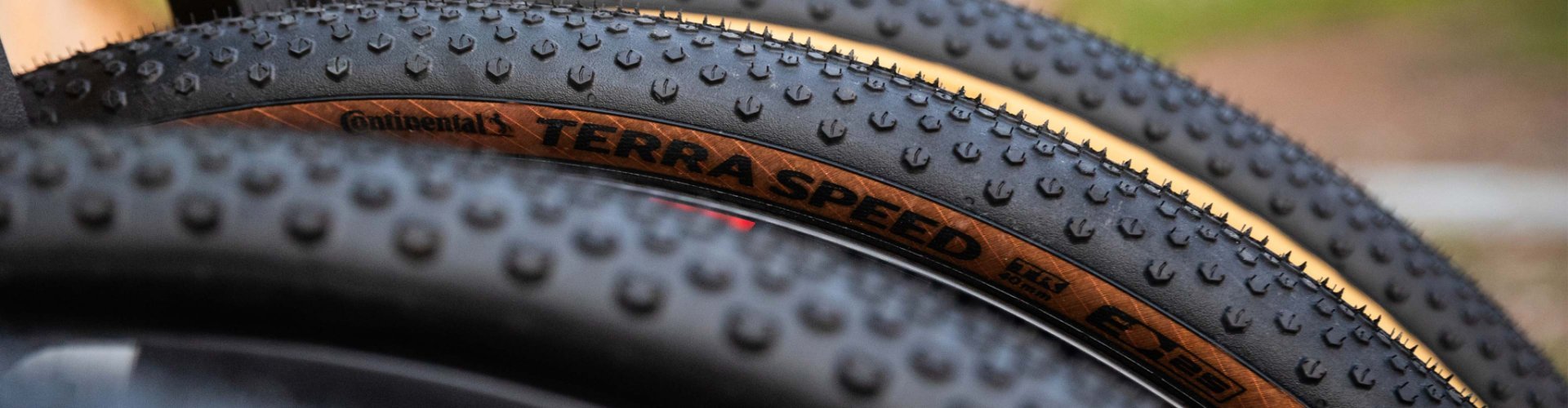
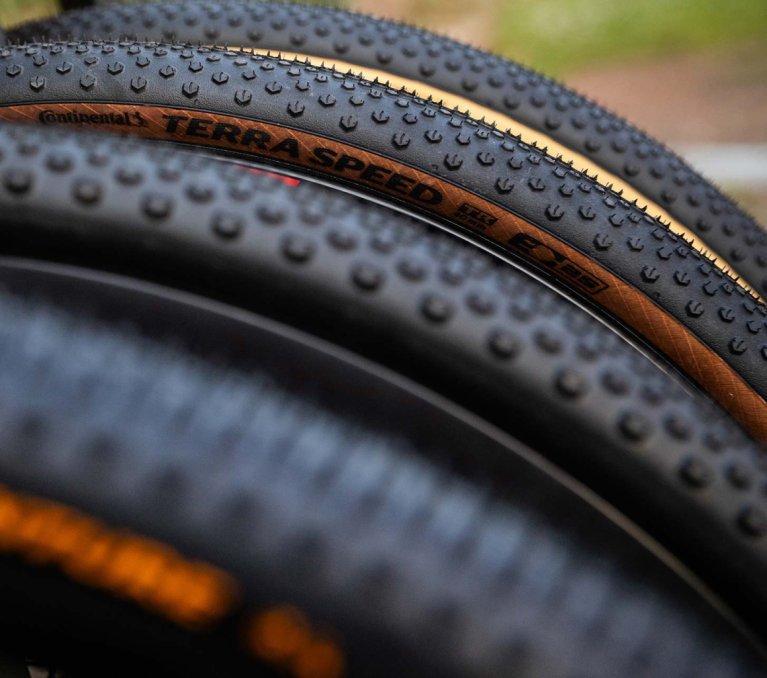
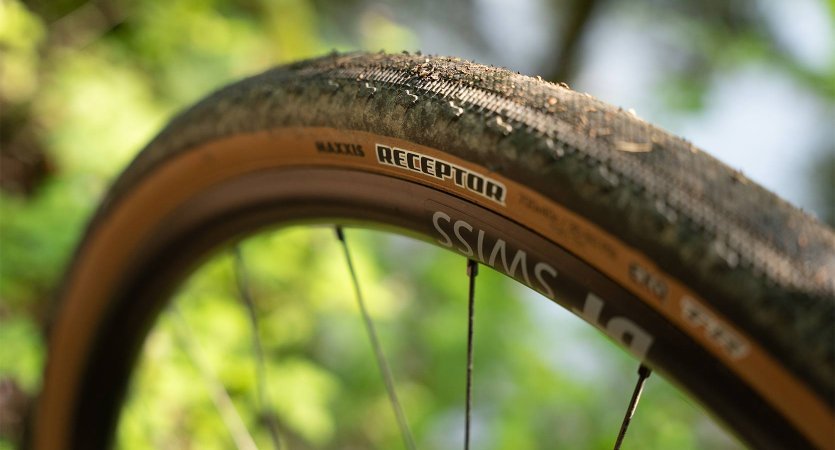
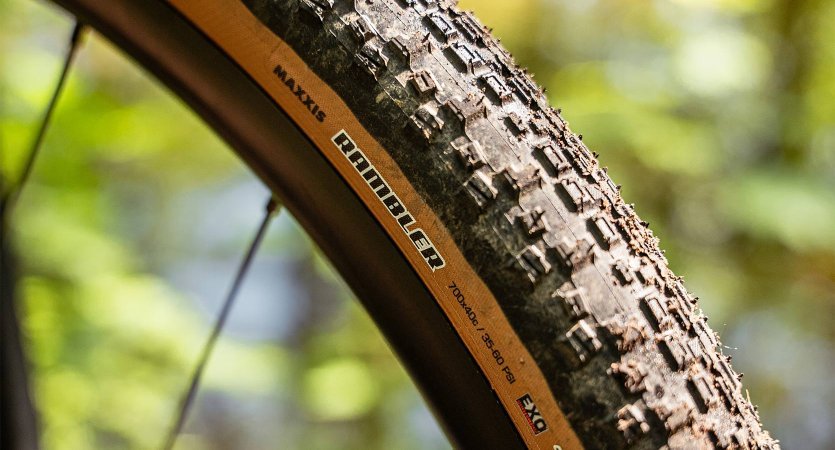
The tyre tread refers to the shape of the tyre surface – in other words grooves, sipes and knobs. The tread has a major influence on how your tyre behaves on different surfaces and how it copes with wet conditions, mud or snow.
In the gravel bike segment, you’ll mainly find the following tread types:
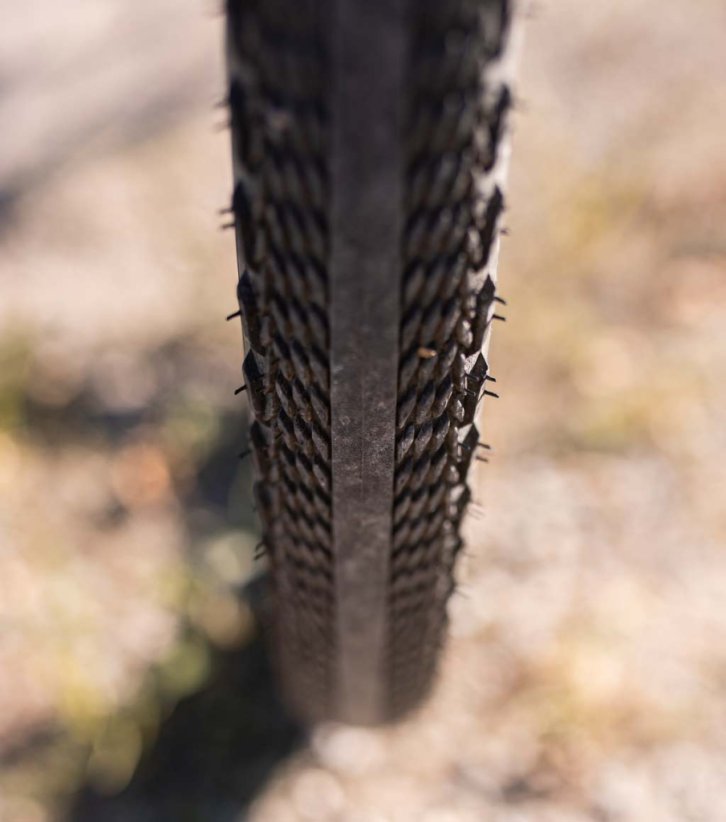
The continuous center strip with lower tread reduces rolling resistance on pavement and gravel, while the side knobs provide grip when corners get loose. © bc GmbH
Info: Depending on your main riding style, you can run different tyre models with different tread patterns on the front and rear — and even different tyre widths. For example, a wider front tyre for more comfort, cornering grip and braking traction, or a narrower front tyre for better aerodynamics. Or more tread up front than at the rear. Or Schwalbe at the front and Maxxis at the back. Tyre choice isn’t a lifelong monogamous relationship. And don’t forget: no tuning upgrade is as effective as tyre tuning!
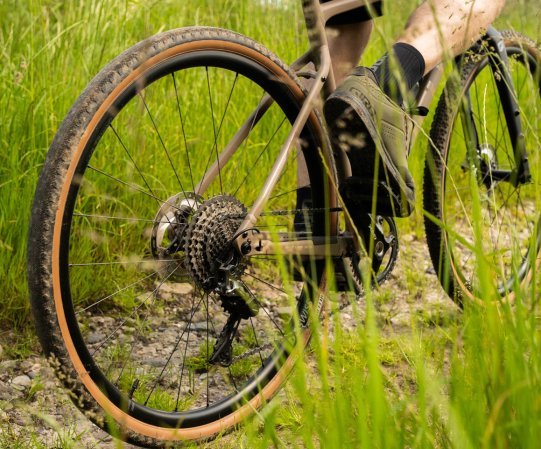
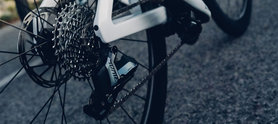
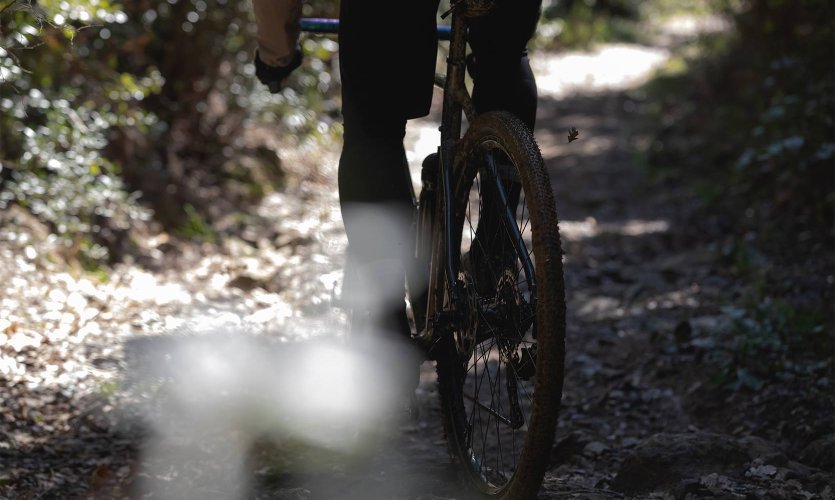
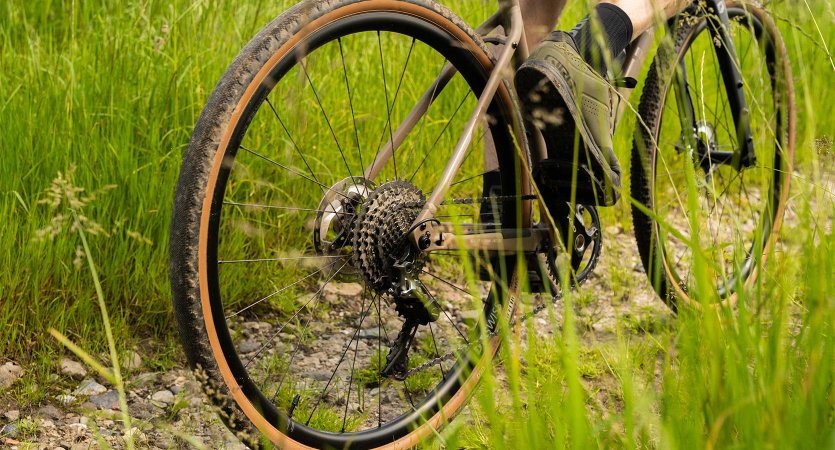
Out back, speed matters: a fast-rolling gravel bike tire keeps you efficient on long gravel stretches. © bc GmbH
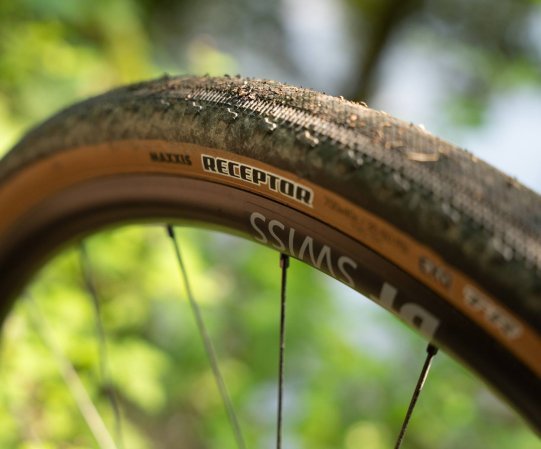
The low-profile center tread is built for speed on hardpack, while subtle side knobs add control when grip becomes crucial. © bc GmbH
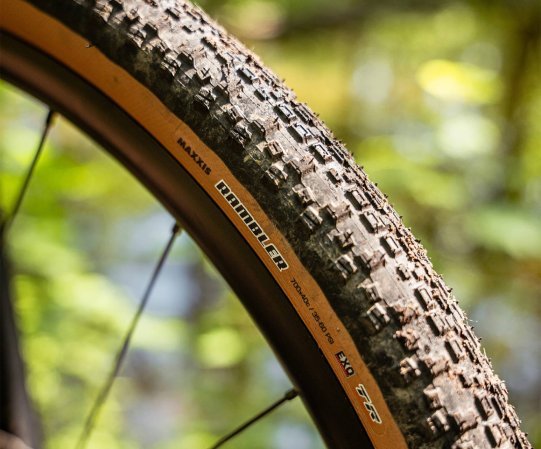
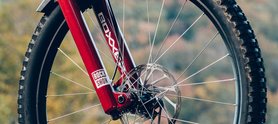
Up front, grip is key: a more aggressive tread enhances control and confidence on loose or technical terrain. © bc GmbH
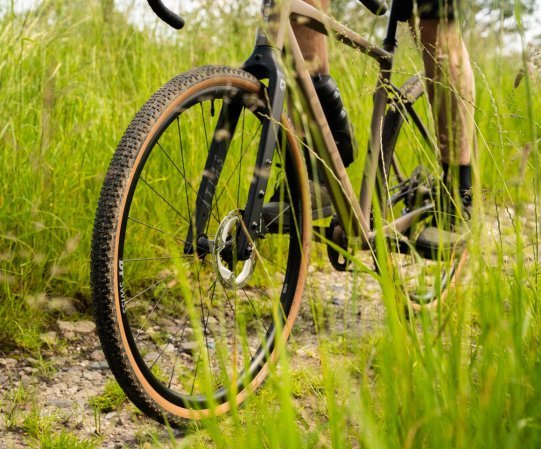
Up front, the more aggressive tread delivers control on loose terrain—perfect for confident steering through corners and gravel sections. © bc GmbH
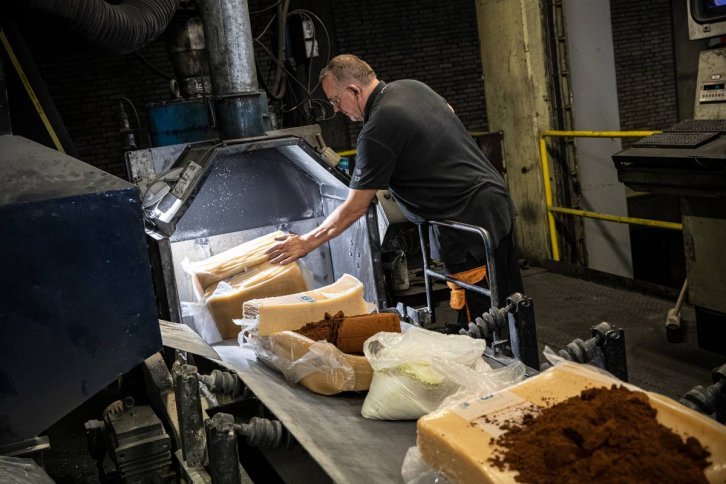
The rubber compound — also called the compound — influences the grip, rolling behaviour and durability of your tyre. Some manufacturers specify the hardness of their rubber compounds. As a rule of thumb: a lower value means softer, grippier rubber, while a higher value indicates harder, more durable rubber.
If you come from mountain biking, you probably know tyres with dual or triple compounds, meaning two or three different rubber hardnesses in a single tyre. This is less common with gravel bike tyres, but some manufacturers, such as Maxxis and WTB, also use multi-compound constructions here. Typically, the centre tread is slightly harder so the tyre rolls better and wears more slowly, while the side knobs are softer to provide extra grip in corners.
This is where performance begins: carefully blended rubber compounds define grip, durability and rolling efficiency. © bc GmbH
The casing forms the structural backbone of your tyre and influences its weight, puncture resistance and ride feel. A key characteristic of the casing is its thread density, measured in TPI (threads per inch). Higher TPI casings make a tyre more supple and faster, but usually a bit more delicate. Lower TPI casings are more robust, but less flexible. For additional protection, many manufacturers use reinforced sidewalls or puncture protection layers under the tread or along the tyre sidewall. These create an extra barrier against cuts, punctures and sharp gravel. If you often ride off-road or carry heavy luggage, you should prioritise strong puncture protection.
For gravel bikes, puncture resistance, low rolling resistance and grip are key factors for maximum riding fun. You can achieve this either with a tubeless setup (Tubeless) or with a TPU or TPE tube. Traditional butyl tubes are no longer up to date in the performance segment.
Tubeless offers many advantages, such as strong puncture protection, improved rolling resistance and the option to run lower tyre pressure (= more comfort and grip). Initial installation is a bit more involved: install tubeless valves, add sealant and make sure everything is airtight. You’ll need tubeless-ready wheels (sealed rim tape), compatible tyres and a suitable floor pump (or a compressor). Afterwards, you should regularly check that there is still enough sealant inside the tyre and that it hasn’t dried out.
Want to convert your tyres to tubeless? In our blog post Stay tight: Tubeless Tyre Conversion, we show you step by step how to do it.
Tubes made from thermoplastic materials such as TPU (thermoplastic polyurethane) or TPE (thermoplastic elastomers) provide reliable puncture protection, are slightly lighter and offer rolling resistance close to tubeless. They’re ideal if you prefer simple installation or don’t want (or can’t) deal with topping up sealant. If you change tyres frequently, a TPU or TPE tube is also the better option, as it saves you from messy sealant. However, if you like to ride with very low pressure for maximum comfort and grip, tubeless is the safer choice in terms of puncture protection.
And by the way: to make sure you’re riding with the correct pressure, check out our guide to the perfect gravel bike tyre pressure!
Are you looking for a really wide tyre for maximum comfort, grip and safety? Then you should consider a 29-inch gravel bike tyre. For technically demanding tours or bikepacking in rough terrain, the extra width and volume can make riding noticeably more comfortable. Mountain bike cross-country tyres in particular can be a good option. Be sure to check compatibility with your frame, fork and wheels!
Are you looking for tyres for your all-road bike that can also handle some gravel? Road bikes designed for all-road use often allow tyre widths of up to 35 millimetres. You’ll usually be best off with a fast-rolling semi-slick tyre: it hardly slows you down on the road but offers more reserves on firm, smooth gravel paths. Don’t forget to check not only the tyre clearance of your frame and fork, but also what tyre width your rims are approved for!
If your rides vary a lot or you want to use one bike for everything, it can make sense to have two different wheelsets with matching tyres. For example, one wheelset for road rides and another for gravel tours. This solution is also worthwhile for different off-road uses: one wheelset with fast tyres for smooth gravel and another with grippy treaded tyres for demanding terrain.
Make sure that the brake rotors, cassette and, if applicable, the hubs are identical, so you only have to swap the wheels and can start riding straight away.
It depends: 700c is generally faster and rolls more efficiently, while 650b allows wider tyres and therefore offers more comfort and grip. You’ll also find 650b more often on very small frame sizes due to space constraints. Which wheel or tyre size is better therefore depends on where and how you ride. Switching between different wheel sizes on the same bike can reveal eye-opening differences. Keep in mind, however, that with smaller wheels your bottom bracket also sits lower, which may reduce pedal ground clearance.
Your bike frame and fork define the maximum tyre width. At the widest point of your tyre, there should be four to five millimetres of clearance to the seat stays, chainstays and fork. Also keep your bike’s spec in mind, as tyre width has a huge influence on handling – the designers usually chose the stock setup for a reason. Beyond that, there are few limits to personal preference.
Again, it depends. If your usual route is mainly asphalt and firm, smooth gravel roads, you can be very happy with a semi-slick tyre. The more loose gravel you encounter, the more an all-round tyre makes sense. The more technical and/or muddy it gets, the more you should consider a treaded tyre. If you mainly use your gravel bike as a rough-road road bike, go for semi-slicks.
If you like riding with low air pressure and want to use your tyre until it’s fully worn out, our answer is a clear “yes”. If you frequently switch between different tyres or mostly ride on asphalt and smooth surfaces, you can also be perfectly happy with a TPU/TPE tube.
With the right tyre pressure, you’ll have more fun, grip and control on your MTB. We explain how to find the sweet spot.
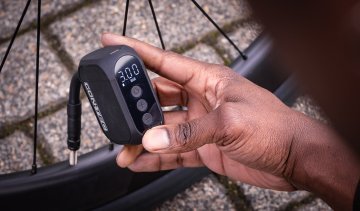
“Hey you! Yes, you on that lightning-fast Factor race bike! Bet your tyre pressure is too high?”
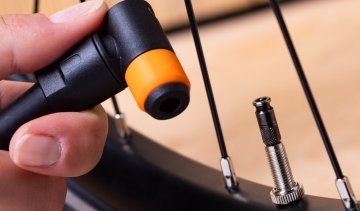
Functional, durable, and easy to use – the Schwalbe Clik Valve promises to be the best bicycle valve yet. We decided to give it a try!
Send your unused goods back within 100 days after purchase and get your money back!
See more