




Tips against cold feet while cycling
Winter riding means cold feet? Not anymore! With our tips, you can banish freezing toes and enjoy every chilly ride.
When it comes to washing and caring for your bike threads, you can do a lot right – or really wrong. We will show you how.
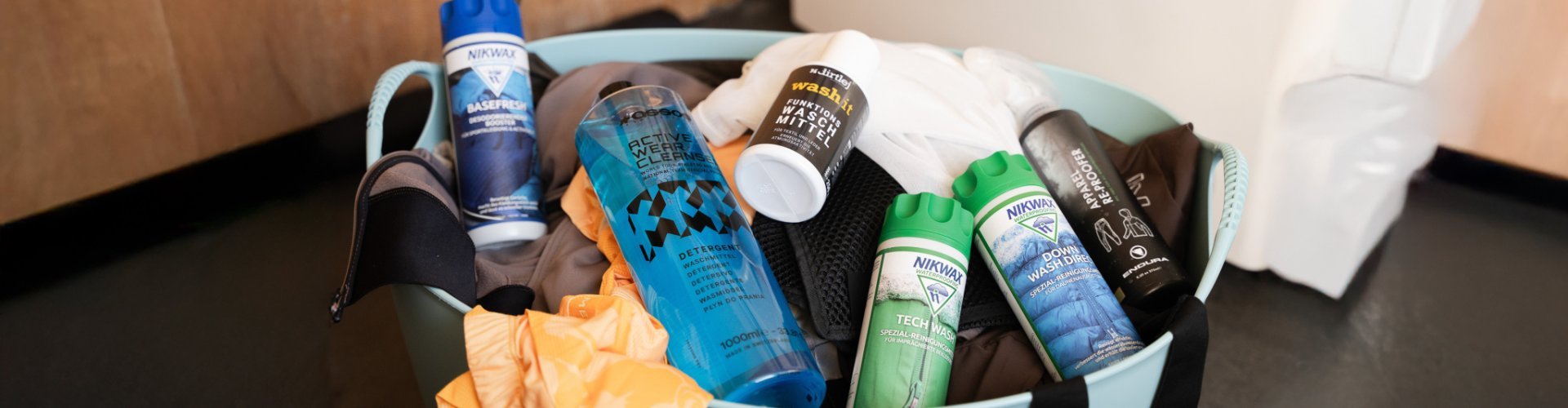
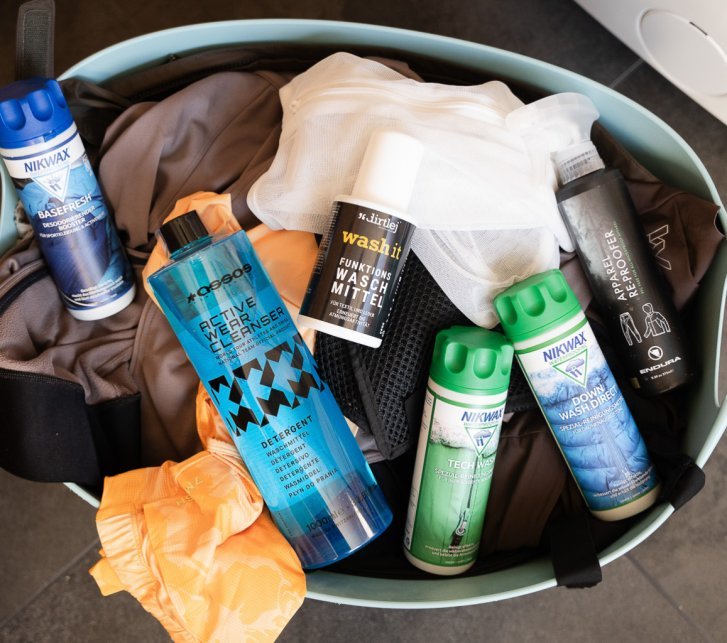
Imagine you're a bike garment. Not just any cheap jersey, but a fancy one with lots of functions. Sadly, things only go well in the beginning and then: maintenance backlog! You suffer because you've been washed wrongly (or not at all), dried, and waterproofed improperly. To prevent this, we're here to show you how to properly care for your bike clothing. Because lack of or improper care is unfortunately one of the most common reasons why expensive functional textiles kick the bucket too early or can't (anymore) fully perform.
Textile care is mandatory for long-term enjoyment of your bike clothes. © bc GmbH
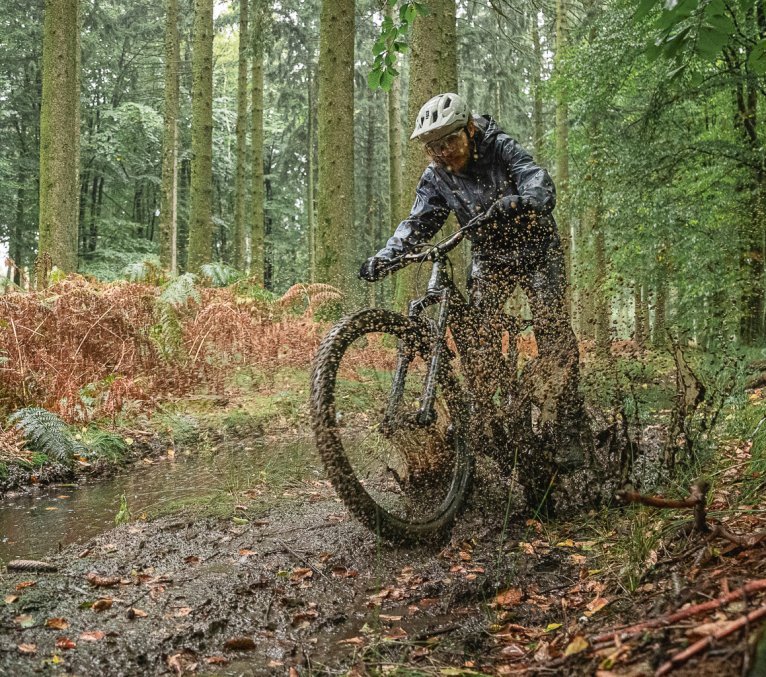
Raincoats and Pants are genuine high-performance tools today. They block rain and splash water while letting sweat evaporate, so you stay as dry as possible under the jacket. To achieve this, they are equipped with so-called semipermeable membranes. These are bonded with the smooth inner and resilient outer fabrics into laminates. Waterproof laminates are called "hardshell."
To allow the tiny water molecules from our sweat to pass through the membrane to the outside, they need a clear path. The more often you use a rain jacket, the more it comes into contact with water as well as sweat, body oils, and dirt. Eventually, body fats and salts clog the membrane from the inside and mud residues from the outside. A superficial wipe of trail and road dirt removes only a fraction. That's why you should regularly wash your hardshell to free the membrane from dirt, fats, and salts. If you don't, you might even harm it in the long run.
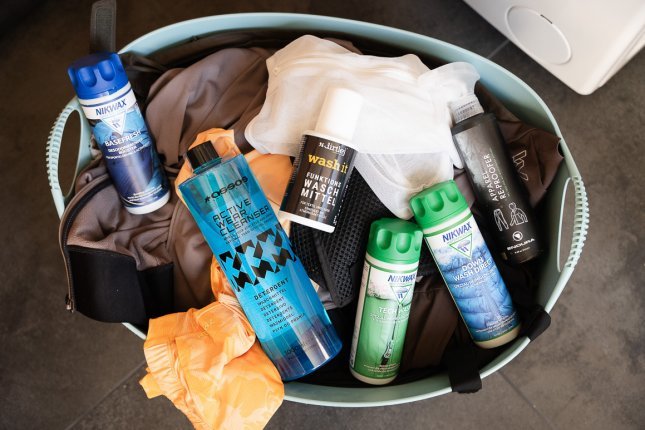
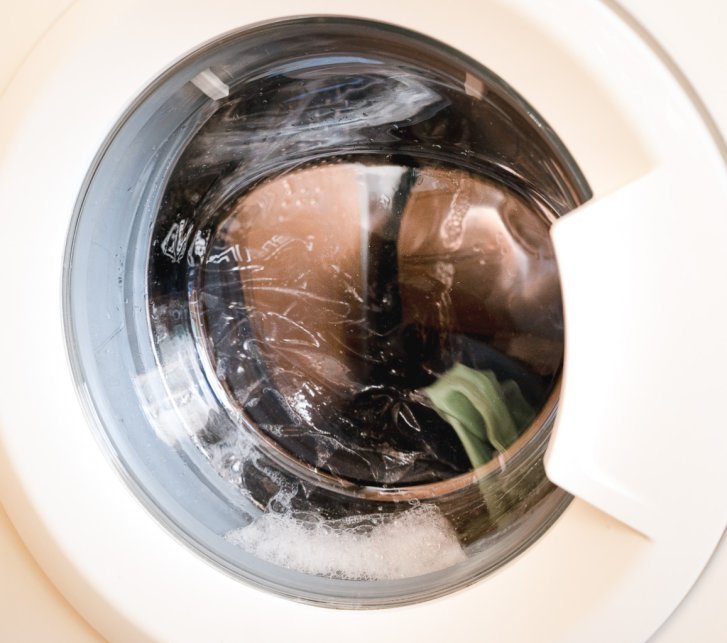
Functional textiles need to be washed to do their job. © bc GmbH
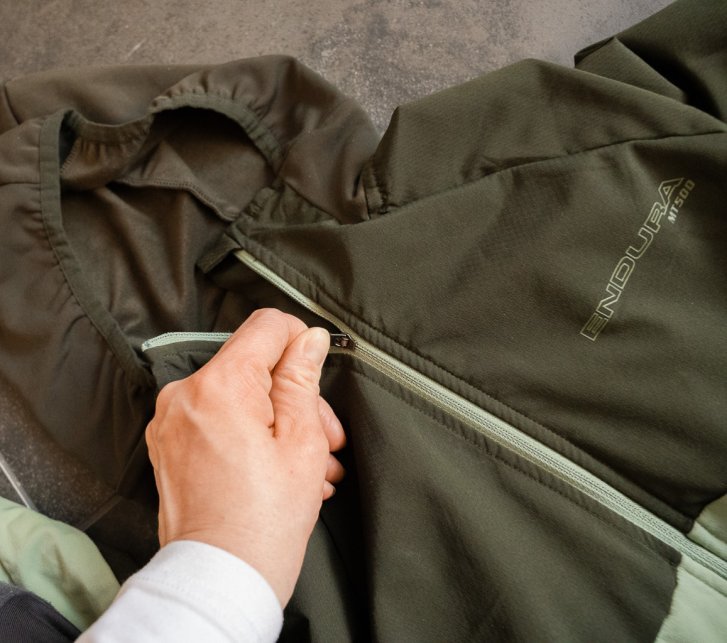
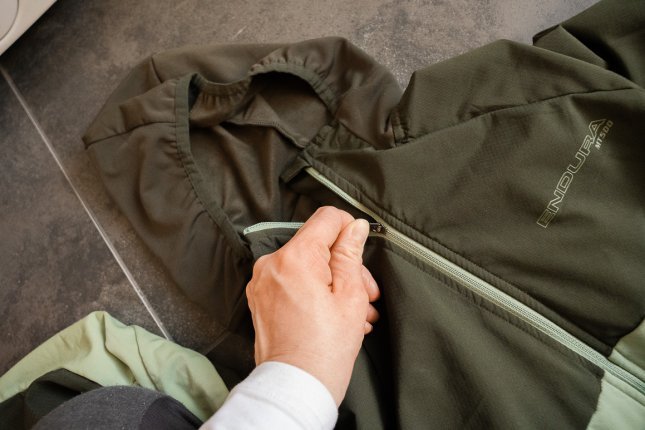
It is generally recommended to close all zippers before washing. © bc GmbH
Without a water-repellent waterproofing of the outer fabrics, Hardshells wouldn't function as expected. Because once the so-called DWR waterproofing ("durable water repellent") is worn out, the top fabric layer soaks up water over a large area, creating a clammy, moist feeling. Moreover, the vapor permeability is noticeably reduced. Your sweat can no longer escape and condenses on the inside of the jacket or on the clothing layer underneath. It feels as if your high-quality Hardshell jacket is no longer waterproof – although it's actually just your own sweat on the inside of the Hardshell creating this feeling.
When brand new, hardshells are pre-impregnated from the factory and wonderfully let moisture bead off the exterior. However, this effect can wear off over time due to mechanical abrasion or depending on how often you wear it. Depending on the manufacturer, you can reactivate the DWR (Durable Water Repellent) by applying heat in the dryer (up to 30 minutes at 140 degrees Fahrenheit). After a certain period, however, rain jackets and pants should be re-impregnated - using either a spray or a wash-in waterproofing.
The spray solution is a bit more work but more targeted since it's applied only to the outside (the inside doesn't need to be water-repellent). The wash-in solution is still better than no re-impregnation and much easier to handle.
There are significant differences in environmental compatibility and the hazardous substances contained in sprays and detergents. In our store, we provide you with the relevant information.
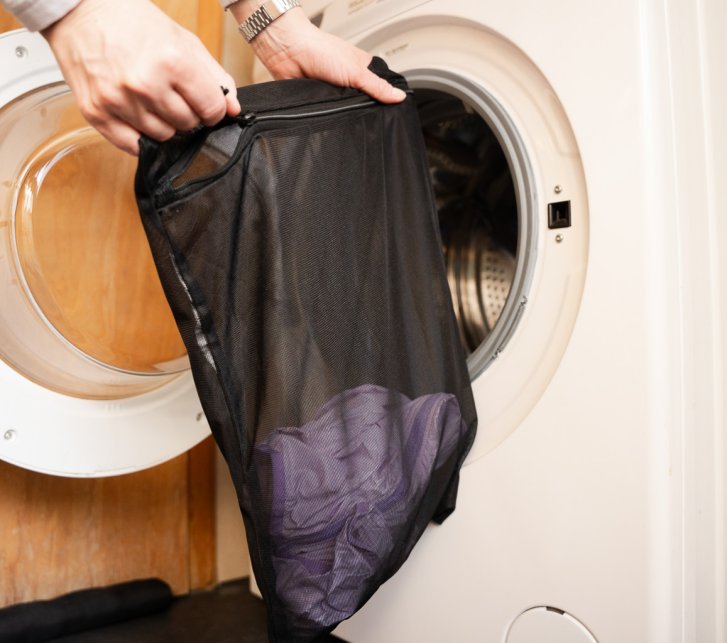
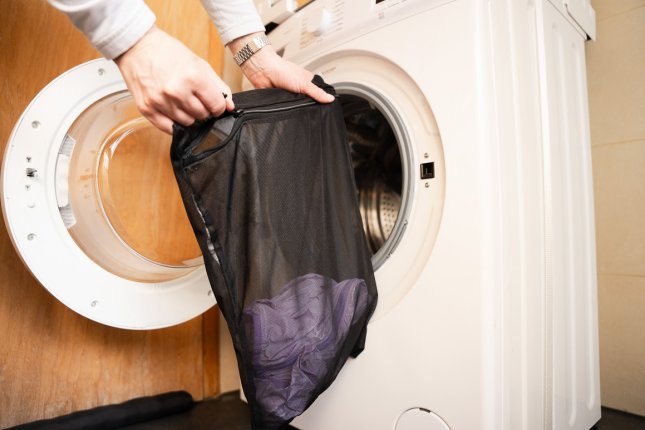
You should put delicate items in a water-permeable bag for washing. © bc GmbH
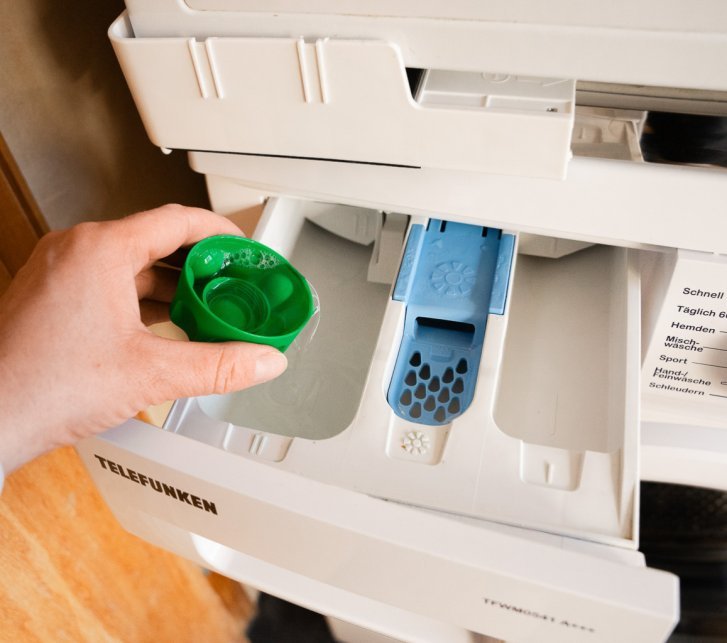
Always dose detergent for functional textiles exactly according to the instructions. © bc GmbH
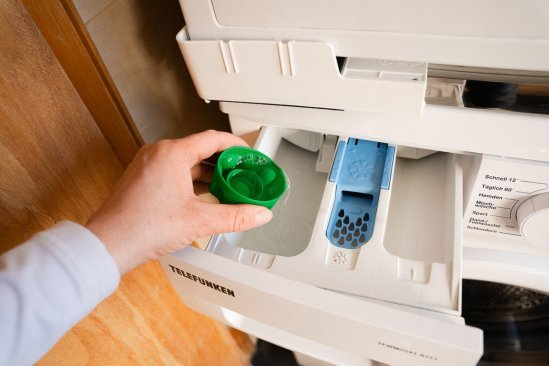
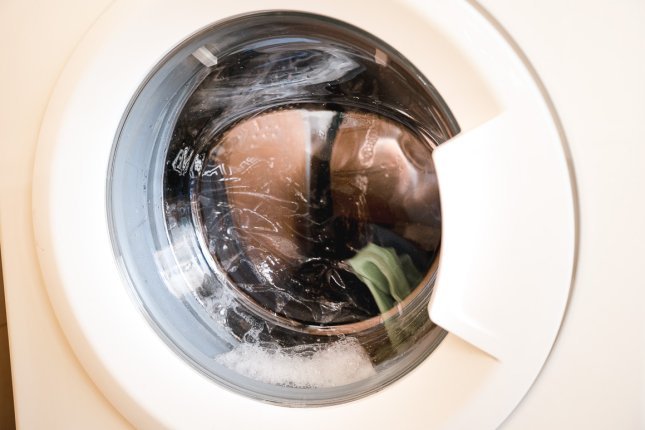
If your machine doesn't have a sports program, use the most suitable one according to the manufacturer's recommendation. © bc GmbH
Read the manufacturer's instructions for the spray! They may differ here and there from our general tips. For example, there are impregnations that do not require heat activation by dryer or iron.
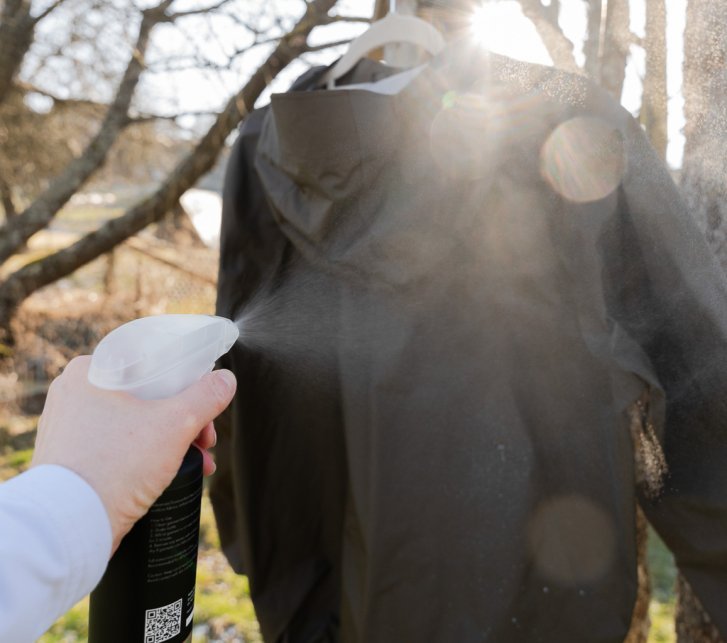
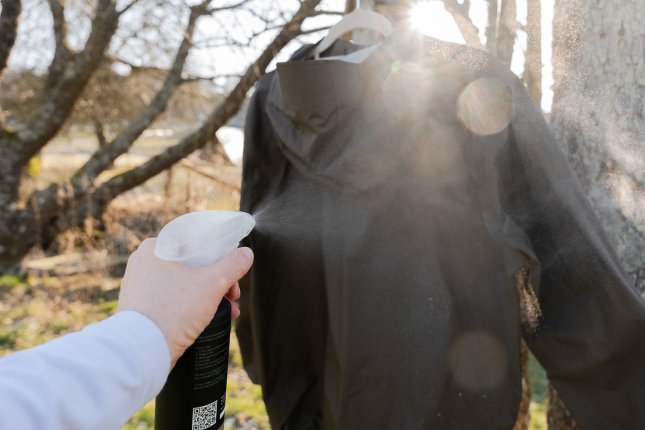
For the application of spray impregnation, you should hang your jacket or lay it flat on the ground. © bc GmbH
Downs are the soft, fluffy underfeathers of waterfowl like geese and ducks. They consist of fine, three-dimensional branched fibers that store air and thus offer excellent heat insulation. Down is especially lightweight, breathable, and compressible, making it ideal for outdoor clothing and sleeping bags.
Down clothing requires special care to maintain its loftiness and thus its insulating ability. Use a special down detergent, as conventional detergents can destroy the natural fat coating of the downs. Wash down jackets, vests, or sleeping bags on a delicate cycle at a maximum of 86 °F with plenty of water and reduce the spin cycle (max. 800 rpm) to avoid damaging the delicate downs. The proper drying is crucial after washing: Dry the clothing at a low temperature in the dryer and add a few tennis balls to fluff up the downs. Alternatively, the clothing can be air-dried, but it must be regularly shaken to avoid clumping.
Down clothing can also be washed – but only very carefully and with special detergents. © bc GmbH
Unlike hardshell jackets, bike jerseys and baselayers typically go into the washer after each training session. However, this isn't necessary for products made of merino wool. Merino might not be the first choice for race days – but for many other activities, these "wool shirts" play an increasingly important role: They are comfortable and tend to have a much lower stink factor compared to polyester variants. For shirts and jerseys with a merino wool component, it's often enough to air them out overnight. This saves washing water, energy, and (special) detergent – and also saves money.
Polyester parts without a membrane or bike jackets for cold days with synthetic fillings like Primaloft, for example, are less demanding in care than hardshells but should not be neglected. They have to deal with sweat moisture and thus massively with body fats and salt crystals even more intensely than rainwear. For these as well, we recommend using functional detergents, gentle washing cycles, and checking the care instructions provided by the manufacturers. And while you're at it: Helmet pads can be easily washed with a load of functional clothes.
And now: Have fun properly taking care of your long-lasting bike clothes!
Winter riding means cold feet? Not anymore! With our tips, you can banish freezing toes and enjoy every chilly ride.

Cycling through autumn and winter: motivation, gear and safety tips. We’ll show you how to get yourself and your bike ready for the cold season.

When cycling in the dark, highly visible clothing and accessories are essential. Find out how to properly equip yourself and your bike here.
No more sore spots after long bike rides! Chamois cream can provide relief. Here’s how to find the right one and use it well.
Say goodbye to sore spots or pimples on your backside! Chamois cream can prevent chafing. Here we’ll tell you how to find the right cream for you.

Never underestimate your undershirt! Because the right baselayer can improve your performance and your ride. How? We'll explain here…

It's gotten cold, but you're still eager to bike? Here's what you need to know when choosing the right winter jersey.
Filthy weather - and still out on the bike. But what do I actually have to pay attention to regarding waterproof and windproof bicycle clothing?
Send your unused goods back within 100 days after purchase and get your money back!
See more