DOT or Mineral Oil: Which One Wins?
A quick overview of the differences between mineral oil and DOT brake fluid for mountain bikes, road bikes, gravel bikes and more.
Hydraulic disc brakes are the standard on modern bikes. They use fluid to transfer braking force from the brake lever to the caliper. The two common options are mineral oil and DOT fluid. Which is better? Both are excellent for transmitting braking force on a bike. The differences lie in the details, which we explain here.

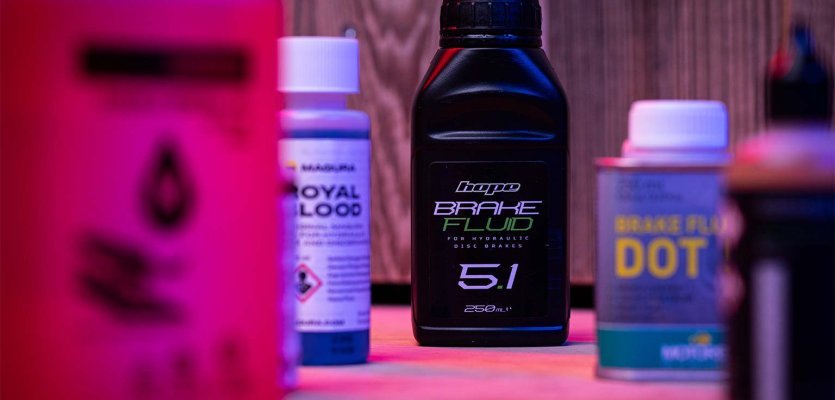
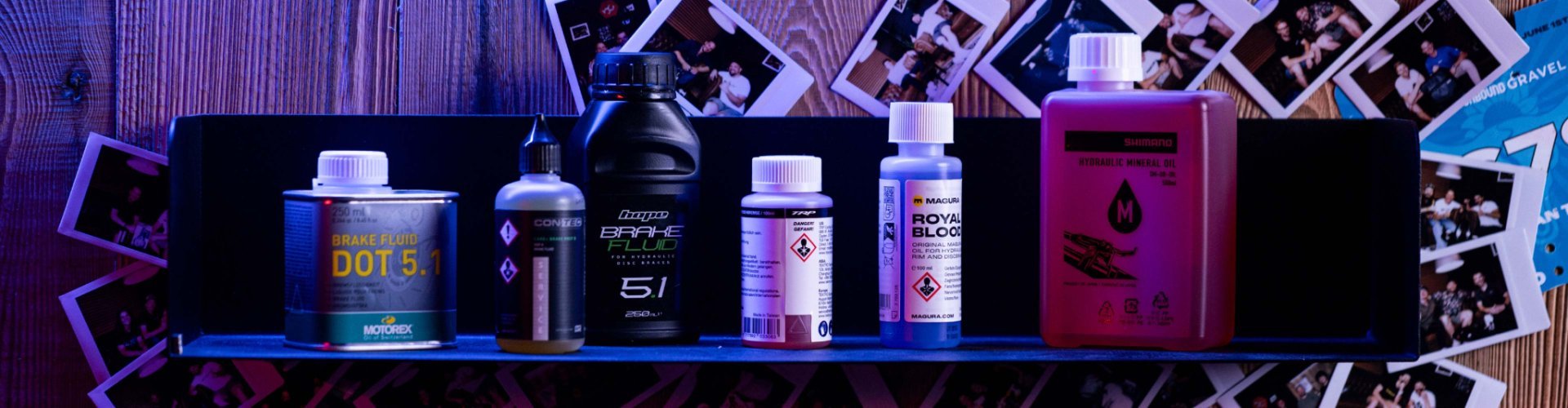
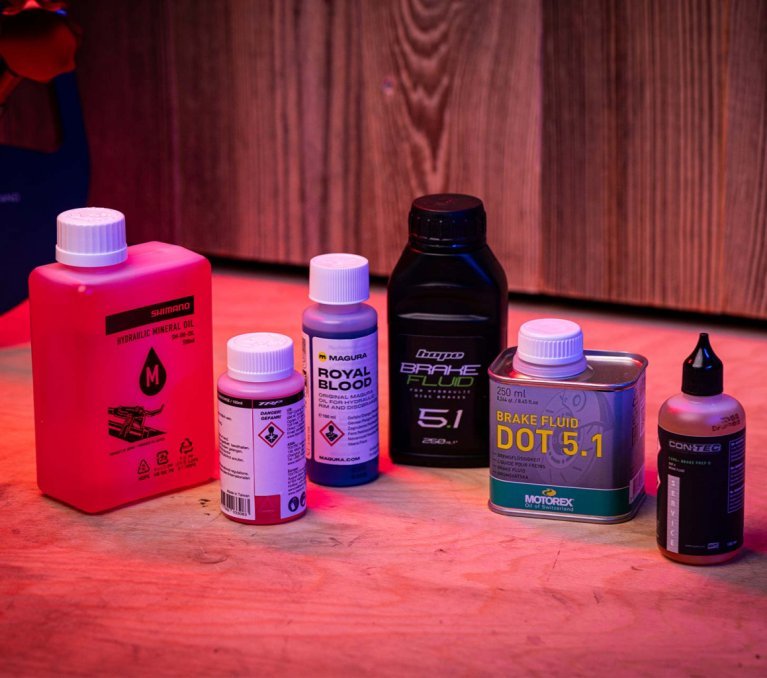
Different brake fluids and mineral oils
Pressure and heat: What a brake fluid needs to handle
The job of a brake fluid (also called hydraulic fluid) is to transmit force. The key requirement is that it must not be compressible. In this respect, there is virtually no difference between mineral oil and DOT. What really matters is that there is no air in the system, as air is compressible. Proper bleeding ensures a firm and consistent brake lever feel.
Because a great deal of heat can build up between your brake pads and rotor, some of it also reaches the brake fluid inside the caliper. That's why the fluid should remain stable at high temperatures and have a high boiling point. Under normal riding conditions, you'll hardly notice any difference. Both mineral oil and DOT brakes perform extremely well when properly maintained. Problems usually only arise if water enters the system – more on that below.
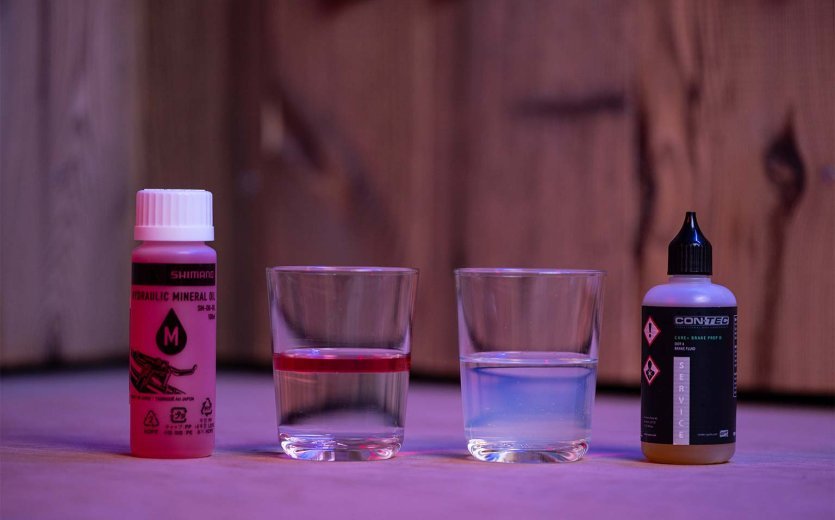
Mineral oil and DOT brake fluid in comparison
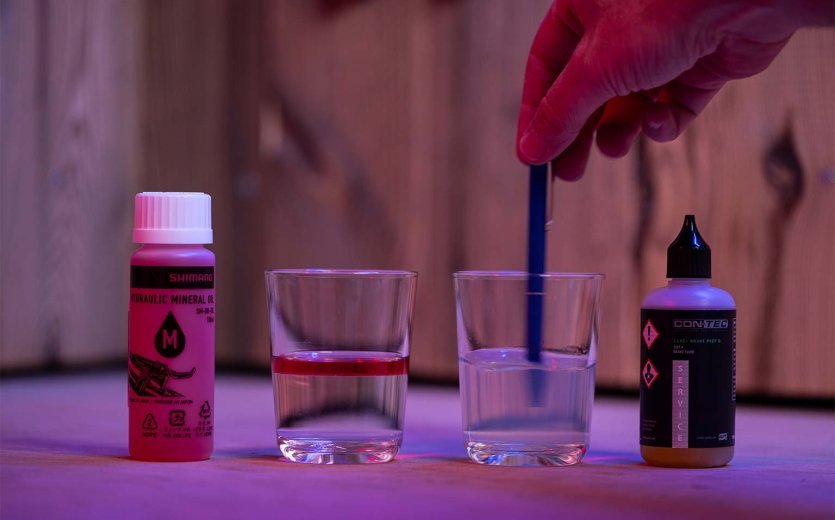
While DOT mixes with water to form a homogeneous liquid,...
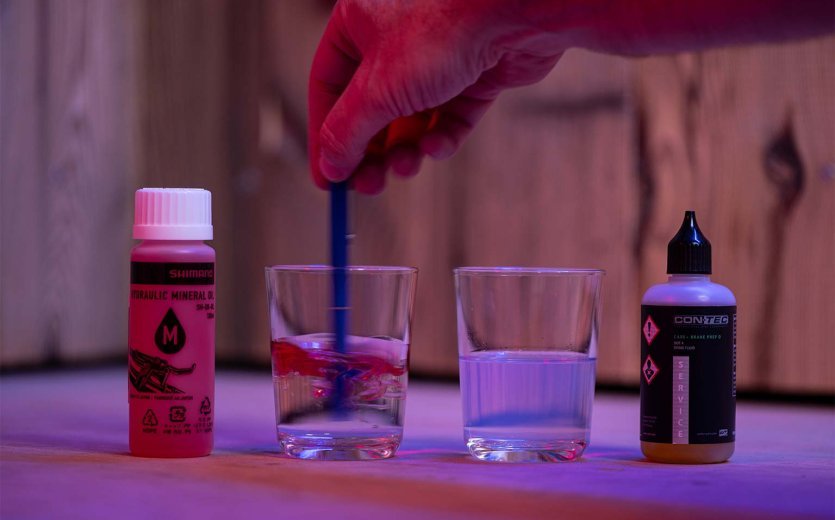
... mineral oil clearly separates from the water.
Mineral oil
The exact properties of mineral oil used in bicycle brakes vary slightly between manufacturers, as there is no universal standard. In general, mineral oil is highly durable and can often remain in a brake system for many years. It is usually harmless to paintwork and plastics, and skin contact is less critical than with DOT fluid. Even so, you should avoid skin contact and wipe off or wash away any spilled mineral oil immediately.
Mineral oil is not hygroscopic, meaning it does not absorb or mix with water. This contributes to its long service life both inside the brake system and in an opened bottle in your workshop. If a small amount of moisture does enter the system, it will not mix with the mineral oil and therefore will not lower its boiling point. Only if water collects inside the brake caliper (because it is heavier than oil and gradually settles at the lowest point) can it start to boil under high temperatures and cause problems. But don't worry: modern brake systems are generally sealed well enough that this should not happen if they are properly maintained.
DOT
DOT refers to glycol-based brake fluids, specifically DOT 3, DOT 4 and DOT 5.1. They originate from the automotive and motorcycle industries, where minimum performance requirements are standardised. The different specifications vary in boiling point and viscosity. On bicycles, DOT 4 and DOT 5.1 are the most common because they offer better heat resistance than DOT 3.
DOT brake fluid should be replaced regularly in bicycle brakes because it is hygroscopic and absorbs moisture, even through microscopic pores and gaps in the system. Since DOT mixes with water, the boiling point of the entire system gradually decreases. However, this hygroscopic property also has an advantage: pure water cannot collect in one place with its much lower boiling point. As long as you follow the manufacturer's recommended service intervals, the boiling point of the slightly diluted brake fluid will remain within the required range. When working with DOT, keep in mind that it is aggressive towards paintwork, some plastics and your skin. Also remember that an opened bottle of DOT fluid continues to absorb moisture from the air, so its shelf life in the workshop is limited.
Besides DOT 5.1, there is also DOT 5. It is silicone-based and has different properties. Since it is rarely used on bicycles, we won't cover it here.
Never mix them!
Mineral oil and DOT fluid must never be mixed. Always use the brake fluid specified for your brake system: DOT fluid for DOT brakes and mineral oil for mineral oil brakes. The seals inside brake levers and calipers are made from rubber compounds specifically designed for the respective brake fluid. Using the wrong fluid can damage these seals and render the entire brake system unusable. You should also be careful when mixing mineral oils from different manufacturers, as they may contain different additives. DOT 3, DOT 4 and DOT 5.1 are generally compatible with each other, although mixing them changes their properties. Silicone-based DOT 5 must never be mixed with them.
Alternative: Mechanical disc brakes
Often underestimated but still a popular choice for certain bikes: mechanical disc brakes use a cable instead of hydraulic brake fluid. While hydraulic brakes clearly outperform them in braking power and modulation, mechanical disc brakes have advantages of their own. They never need bleeding and can be serviced with basic tools, even on the trail. This can be especially useful when travelling in remote areas. If easy maintenance matters more to you than maximum braking power and modulation, mechanical disc brakes are well worth considering.