
The Ultimate Indoor Trainer Comparison
What types of indoor trainers are out there, and which one suits you best? We give you an overview and present the best models on the market.
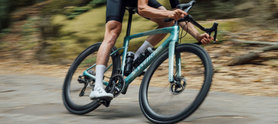
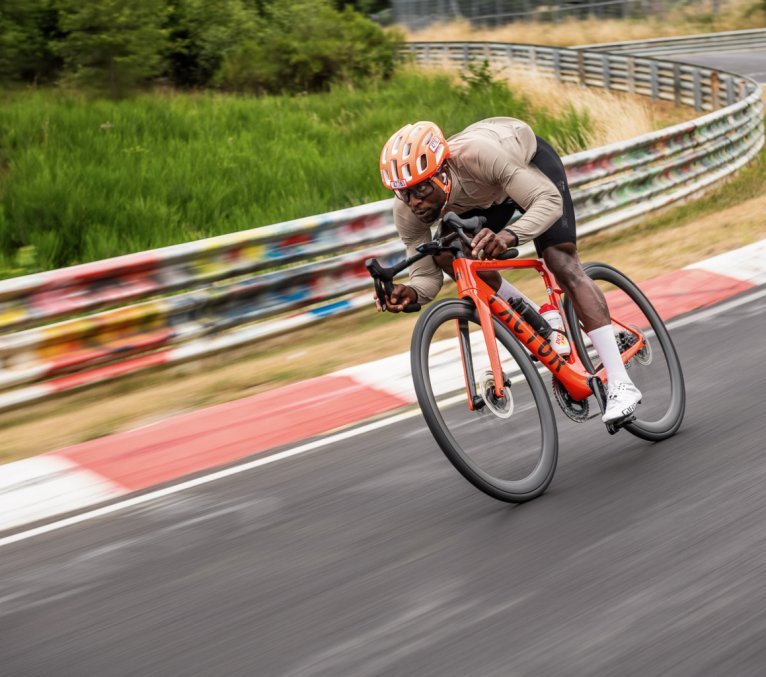
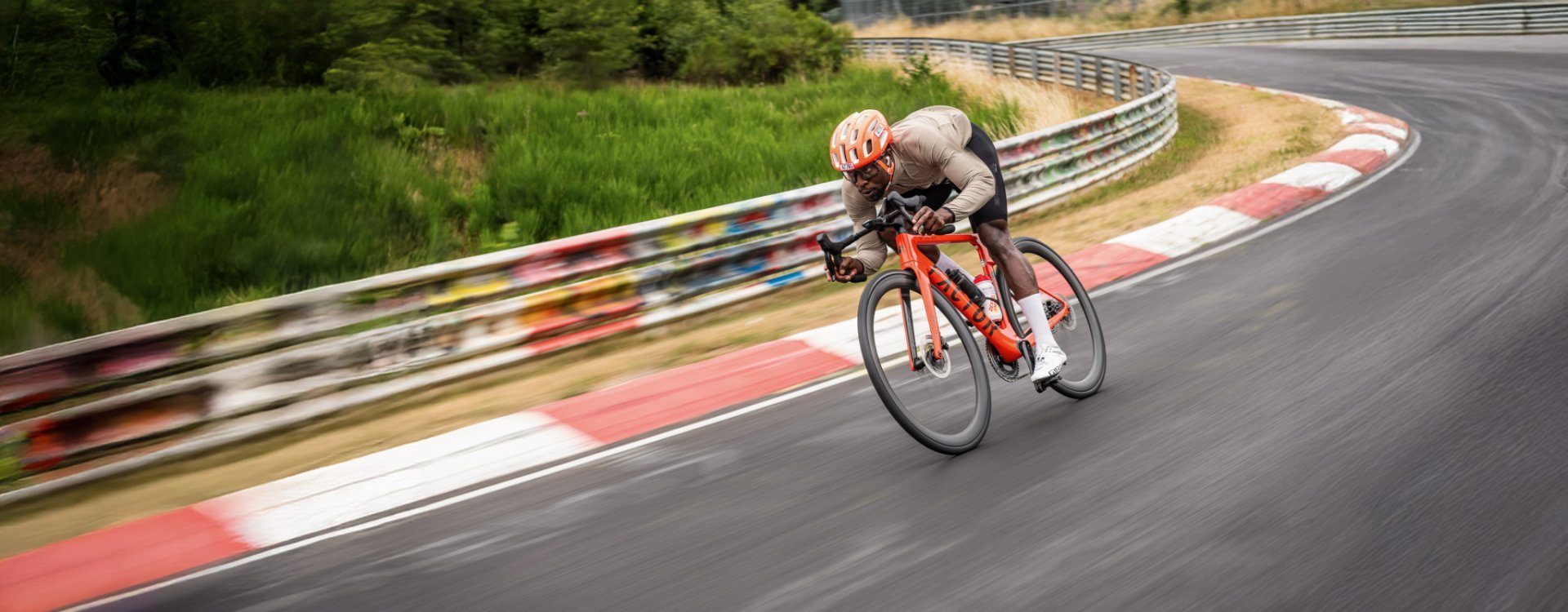
“Hey you! Yes, you on that lightning-fast Factor race bike! Bet your tyre pressure is too high?”
Not exactly a friendly conversation starter, admittedly. But probably an accurate one. Many riders are still out there on their road bikes and gravel bikes with the wrong – and usually far too high – tyre pressures. And that’s despite the fact that we’re right in the middle of a tyre pressure revolution. No other tuning measure has such a big impact on ride dynamics and riding enjoyment as tyre pressure tuning. And it doesn’t cost you a single penny! Old certainties are crumbling, old pressure charts are flying out of team car windows faster than Pauline, Pogi and Mathieu blasting across the cobbles of Roubaix on three bar. New technologies are opening up completely new possibilities. Lower pressure is the new fast! (Spoiler: too little is rubbish too!)
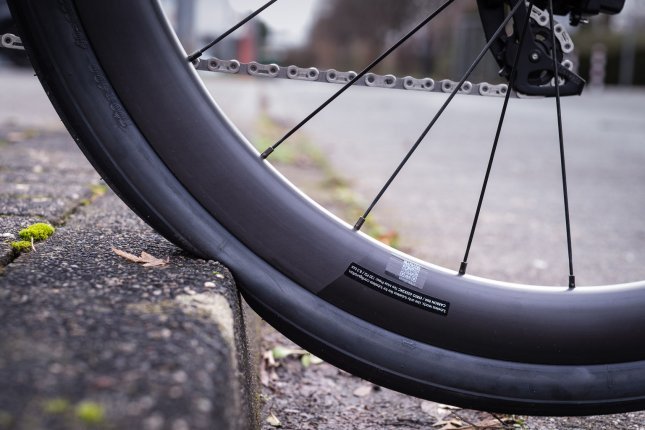
The optimal tyre pressure on a road bike is the best and most affordable tuning measure. High time to take a closer look! © bc GmbH
Wider, higher-volume versions of the same tyre roll more easily at the same pressure than narrower versions. Full stop. This simple insight has been confirmed time and again by tests. The reason lies in the comparatively longer contact patch of narrower tyres. Tyre manufacturer Schwalbe explains this in its technical FAQ: “While a wide tyre flattens more across its width, a narrow tyre has a narrower but longer contact patch. This flattened section can be interpreted as a lever arm that works against the rolling motion of the tyre.” In short: the longer the contact patch lever, the higher the resistance.
To achieve similarly low rolling resistance (and comparable puncture protection), narrower, lower-volume tyres inevitably have to be ridden at higher pressures. Higher pressures, however, also lead to increased rider fatigue, reduced control and greater stress on the material.
The core of the tyre pressure revolution therefore lies in wider, higher-volume tyres. If you want to benefit as much as possible from lower pressures, the rule is simple: go wider! (If you can.)
40 mm wide tyres on a road bike would have been unthinkable not so long ago, but they can actually be faster than their narrower counterparts. They’re more comfortable anyway! © bc GmbH
Low rolling resistance is only one reason why wider tyres and lower pressures make you faster. Comfort and traction are at least just as important:
Just pumping your tyres harder to make them roll faster – wrong. There is a relationship between tyre pressure, tyre volume and rolling resistance. In many cases, lower pressures will actually make you faster. And rolling resistance isn’t the only factor when it comes to speed. If you’re being shaken so hard that your fillings are about to fall out, a tiny reduction in rolling resistance won’t help you anymore.
Interestingly, speed also has a strong perceptual component. Constant vibrations, impacts and changes in movement feel fast, even if the actual speed doesn’t measurably change. You’ve probably experienced this when sitting in a heavy luxury car or a high-speed train and thinking, “Wow, I’m going fast – it doesn’t feel like it at all.” That’s because humans don’t perceive absolute speed, only acceleration, meaning changes in speed. Every jolt and every vibration is such an acceleration acting on your body, and one that you perceive immediately.
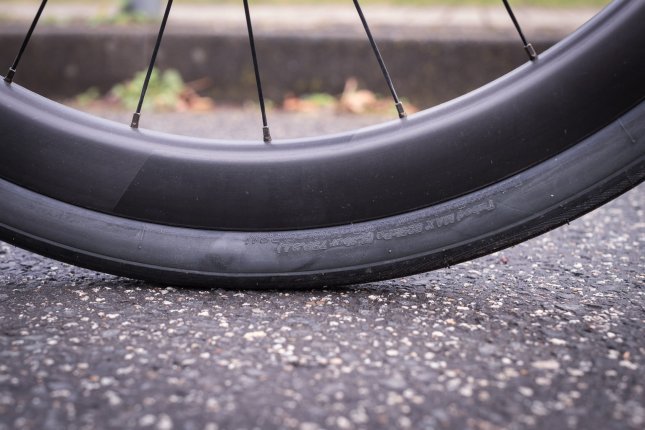
With narrow tyres, the contact patch tends to be long and narrow, which absorbs muscle power that would otherwise contribute to forward motion. © bc GmbH
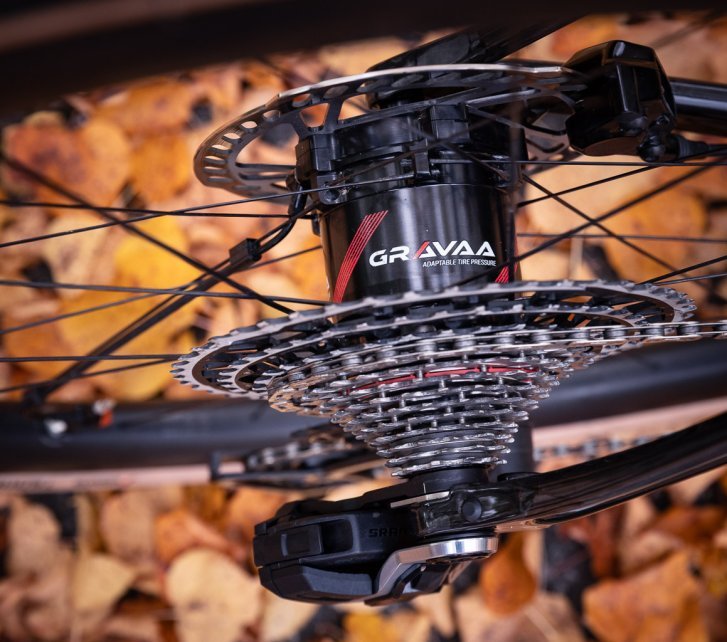
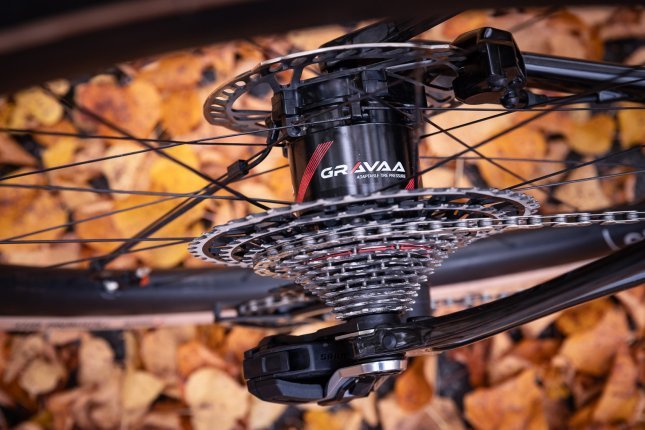
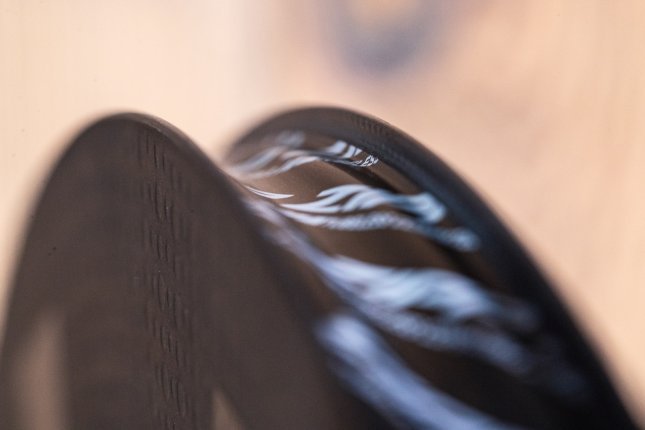
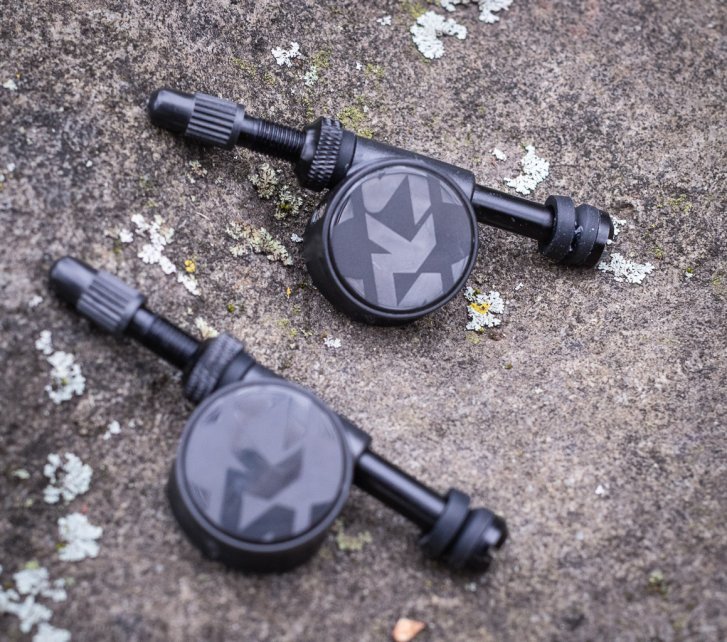
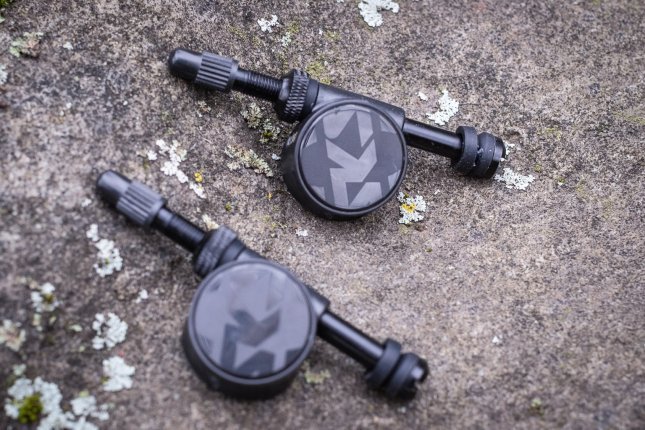
The pumping hubs from Gravaa are a game changer in cycling: they allow you to run the perfect tyre pressure for any surface at any time – without stopping. © bc GmbH
What if you could always ride with the perfect tyre pressure for the current surface and your setup? What if you could switch within seconds at the push of a button on the handlebar between 1.5 bar for sand, 2.5 bar for gravel and 3.5 bar on asphalt? And what if there were a technology that could automatically pump air (and sealant) into a damaged tyre in the event of slow punctures or minor pressure losses?
That technology is called Gravaa – and it’s now available at bike-components! A pump integrated into the hub adjusts tyre pressure at the touch of a button. A line running along a spoke elegantly connects pump and valve. As a Gravaa user, you can switch between various pre-programmed pressure levels or freely choose your desired pressure.
In 2025, Gravaa was used for the first time in the UCI WorldTour, exclusively on bikes of Team Visma | Lease a Bike. Superstar Pauline Ferrand-Prévot won the legendary Paris–Roubaix in 2025 on a bike equipped with Gravaa hubs.
Tubeless riding – meaning riding without a inner tube and using sealant instead – has been an integral part of the mountain bike world for years and has since taken hold in gravel and road cycling as well. Eliminating the inner tube reduces rolling resistance by removing the tube’s internal flexing inside the tyre. Small cuts and punctures are reliably sealed by the liquid sealant. Without a tube, the risk of pinch flats is also significantly reduced. The infamous snakebite – where the tube is pinched between the rim and the ground and punctured – becomes a thing of the past. The result: less pressure, less rolling resistance, fewer punctures.
The dreaded snakebite gets its name from the two symmetrical, puncture-like holes in the inner tube that occur when you hit a hard obstacle with too little pressure. © bc GmbH
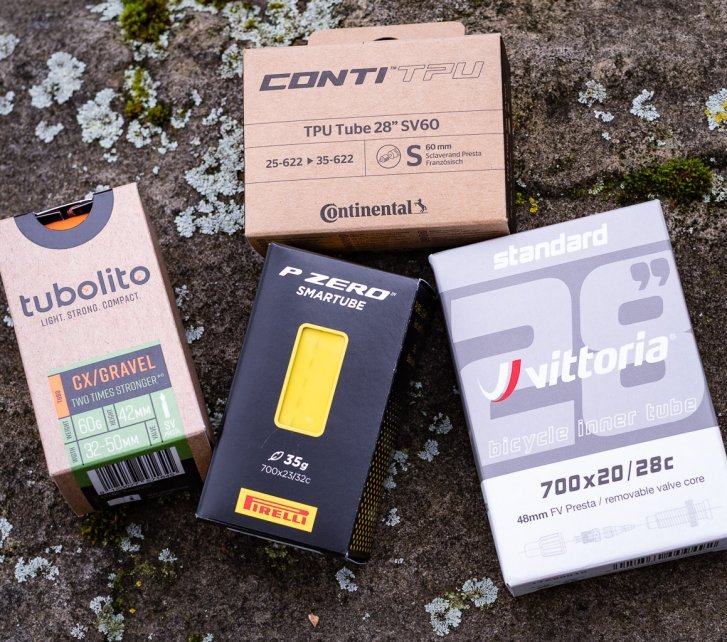
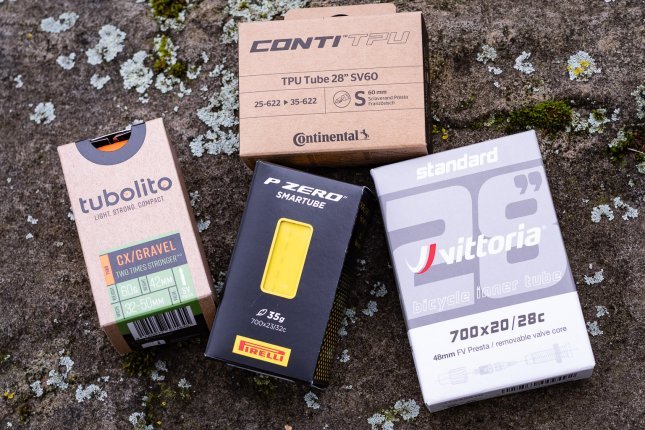
If tubeless isn’t an option for you, there’s a modern alternative to the classic butyl tube: inner tubes made from thermoplastic polyurethane (TPU) or thermoplastic elastomer (TPE). They are lighter and significantly more supple than butyl – resulting in less internal flex, less friction and lower rolling resistance. Bonus feature: TPU/TPE tubes pack down much smaller and weigh less, making them ideal as spare tubes, for example in your saddle bag or jersey pocket. TPU and TPE tubes are available from many manufacturers such as Schwalbe, Tubolito, Continental, Vittoria or Pirelli. Tip: simply use the material filter in our webshop!
Those who prefer riding with inner tubes now have the choice between the classic butyl rubber option or lighter variants made from TPU or TPE. © bc GmbH
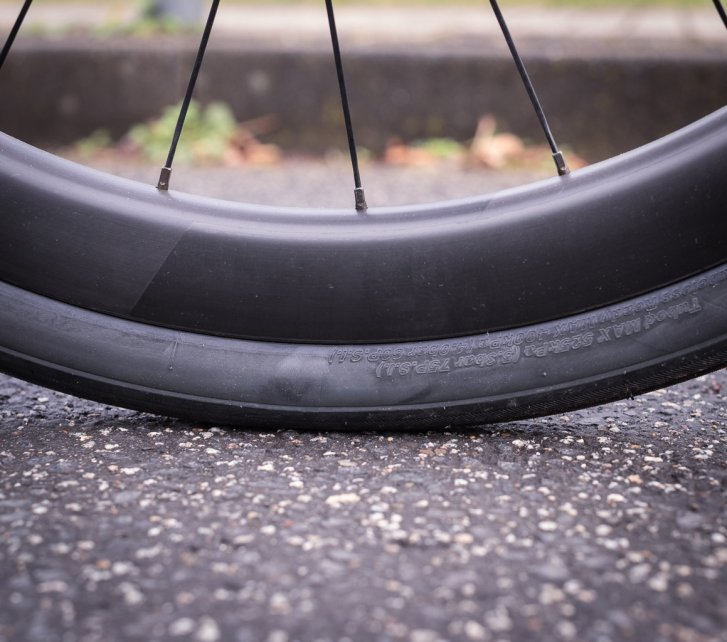
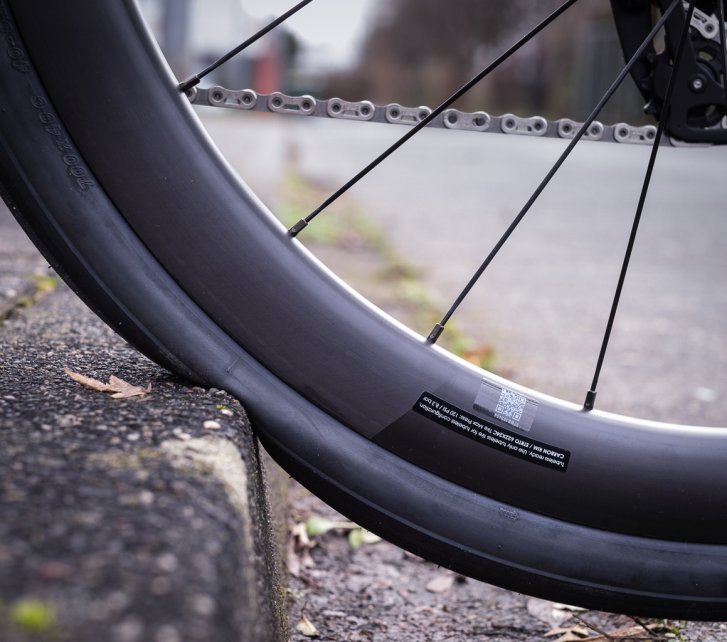
Hookless rims have repeatedly been the subject of discussion in recent years. The concern: under certain circumstances, tyres could unseat from a hookless rim and cause a crash. Even though the serious crash of Thomas De Gendt at the 2024 UAE Tour was probably not caused by a hookless issue, as initially discussed, as reported by the specialist portal Rennrad-News. When using hookless rims, you should always follow the compatibility guidelines of the tyre and rim manufacturers and strictly adhere to the ETRTO standards during installation. These specify that when mounting a tyre on a hookless rim, a pressure of 5 bar or 72.5 psi must not be exceeded.
There’s (no) catch: hookless rims are unproblematic – as long as you follow a few basic rules. © bc GmbH
As you’ve seen, there is a close relationship between tyre width, volume and pressure. If you ride wider tyres, you can therefore experiment with lower pressures than were possible with narrower tyres. But what if you can’t change the tyre width – for example because wider tyres no longer fit in your bike or through your fork? With a few simple tips, you can find your sweet spot.
Systems like the SKS Airspy monitor your tyre pressure and notify you electronically if it deviates from the target value. © bc GmbH
Afraid of getting more flats? Don’t worry! A tubeless setup in particular is significantly less prone to punctures than a combination of tyre and inner tube. But even if you’re riding with a traditional inner tube, lower tyre pressure off-road does not automatically lead to more punctures. It’s all a question of balance. Pressures that are too high make your tyre more susceptible to cuts or punctures; pressures that are too low increase the risk of a pinch flat.
Even on a road or gravel bike: tubeless rolls more easily and offers better puncture protection. © bc GmbH
Everything that applies to a gravel bike also applies to a road bike. So far, so simple. However, the conditions are often different:
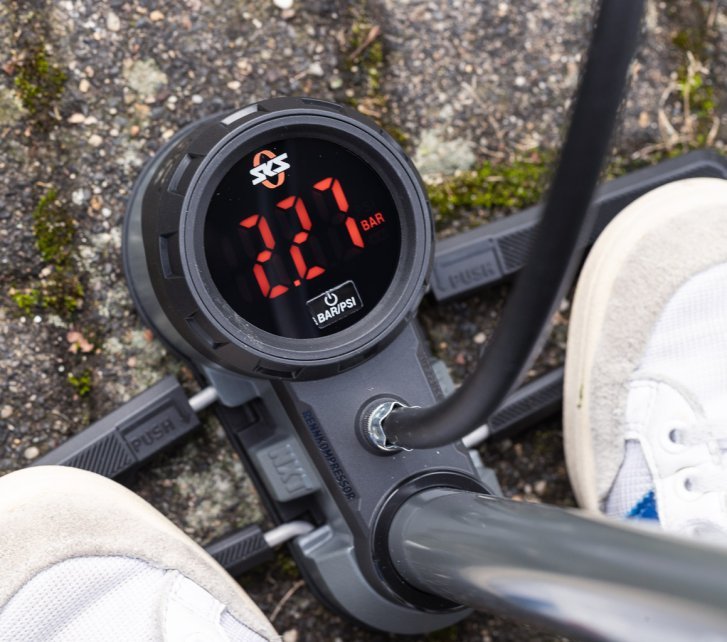
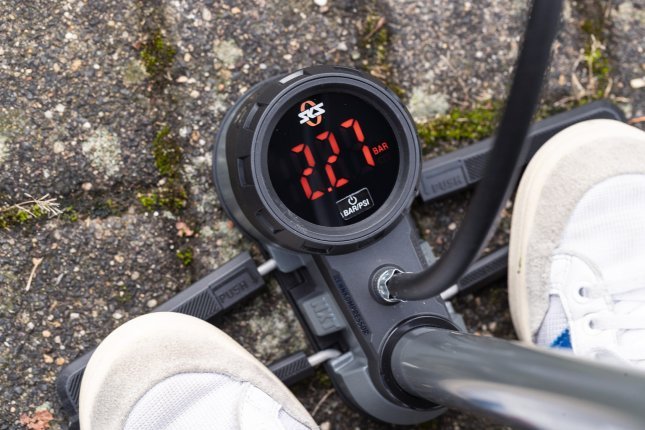
A good floor pump is part of the standard kit if you take your tyre pressure seriously. © bc GmbH
The days when the professional peloton rode 23 mm tyres inflated to nine bar or more are long gone. Depending on the course and surface, 28 to 32 mm tyres now dominate. Whether even wider tyres will prove superior in road cycling as well is something we’re unlikely to find out anytime soon. Article 1.3.018 of the extensive UCI regulations specifies a maximum outer diameter of 700 millimetres for road cycling. Significantly more voluminous tyres than those currently used could violate this rule. However, Rennrad-News already reports pressures between three bar at Paris–Roubaix and around 4.5 bar at the Tour de France – in both cases tubeless.
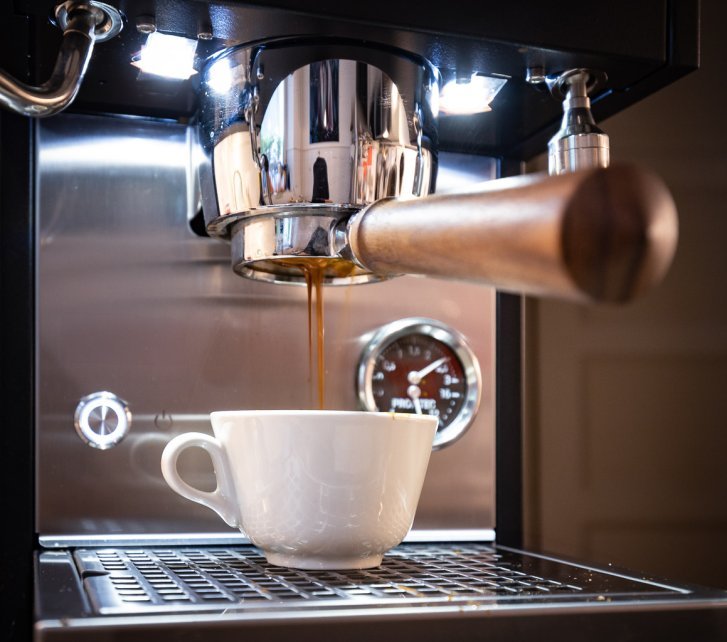
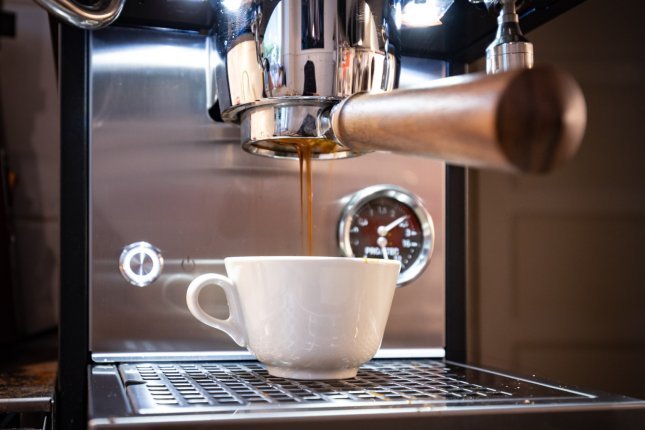
The only thing that still needs to be run at nine bar today is a good espresso. Period! © bc GmbH
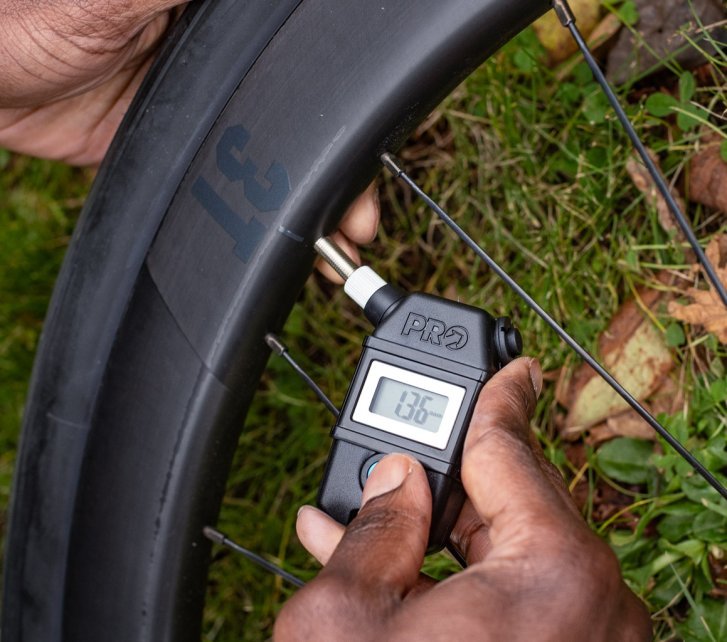
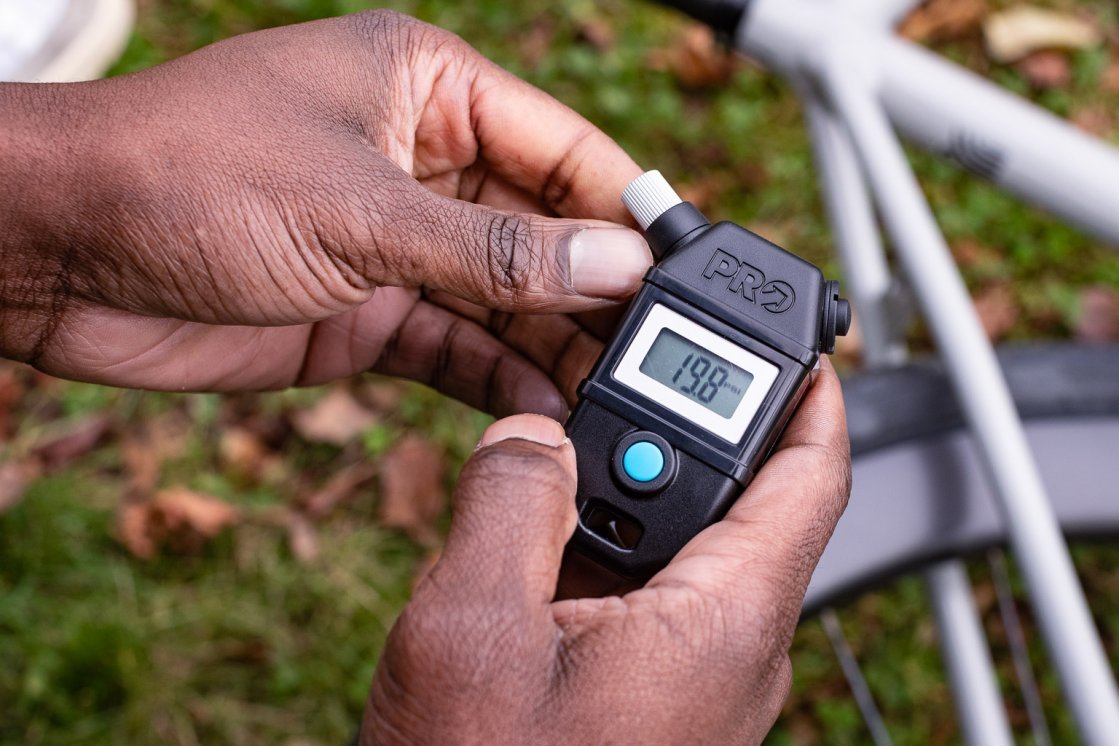
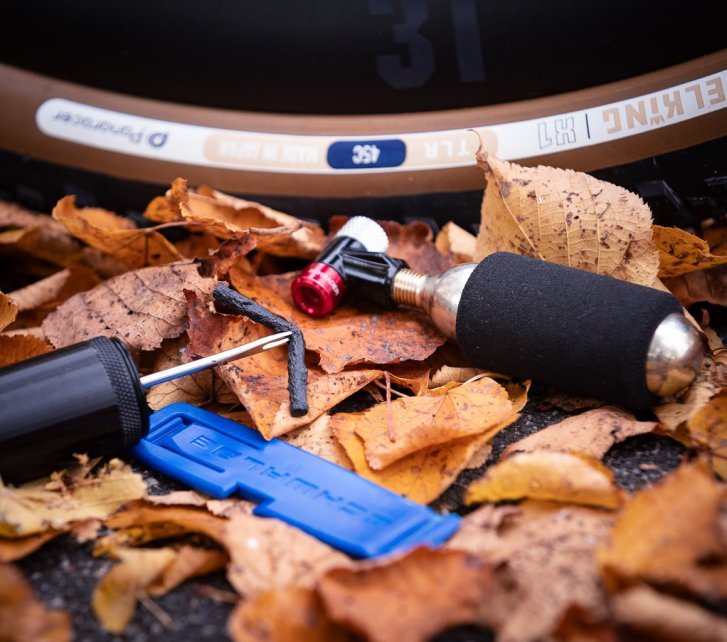
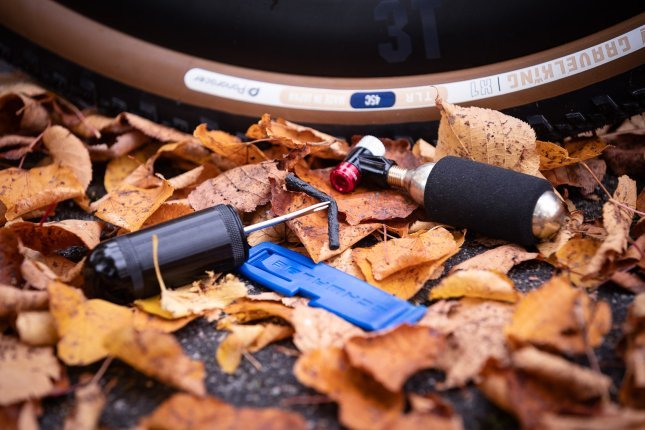
For everyone who isn’t riding Gravaa yet, there are useful accessories to help you in the pursuit of the perfect tyre pressure.
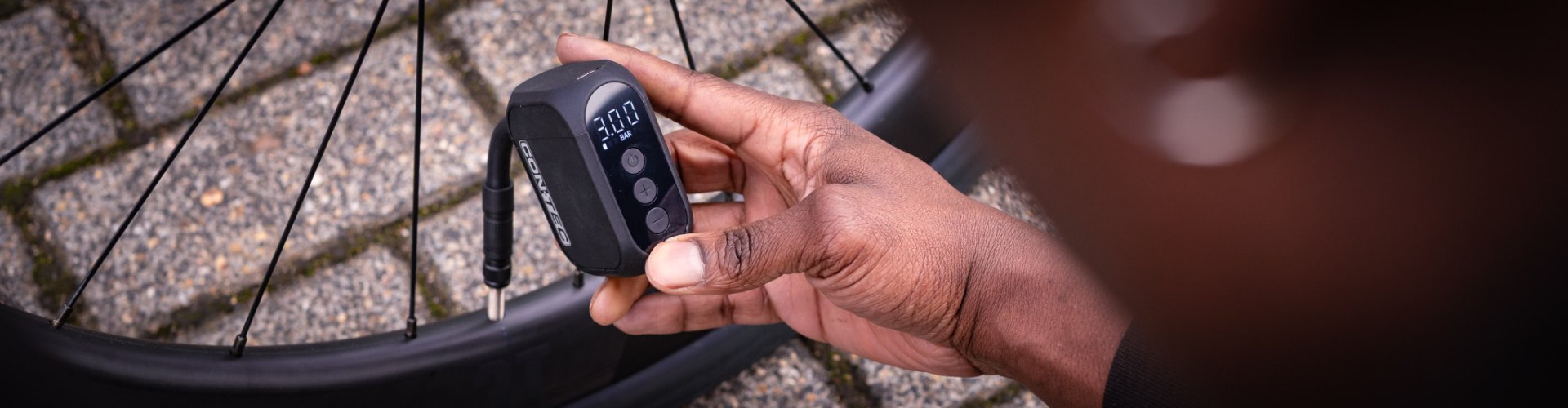
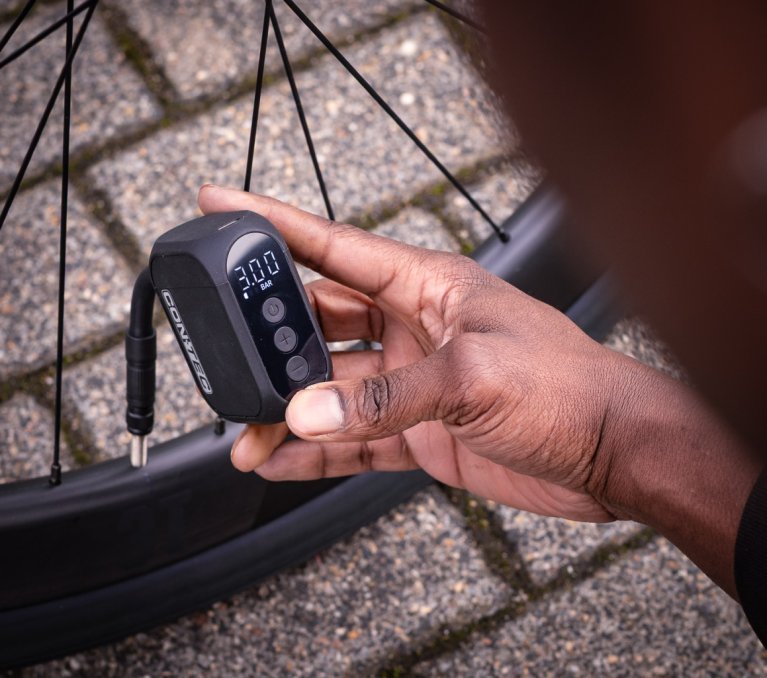
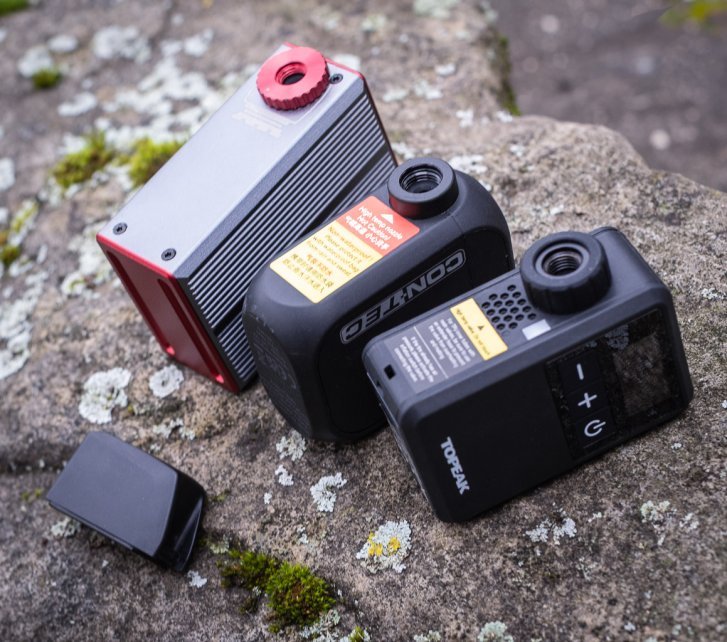
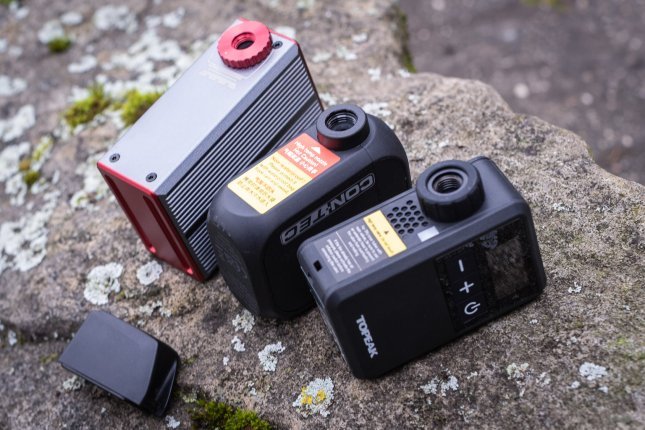
Electric mini pumps are becoming increasingly popular – they can inflate your tyres with accuracy down to a tenth of a bar. (AXS battery shown for size comparison) © bc GmbH
What types of indoor trainers are out there, and which one suits you best? We give you an overview and present the best models on the market.
With the right accessories, your indoor training becomes even more realistic, comfortable and motivating. Find out here how to take it to the next level!
Is the chain on your gravel or road bike worn out? Do you want to install a new one? With our how-to guide, replacing the chain is a piece of cake.
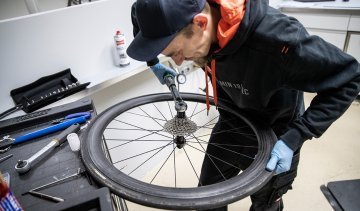
A cassette on a road bike or gravel bike can be changed quickly. We’ll show you how to replace the cassette with just two tools.
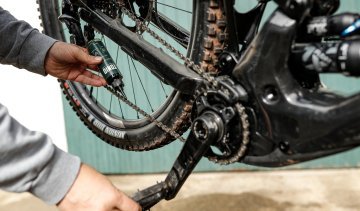
Well-greased chains are smooth, quiet, and shift with precision. But which lubricant is the best? Here are some tips for proper chain care.
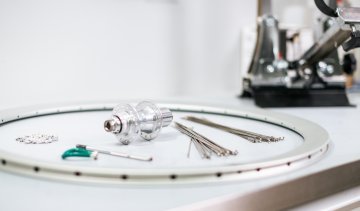
Is it worth building a custom wheelset for a road bike when there are so many good system wheels available? Absolutely! Read on to learn more.
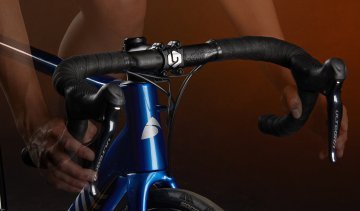
Drop – Reach – Flare: On road handlebars, aerodynamics and ergonomics must go hand-in-hand, so that you can bring your best performance to the road.
Searching for THE road bike saddle that makes your beloved hobby comfortable for your rear too? Read here what you need to look out for.
Send your unused goods back within 100 days after purchase and get your money back!
See more