Cycling with Children
The bc Guide to Making the Right Decisions
Based on our experience, we’ve put together this guide to cycling with children. Here you’ll find guidance on the most important decisions—from choosing the right children’s bike and helmet to safe transportation solutions for everyday use and longer rides.

Finding the Right Kids' Bike
Finding the right kids' bike isn't always easy—we know this all too well. The most important factor isn't age, but the right size and a bike your child can handle safely. A bike that's too big or too heavy makes getting started unnecessarily difficult and quickly takes the fun out of riding.

Finding the Right Size: Balance Bike Size & Inseam Length
Choosing the right size is the most important factor in ensuring your child can ride a bike safely and enjoyably. Manufacturers’ age recommendations can serve as a starting point, but the balance bike size (in inches) and your child’s individual body measurements are what really matter.
The smaller the child, the smaller the balance bike diameter usually is. However, to ensure the bike really fits and can be controlled well, you should also consider the inseam length. This tells you whether your child can safely reach the ground and develop a good feel for the bike.
How to measure the inseam length:
- Clamp a book vertically between your child’s legs while they are standing, with the spine facing up
- Push it upward until your child is sitting lightly on it
- Measure the distance from the spine of the book to the floor
- The measured value corresponds to the inseam
Tip: It’s best to measure the inseam with shoes on and in tight-fitting pants. This will give you realistic measurements for everyday use.
The Right Features: Components Designed for a Child’s Anatomy
In addition to the right size, the features are also crucial. Children have smaller hands and less strength—the handlebars, grips, and brakes should be designed with this in mind. Handlebars and grips shouldn’t be too thick, so your child can grip and control the bike safely. Brake levers must be easy to reach and operate smoothly. Make sure the grip width is adjustable so your child can brake with control at all times. This ensures your child can operate the bike intuitively and feels safe right from the start.
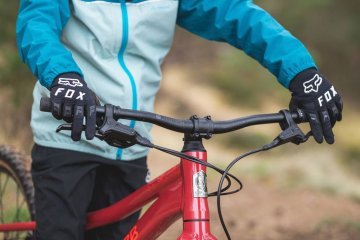
The right components matter: kid-friendly brake levers, ergonomic grips and optimized cockpit parts improve control, safety and confidence on every kids bike ride.
The lighter the children's bike, the more fun it is to ride
The weight of a children's bike is often underestimated, but it is crucial for riding enjoyment and control. Many bikes are too heavy relative to a child's body weight, making it unnecessarily difficult for them to get started. A lightweight children’s bike is easier to start, steers better, and brakes more safely; it’s also much easier to push. This makes a big difference, especially in the beginning, because a bike that’s too heavy quickly leads to insecurity and frustration. So, if you have a choice, go for the lighter bike—your child will feel more confident sooner and enjoy riding more.
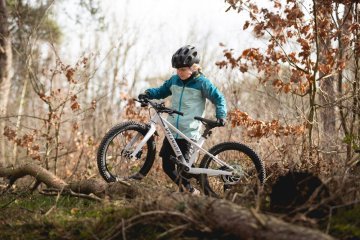
Lightweight kids bikes make a real difference: less weight means better control, easier handling and more fun – helping young riders gain confidence and progress faster. © bc GmbH
Balance Bikes Instead of Training Wheels: How to Get Started
The way children learn to ride a bike has changed significantly in recent years. Training wheels are no longer considered a useful aid, as they tend to hinder balance training. While children learn to pedal with them, they don’t learn to truly control a bike.
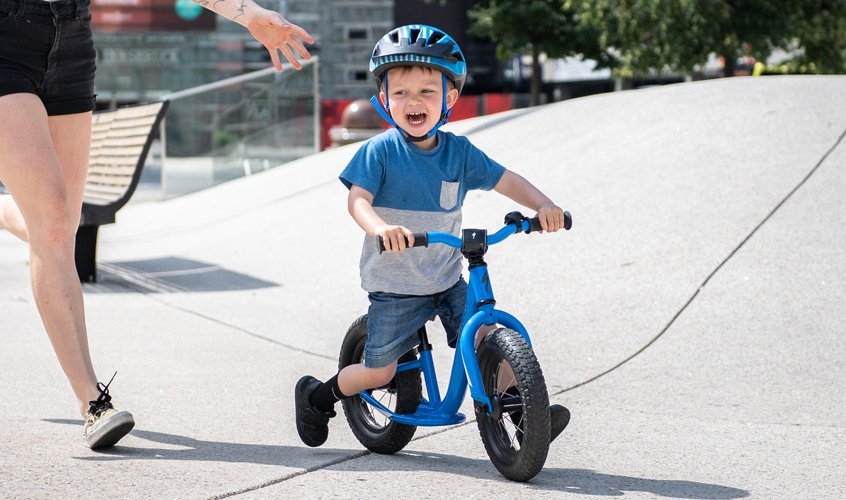
A balance bike is therefore a much better way to start. It works just like a bike—only without pedals. Your child moves forward with their feet, automatically developing a sense of balance and control.
This is how your child learns step by step:
- To maintain balance on two wheels
- To steer confidently and control direction
- To regulate speed and brake on their own
The advantage: The transition to a children’s bike is usually much easier later on and often even possible without training wheels at all.
When can my child start riding a bike?
The right time depends less on age and more on your child’s physical and motor skills. The key is that your child can maintain balance, steer confidently, and has enough strength to pedal and support themselves.
The transition often goes particularly well after the balance bike phase. Many children switch directly to a 14-inch bike, as the difference is minimal. Depending on their development, however, it may make sense to stick with the balance bike for a while longer and switch to a 16-inch bike later—this way, the bike often fits for longer.
The right use case: everyday use, outings, or first trails?
In addition to size and features, the intended use also plays an important role in choosing the right children’s bike. After all, not every bike is equally well-suited for every purpose.
Think ahead about where your child will mainly be riding:
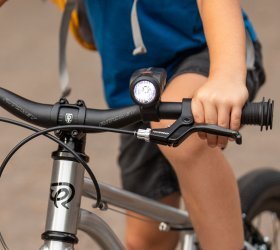
- Everyday use & the way to school: Here, sturdy, reliable children’s bikes with features suitable for daily use make sense—such as lights, fenders, and an upright riding position
- Leisure & outings: For longer rides or family outings, comfort and a lightweight design are key, so your child can easily handle longer distances
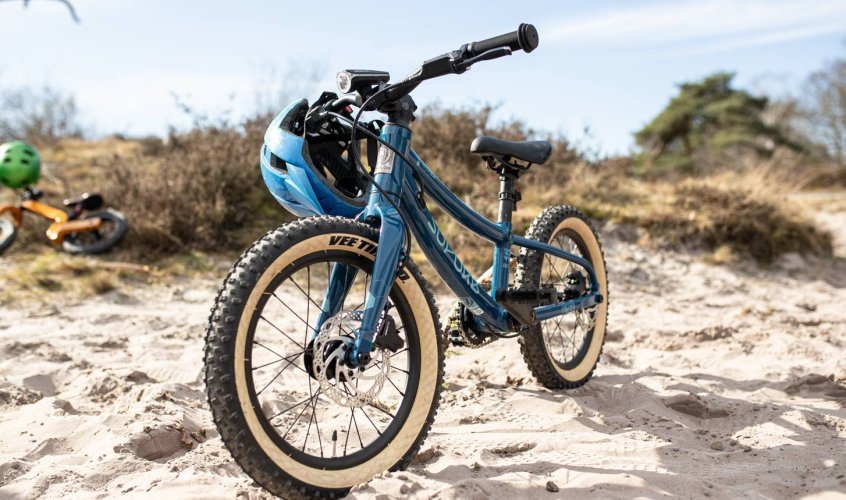
- Off-road & first trails: If your child likes to ride off paved paths, specialized models with high-grip tires and a sturdy build offer more control and safety
Important: The bike should always match the actual use—not what might be planned for the future. This way, your child stays safe on the road and enjoys riding more in the long run.
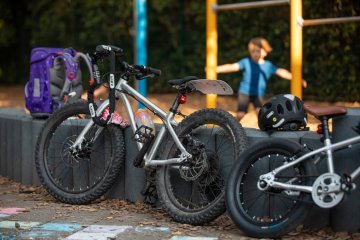
Built for everyday use: kids bikes with lights and accessories ensure safety on school runs and daily rides. © bc GmbH
Children's Bike Helmets: Fit, Protection, and the Right Size
A well-fitting bike helmet is an essential piece of equipment—whether on the way to school or during their first off-road rides. If the helmet is too loose, it will slip; if it’s too tight, your child will quickly stop wearing it. That’s why the right fit is crucial: only a properly adjusted bike helmet can reliably protect your child.
In the following section, we’ll show you what to look for in a children’s bike helmet—from the right size to the perfect fit.

How do I measure my child’s head circumference correctly?
The right helmet size is crucial for your child’s safety. Children’s bike helmets are sized in centimeters and are based on head circumference.
To determine the right size for a bike helmet, you should measure your child’s head circumference as accurately as possible.
- Place a measuring tape about 1 cm above the eyebrows around your child’s head
- Measure at the widest part of the head (forehead and back of the head)
- Do not pull the measuring tape too tight, but also not too loose
- Note the measurement in centimeters and compare it with the manufacturer’s size chart
The measured value should fall within the helmet’s size range specified by the manufacturer, for example, 48–52 cm. If your child falls between two sizes, a finely adjustable system helps ensure the helmet fits perfectly. It is crucial that the bicycle helmet fits snugly without pressing or slipping. A helmet that is too large provides significantly less protection—even if it supposedly “grows” with your child for longer.
Tip: If you don’t have a measuring tape on hand, you can also use a string and then measure it with a ruler.

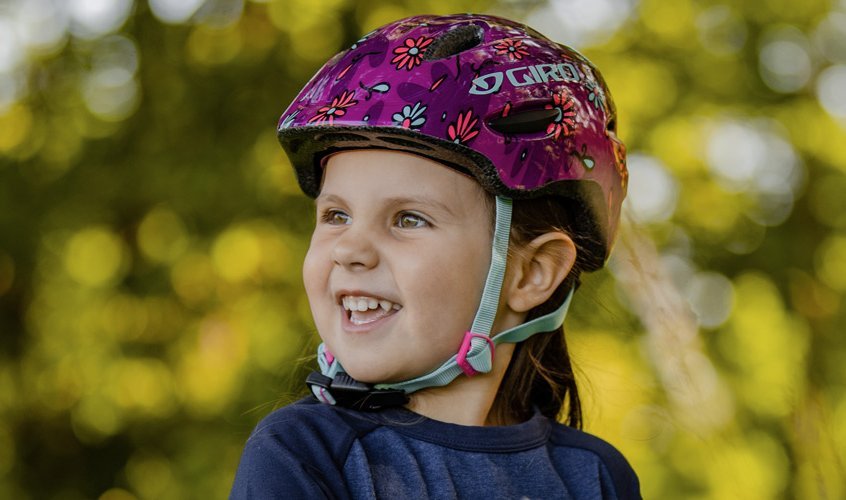
The right helmet size starts with measuring: a proper fit ensures safety and comfort for young riders.
How should a children’s bicycle helmet fit properly?
A children’s bicycle helmet fits properly when it sits level on the head and neither slides backward nor sits too low on the forehead. The forehead should be protected without restricting vision.
The helmet must fit snugly without being too tight and can be securely fastened using the adjustment system. The straps should sit close to the head, with about a finger’s width of space under the chin.
The helmet must not slip when the head is shaken.
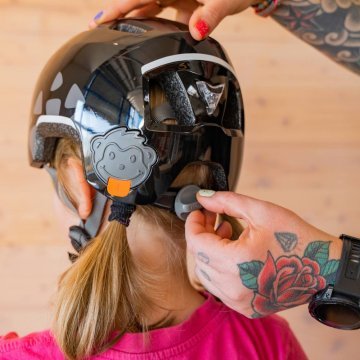
A perfect fit matters: the adjustment system lets you fine-tune the helmet for comfort and maximum safety. © bc GmbH
What is MIPS, and is it worth it for kids' helmets?
MIPS (Multi-directional Impact Protection System) is an additional safety feature in bicycle helmets that can reduce rotational forces during a fall.
A bike helmet with MIPS can be a good idea, especially if your child is more active, for example on trails or off-road. For everyday use, it’s an added safety feature, but not a must-have.
The bottom line remains: The helmet must first and foremost fit properly and sit well—that’s always more important than any extra feature.
When is a full-face helmet a good choice for kids?
A full-face helmet is especially useful when your child is riding off-road—for example, on trails, at a bike park, or on a pump track. Thanks to the additional chin protection, it offers greater protection in the event of a fall, particularly around the face.
For everyday use or the commute to school, a full-face helmet is generally not necessary, as it is heavier and offers less ventilation.
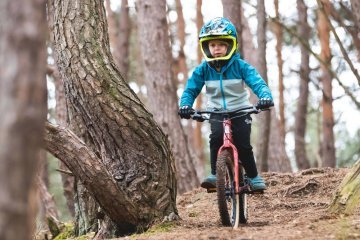
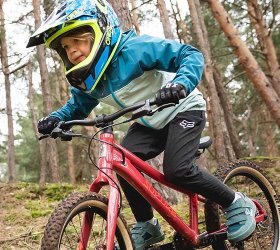
A full face helmet makes sense on technical trails, at higher speeds or in bike parks – offering extra protection and confidence off-road. © bc GmbH
Bicycle trailer or bike seat: The right solution for transporting children
Many parents have faced this dilemma: bike trailer or bike seat—which is better suited for everyday use? Both options have their advantages: A bike seat is compact and quick to attach to the bike, while a bike trailer offers more comfort, extra storage space, and protection on longer trips.
Here, we’ll show you what matters most when transporting children by bike and recommend products that we use and love every day.

Which is better: a bike trailer or a bike seat?
From our own experience, we know that there isn’t always one “right” solution—it’s the one that best fits your daily routine. Key factors to consider are your child’s age, the routes you take, and how much space and flexibility you need.
A bike trailer offers more comfort, weather protection, and storage space, and is particularly suitable for longer distances. A bike seat, on the other hand, is more compact, quick to install, and ideal for short daily trips. For many families, the trailer is the more versatile solution, as many models can also be used as a stroller or jogger.
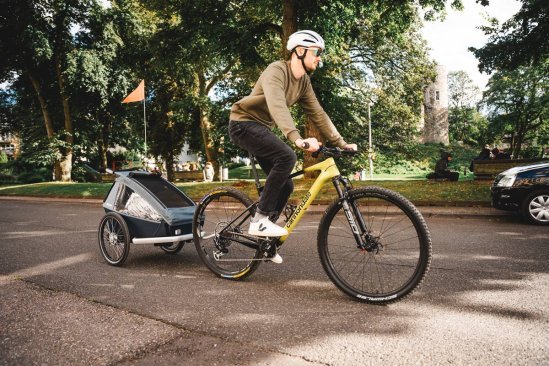
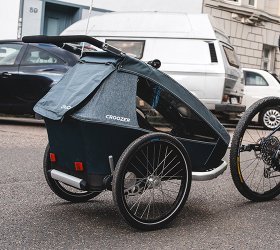
Trailers offer more comfort, storage and stability – ideal for daily use and longer rides with kids. © bc GmbH
At what age can a child ride in a bike trailer?
Many bike trailers are suitable for younger children when equipped with appropriate accessories, such as an infant car seat or seat insert. These provide additional support and a more stable seating position, since young children cannot yet control their upper bodies sufficiently on their own. Without such inserts, your child should be able to sit independently and have enough upper body stability. It is also important that the harness system is adjusted correctly and that your child sits securely in the trailer without sinking or tipping forward.
Therefore, always follow the manufacturer’s guidelines regarding age, weight, and usage, and ensure a proper seating position. This is the only way to guarantee that your child rides safely and comfortably.
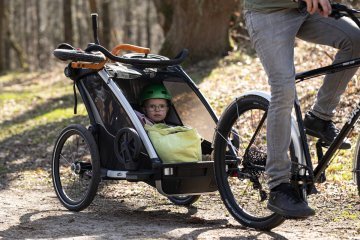
When can kids ride in a trailer? With proper support and a helmet, even young children can join safely on rides. © bc GmbH
What should I look for in a bicycle trailer?
Make sure it has enough space, a secure strap system, and good visibility on the road. Weather protection and storage space make it more practical for everyday use, especially on longer trips. It’s also important that the hitch fits your bike and that the trailer is easy to handle.
The materials used also play a role: low-emission, durable fabrics and sturdy construction ensure greater safety and longevity in daily use.
When is it a good idea to usea kid bike seat?
A child bike seat is a good idea as soon as your child can sit steadily and hold their head up on their own. At that point, they can balance themselves well in the seat and ride safely.
In everyday life, a bike seat is particularly practical: it’s quick to install, space-saving, and ideal for shorter trips like the ride to daycare or to the store. It’s important that the seat fits your bike, is properly secured, and has a safe harness system as well as well-adjusted footrests.
For longer trips, a bike trailer is usually more comfortable, as it offers more freedom of movement and better protection from the weather.
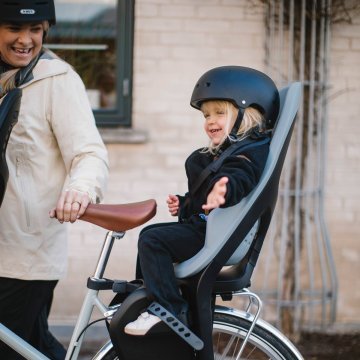
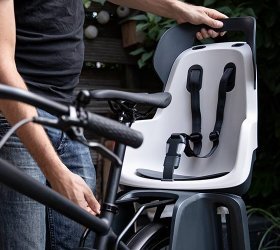
Once kids can sit steadily, a bike seat is ideal for short trips and daily rides. © Thule