
MTB Suspension Glossary: All Terms Explained!
Spring curve, negative chamber and shim stack – clear so far? If not, our mountain bike suspension glossary has you covered.
Inner tube or tubeless tyre? Butyl, TPU, or latex? Find out here which system is best for you and your bike.
Ever since John Boyd Dunlop invented the pneumatic tyre in 1888, almost all bicycles have rolled on air-filled tyres. How the air is held inside the tyre, however, has changed a great deal over the decades. Today you can choose between an (inner) tube, tubeless systems, or tubular tyres. All these systems have their advantages and their place. After all, the requirements for a mountain bike differ from those for a road bike, a gravel bike, or a commuter bike. We explain the common solutions and show which system makes sense for your bike and how you use it.
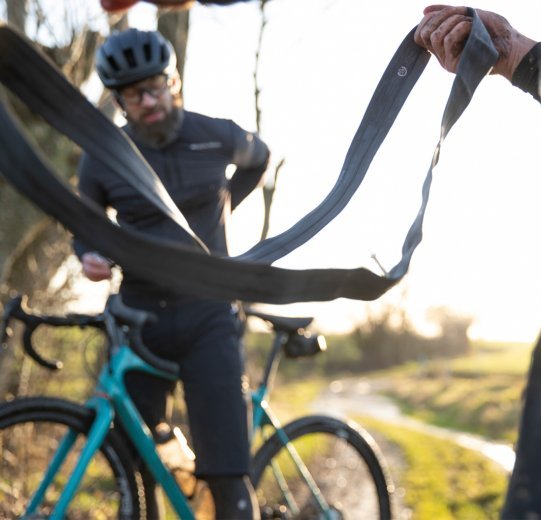
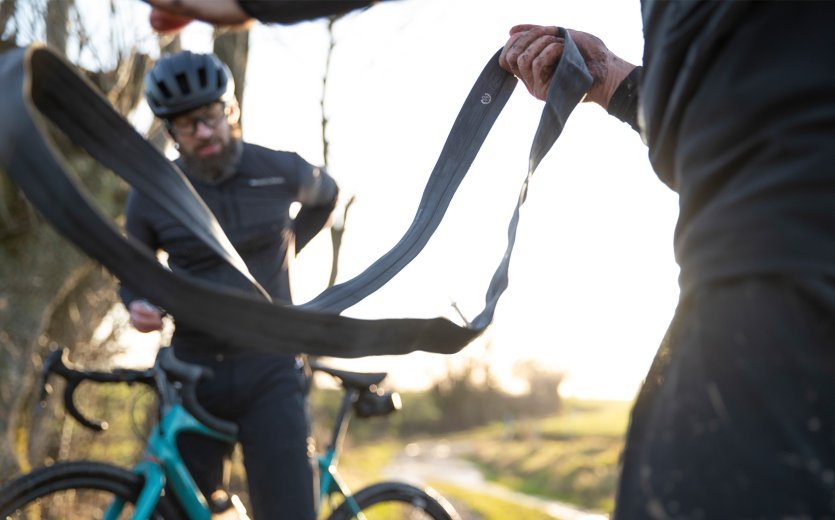
Got a flat? An inner tube can help you get back on your bike quickly thanks to easy installation.
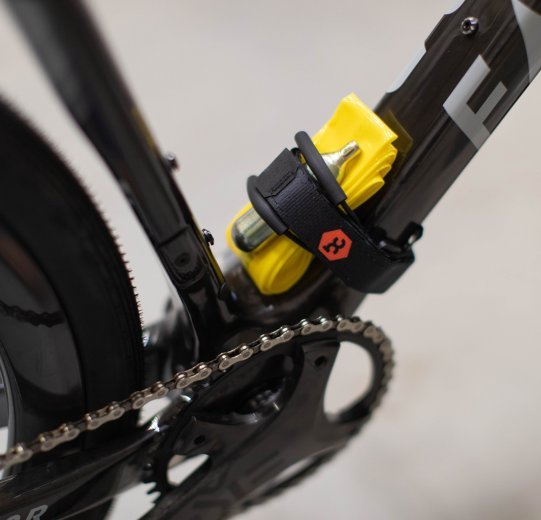
An optimal solution for on the go: bicycle tubes made of thermoplastics.
Looking for a quick answer on which system is best for you? No problem: if you
In the sections below, we explain in more detail why each system suits which purpose.
Inner tubes act as the air container inside the tyre and were, for a long time, the standard on all bikes. Compared to tubeless systems, they're simpler to handle and maintain, since they're quick and easy to fit or swap out. Modern materials also offer improved rolling properties and better puncture protection.
Whatever bike you ride, one thing you always need to get right is the correct tube size: it should match your wheel diameter and tyre width. Some tubes offer a bit of flexibility here, with variants that work for both 27.5" and 29" tyres – these are also ideal as a spare tube for a mullet setup (a bike with a smaller rear wheel than front). In our shop, you'll find filters for tyre size and width.
When it comes to the valve, make sure it's compatible with your pump and that its diameter fits the hole in your rims. On performance bikes, the Presta valve is common – also known as the Sclaverand, racing, or French valve. Most rims are drilled with a matching 6.5-millimeter hole. Especially on road bikes, you should also pay attention to valve length: high-profile rims need longer valves, or alternatively valve extenders. Schrader valves (also called car valves) and Dunlop valves are nowadays found more on budget bikes. They need a larger rim hole, 8.5 millimeters in diameter. New since 2024 is the Clik Valve introduced by Schwalbe. Like the Presta valve, it fits a 6.5-millimeter hole and is especially easy to use. In our article on valve types, you can learn more about the different bicycle valves.
Most bicycle tubes are made from butyl rubber – butyl for short. The material has proven itself over a long time and can be used universally. Butyl tubes are affordable and hold air reliably over long periods. That makes them a good fit for bikes that sit unused for a while between rides, or for commuters who'd rather spend as little time as possible on maintenance. Most manufacturers offer them in different weight classes, varying the material thickness. Tubes made from thicker material are cheaper and more robust, offering a bit more protection against pinch flats and punctures. Tubes made from thinner material are lighter and therefore especially useful for sporty riding, since less material also means less rolling resistance. In case of a flat, you can easily repair butyl tubes with self-adhesive patches, or reach for the tried-and-tested patch kit with rubber patches and vulcanizing solution. If sustainability matters to you, you'll be interested to know that butyl tubes can be recycled. Tubes from Schwalbe have for some time now contained a share of recycled old tubes. The market for butyl tubes is dominated by the major tyre manufacturers.
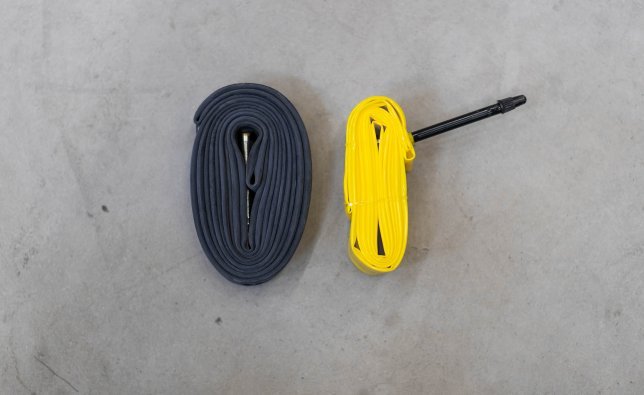
A relatively new arrival on the market is tubes made from thermoplastic materials. In product names and in our shop's filters, you'll recognize them by the abbreviations TPE (thermoplastic elastomer), TPU (thermoplastic polyurethane), or simply "special plastic". They are extremely light – even lighter than latex tubes – hold air permanently, and roll better than butyl tubes. Manufacturers also promise puncture protection that can rival tubeless systems. In case of a flat, you can repair tubes made from thermoplastic materials with self-adhesive patches; we recommend following the specific tube manufacturer's instructions on which patches are suitable and what to watch out for. Compared to tubeless systems, they need less "topping up" of air, just like butyl tubes, which makes them ideal for sporty riders who are happy to trade the last few percent of performance for simple handling. Last but not least, thanks to their minimal packed size and weight, they're excellent as a spare tube wherever space is tight and performance counts.
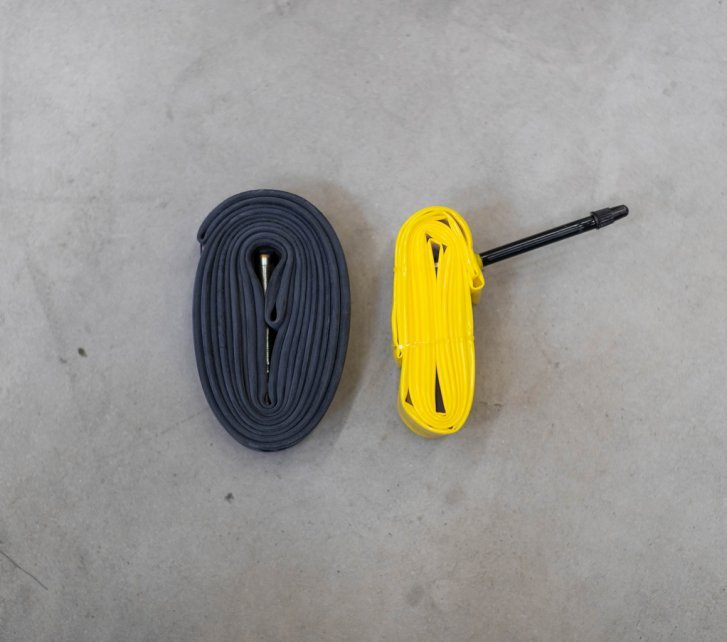
Compared to butyl tubes, TPU tubes have a significantly smaller pack size and less weight. © bc GmbH
Latex tubes were popular with ambitious cyclists for a long time. They're lighter and more supple than butyl and offer very low rolling resistance. Today, though, they play more of a niche role, since tubes made from thermoplastic materials are easier to handle and pack down significantly smaller. When fitting latex tubes, you should be a bit more careful, since the material is delicate and shouldn't get pinched between tyre and rim, or caught by a tyre lever. Since latex doesn't hold air as long as butyl, it's a good idea to check your tyre pressure more often and top it up as needed. Small holes can be repaired with an ordinary patch kit.
With tubeless systems, you mount the tyre directly onto the rim. By leaving out the tube, tubeless tyres roll faster and more smoothly. The system is also fundamentally more puncture-resistant – especially at low tyre pressures. On gravel and mountain bikes, tubeless has largely become the standard. On road bikes, the demands on tyres and rims are different due to the high pressures involved, but more and more riders are switching over here too.
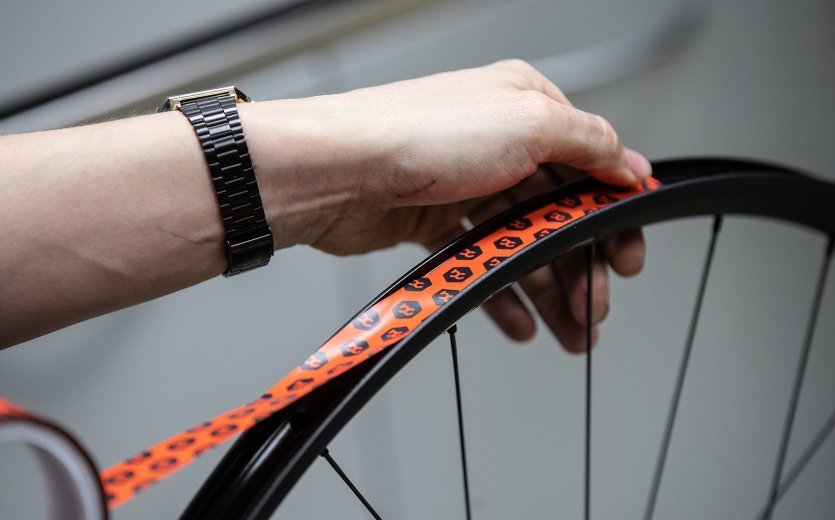
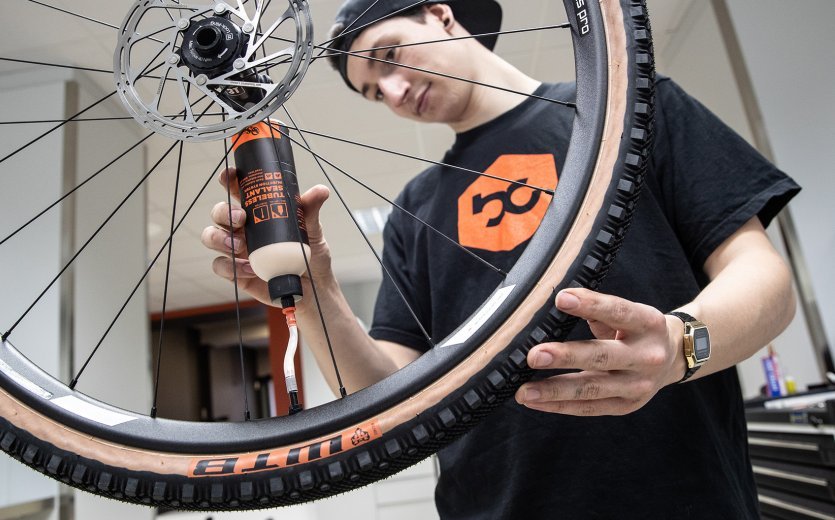
Tubeless-specific tyres and rims fit together so precisely that they form an airtight chamber, meaning no tube is needed. To seal the spoke holes in the rim airtight, you first stick in a special rim tape. You screw the tubeless valve directly into the rim's valve hole. Many combinations of high-quality tyres and rims already hold air this way on their own, but the system is only truly complete with tyre sealant – often called simply "sealant" or "milk". You fill this liquid into the tyre either before mounting it or afterwards through the valve. It not only keeps the tyre permanently airtight on the rim – it also seals smaller tyre damage. Punctures from thorns, for example, become a thing of the past this way. The sealant should be topped up every few months, since it dries out over time. How long you can ride on one fill depends on the manufacturer.
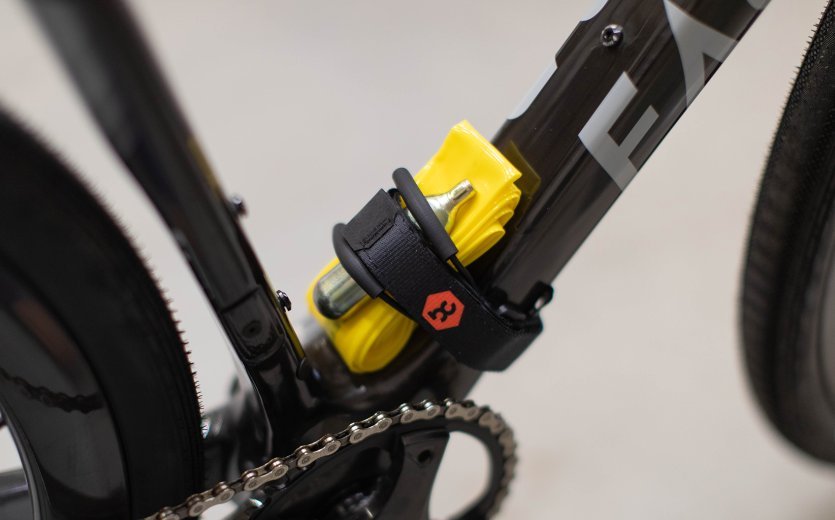
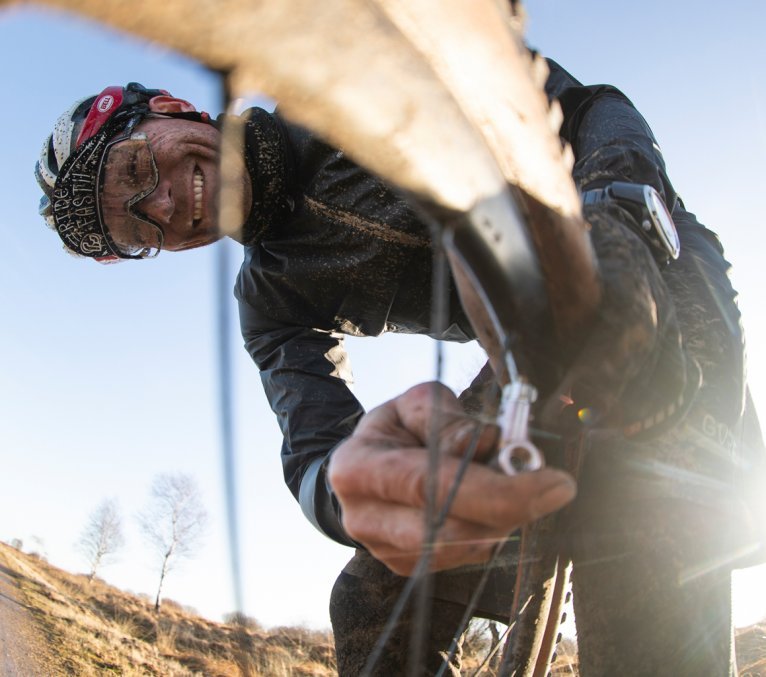
Tyre damage that the sealant alone can't close can be plugged with special repair kits. To do this, the wheel can stay in the bike and the tyre can stay on the rim. In case a flat can't be plugged after all, we recommend always carrying a spare tube as a backup even with tubeless – for example, a tiny TPU tube.
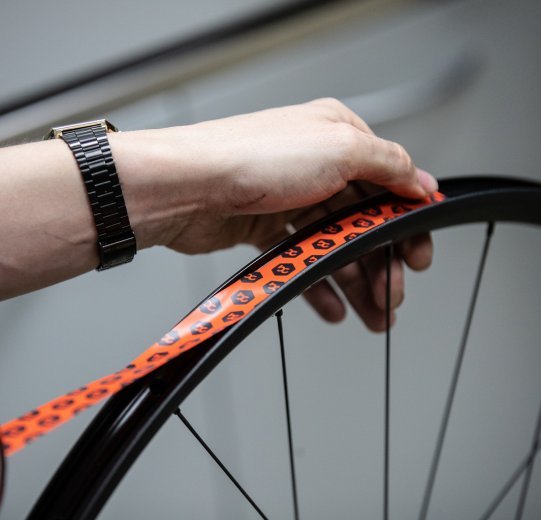
Tubeless rim tape is required for airtight mounting of tubeless tyres.
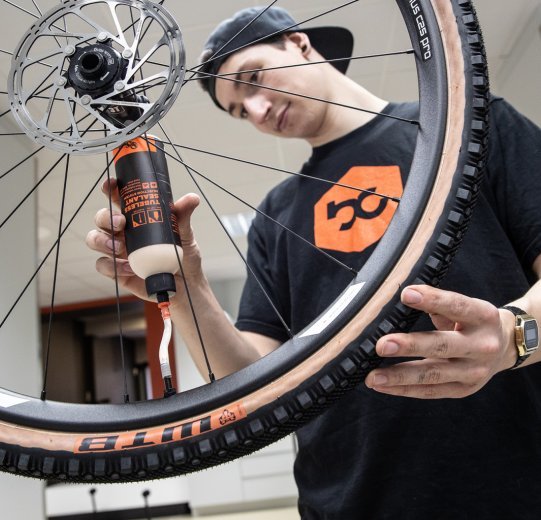
The system is sealed airtight with the help of a special tyre sealant.
Tubular tyres – also known simply as "tubulars" – are self-contained, airtight tyres. To run tubulars, you need wheels with special rims, onto which the tyres are glued using tubular cement, glue, or tape. The valve is built permanently into the tyre. This means the tyre-and-rim combination can be built very light. Tubular tyres roll fast and smoothly. They're common among cyclocross and road-racing pros, but ambitious recreational riders can benefit from their advantages too. In case of a flat, you can try to help yourself with tubeless sealant before the tyre needs to be replaced. However, fitting and repairing tubulars isn't trivial.
|
| Butyl | Thermoplastic materials | Latex | Tubeless | Tubular tyres |
| Installation | +++ | +++ | +++ | + | - |
| System airtightness | +++ | ++ | + | +/- | +++ |
| Puncture resistance | ++ | +++ | ++ | +++ | +++ |
| Repairability | +++ | + | +++ | ++ | - |
| Rolling resistance | - | ++ | ++ | +++ | +++ |
| Weight | - | +++ | + | +++ | +++ |
| Use case | Commuter Touring cyclists Trekking Occasional riders | Road bike | Road bike | MTB Gravel Road bike | Road bike (Performance) |
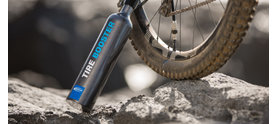
Good tyre levers can be a great help when fitting tyres with tubes, or tubeless tyres. Alongside a floor pump, we recommend a standalone or pump-integrated booster to make inflating tubeless tyres easy. Air pressure has a huge influence on how your bike handles. It's worth experimenting a bit here, within the manufacturer's recommendations. A precise pressure gauge helps you reproduce the right values reliably every time.
That depends on how you use your bike. Off-road and at low pressures, tubeless offers more grip and puncture protection, but is more involved to set up and maintain. A tube system is simpler and cheaper. If you use a light (but pricier) plastic tube, you can score with the lowest overall system weight. In short: tubeless is definitely preferable off-road and can make sense for ambitious road riding too. A tube suits you if you're after a simple, low-maintenance system.
Tubeless is more demanding to set up, and the sealant needs to be topped up regularly, since it gets used up sealing small holes or dries out over time. Larger cuts that the sealant can't close are more of a hassle to fix on the road – sometimes only fitting a tube will get you home.
A tubeless setup saves less weight than you might think: yes, you save the tube, but you have to factor in sealant, valves, rim tape, and the sometimes heavier tubeless-ready tyres. Altogether, a tubeless system is often a bit heavier than a setup with a lightweight TPU tube.
The sealant dries out over time and loses its sealing effect. Depending on the sealant used, temperature, how airtight your tyre-and-rim system is, and how you use your bike, you should top up sealant roughly every two to six months. A simple check: shake the tyre. If you no longer hear any liquid, it's time to top up.
Tubeless is worthwhile above all for MTB, gravel, and ambitious road cyclists who want low pressure, grip, and puncture protection. For a classic everyday or touring bike, and for anyone who prefers an uncomplicated system, a tube is usually the better choice. A lightweight TPU tube suits anyone who wants to combine good performance with simple handling.
Butyl is the robust, affordable standard – it holds air well but is the heaviest. Latex rolls the easiest and is very supple, but loses air quickly and is delicate. TPU or TPE tubes are extremely light, pack down small, and hold air very well. Depending on the model, their rolling resistance comes close to tubeless levels. Just keep in mind they need special patches!
TPU tubes are significantly lighter than butyl and offer lower rolling resistance. Depending on the model, this brings them very close to a tubeless setup. In exchange, TPU tubes are noticeably more expensive, more heat-sensitive, and can only be patched with special patches. As a lightweight spare tube, or for ambitious riders who want to optimise weight and rolling resistance, they're an excellent choice. For everyday use, butyl remains the solid, uncomplicated, and affordable solution.
The Clik Valve is a new valve system from Schwalbe that makes inflating easier: the pump head clicks into place without a lever or screw thread, airflow is improved, and the system seals reliably while pumping.
On smooth asphalt, the difference is small: tubeless rolls about as easily as a tyre with a TPU tube. The noticeable advantage really shows up off-road. There, you can run tubeless at lower pressure, which brings more grip and comfort while reducing rolling losses caused by rough terrain.
In brief: first check whether your rim and tyre are tubeless-ready, and fit a tubeless-compatible rim tape if needed! Then insert the tubeless valve, mount the tyre, and give it a strong blast of air (compressor or tubeless booster) so it seats properly! Finally, pour the sealant in through the valve, insert the valve core, and inflate the tyre. You'll find a step-by-step guide in our how-to on converting to tubeless.
Spring curve, negative chamber and shim stack – clear so far? If not, our mountain bike suspension glossary has you covered.
Which thru axle is the right one for your hub? We give you an overview of the common dimensions of hubs and axles on MTB, road bike and gravel bike.

Perhaps you’re familiar with the basics, but do you want to learn more about the physics behind a wheel? Allow us to give you an in-depth explanation.

Is it worth building a custom wheelset for a road bike when there are so many good system wheels available? Absolutely! Read on to learn more.
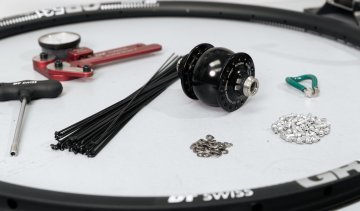
A hub dynamo provides power for lights and charging smartphones and GPS on the bike. We’ll show you what to look out for when building a dynamo wheel.
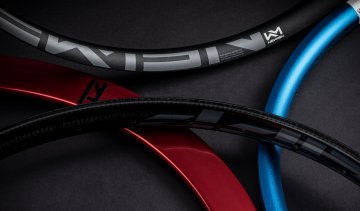
Looking for a new rim for your bike? We’ll show you what to look for when choosing the right rim for your MTB, road bike or gravel bike.
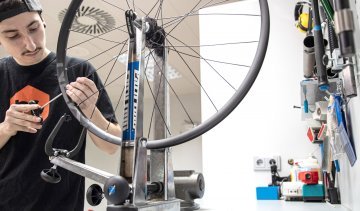
The question: system wheelset or build your own wheel? We explain the basics for picking out rims, spokes and hubs.
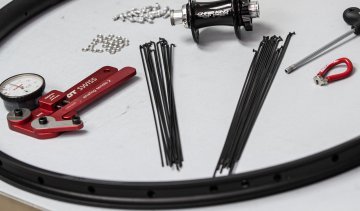
Have you ever thought about building your own MTB wheelset? We’ll give you ten reasons to build your own custom wheelset.
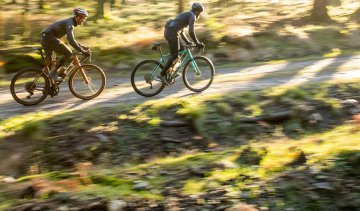
A gravel wheelset has to withstand a lot of hard use. Can't find the right one? Build it yourself! We’ve put together some tips to help you get started.
Send your unused goods back within 100 days after purchase and get your money back!
See more