
The Ultimate Gravel Bike Tyre Guide
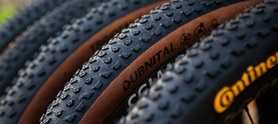
More speed, comfort or grip through tyre tuning? Learn how to find your perfect gravel bike tyre here.
There are some things to consider when buying a sleeping bag. Low weight, comfortable temperature, synthetic fibres or down. An overview of sleeping bags.
Alongside a suitable sleeping pad, the sleeping bag is a key part of your sleep system for a bikepacking trip. In this buying guide, we'll show you how the different fill materials differ from one another, how important weight is, what sleeping bag shapes exist, and what makes the right bikepacking sleeping bag for you.
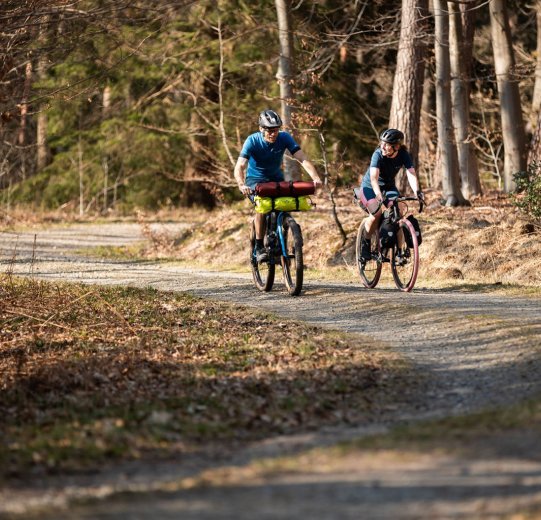
Small, light and yet warm: Have you got high expectations for your bikepacking sleeping bag? So do we!
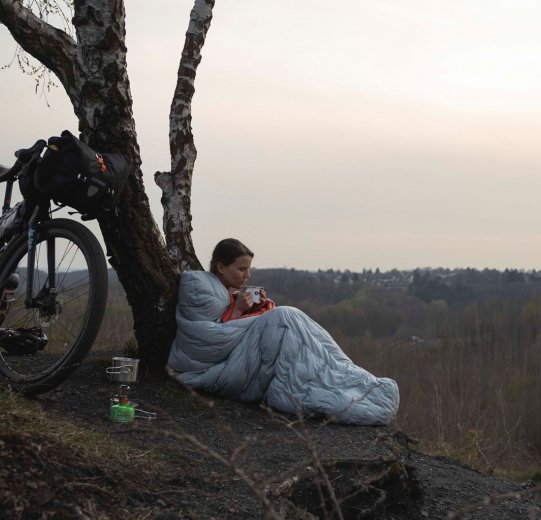
Here you can learn exactly what you need for an ideal bikepacking sleeping bag.
There are sleeping bags for every conceivable use, from van life to high-altitude expeditions. We're focusing on sleeping bags that excel at bikepacking but are also well suited to trekking trips or a camping holiday. So what makes a good bikepacking sleeping bag?
Even with a full bag setup, space is limited when bikepacking – especially if you're planning longer trips in cold and/or wet weather. The smaller your sleeping bag packs down, the more room you'll have for the rest of your gear.
If you still have questions about your bikepacking bag setup, our guide to bikepacking bags can help.
Weight is everything for mountaineers, but in bikepacking it's comparatively less critical. After all, you're not carrying the load on your body here, but on your bike. Still, a lightweight bikepacking sleeping bag pays off, since every gram less on the bike adds to your riding fun. And who knows, maybe you'll want to carry the sleeping bag in a backpack around the world one day too?
An ultralight sleeping bag with a tiny packed size is no use to you if you're constantly freezing. The temperature range absolutely has to match how you'll use it.
Let's face it! Even with waterproof bags, bikepacking can turn into a pretty dirty and wet affair. The less of a fair-weather rider you are, the more attention you should pay to how robust your sleeping bag is – even if that means accepting a bit more packed size and weight.
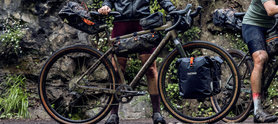
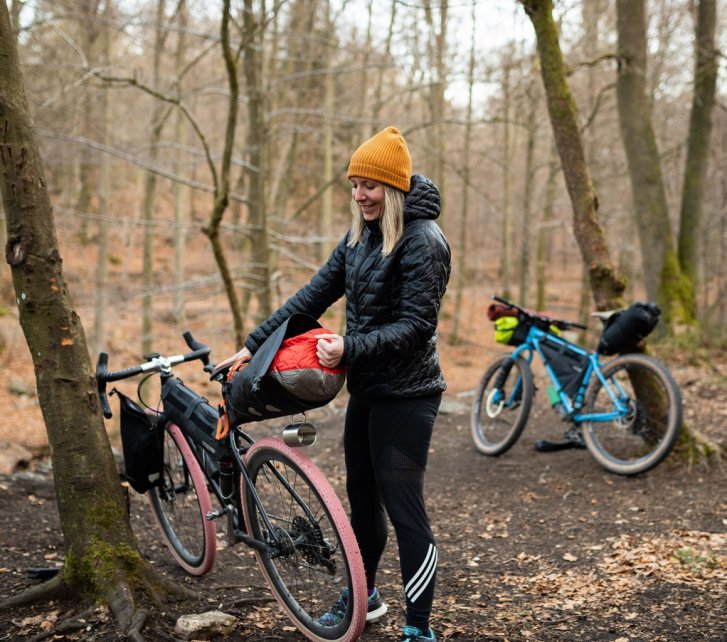
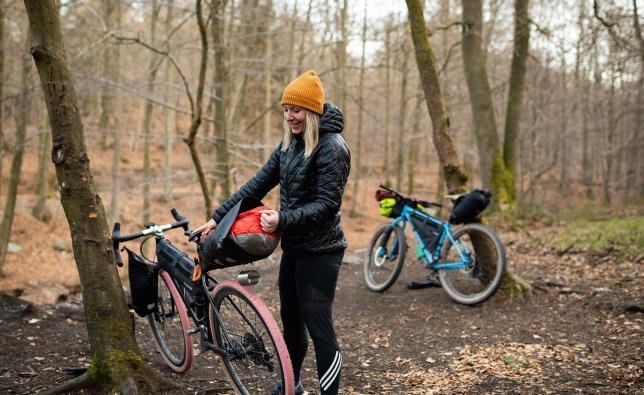
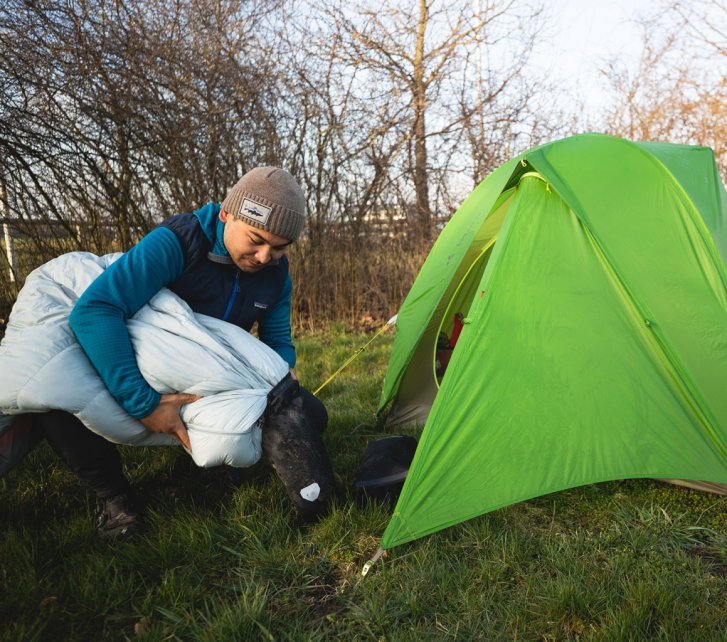
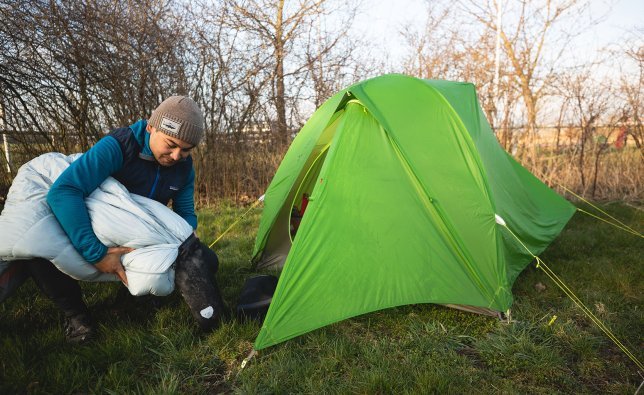
Despite a large bag setup, space for gear is limited when bikepacking. A sleeping bag with a small pack size creates free space for additional luggage. © bc GmbH
There are blanket-style (rectangular) and mummy sleeping bags. For outdoor use, the mummy shape has decisive advantages: by leaving only a small viewing gap when needed and fully enclosing the head, the mummy construction cuts down on the otherwise very high heat loss through the head. For 3-season or winter use, and as an all-rounder, there's really no way around a mummy sleeping bag. For summer gram-counters chasing the lightest possible setup, a blanket-style bag can be a highly specialised alternative.
Sleeping bags are generally filled with either down or synthetic fiber (e.g. Primaloft). Both fill materials essentially have the same job: to insulate. A temperature-stable cushion of air forms between, or within, the fibers. This air cushion insulates your body heat from the cold surrounding it. The bigger and more stable this air cushion is, the better – which is why your sleeping bag insulates least wherever you compress the fill material.
You'll find more information on this in the following sections:
When it comes to the ratio of insulating performance to weight and packed size, this natural fiber can't be beaten. At the same weight and packed size, down sleeping bags are warmer than their synthetic counterparts, or, for the same insulating performance, they pack down smaller and lighter. Robust duck down or even higher-quality goose down is typically used. The warmth of a down sleeping bag depends on the fill weight (in grams) and the fill power of the down (measured in CUIN: cubic inches per ounce). For both figures, the rule is: the higher, the warmer. Another quality marker is the down-to-feather ratio. The higher the down content, the warmer the fill at the same weight. Anything from 90/10 upward (i.e. 90% down, 10% feather) counts as very high quality. Down can absorb an extreme amount of moisture relative to its own weight, which makes for very high sleep comfort, since you don't feel "sweaty". However, beyond a certain moisture level, down clumps together and loses a large part of its insulating ability. Sweat, breath, or condensation alone don't do much harm to a high-quality down fill, but rain is always a problem. Some manufacturers counter this moisture sensitivity with a water-repellent treatment on the down itself, similar to jackets. With a down sleeping bag, we recommend making sure the down comes from animal-welfare-compliant farming, i.e. certified to the so-called Responsible Down Standard (RDS). With proper care, down sleeping bags last almost forever and are even more durable than synthetic-fill ones.
Most synthetic insulations are so-called hollow fibers, modeled on polar bear fur. The insulating volume of air is therefore held within the fiber itself. Synthetic fibers are usually, though not exclusively, processed into batting sheets. A relatively new development is synthetic fibers that are processed loose into baffled chambers, similar to down. Synthetic-fill sleeping bags are very robust, easy to wash, largely unaffected by moisture, and still provide warmth even when wet (which should nonetheless definitely be avoided). Since they contain no animal products, they're also vegan and generally more affordable than down sleeping bags. For temperatures well below freezing, however, synthetic-fill sleeping bags are only suitable to a limited extent: the fill needed would send their packed size shooting up to 20 liters or more, making them too heavy and bulky for a bikepacking adventure.
If you're after minimal packed size and weight, or you're frequently out in sub-zero temperatures, you'll generally want to lean towards down. If you're expecting a lot of moisture, like to go without the protection of a tent, or will be washing your sleeping bag often, take a look at modern synthetic fibers first!
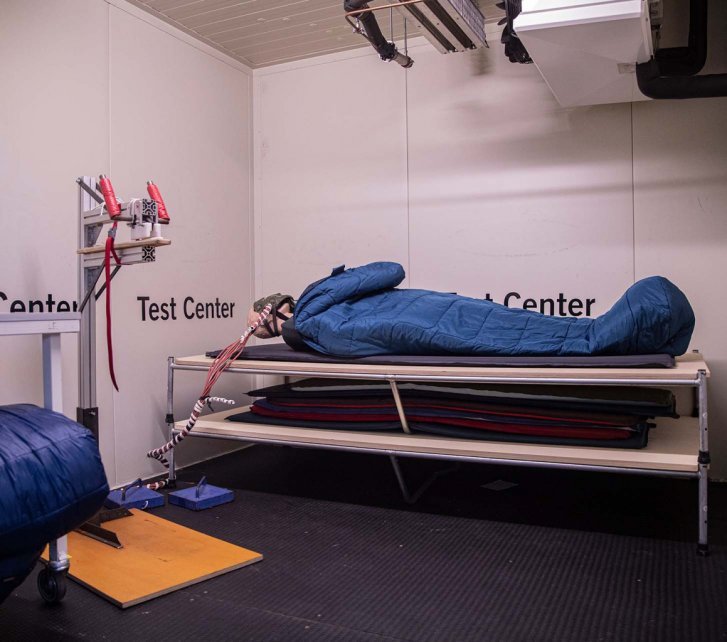
Outdoor sleeping bags are usually given three temperature values (according to EN 13537): comfort temperature, limit temperature, and extreme temperature. To determine these values, standardized manikins – built in size, weight, and body fat to represent an average Central European man or woman – are first warmed to body temperature. Lying in the sleeping bag on a sleeping pad, the heat loss is then measured in a standardized climate chamber. Why all this effort? Because how cold someone feels is entirely subjective and depends, besides the person themselves, on external factors such as fatigue, nutrition, humidity, wind chill, and much more. The measuring method is meant to approximate an average sense of temperature as closely as possible.
Here's how to read the resulting values:
| Comfort temperature: | The temperature at which the "standard woman" (160 cm, 60 kg) is just not yet cold and sleeps comfortably. |
| Limit temperature: | The temperature at which the "standard man" (173 cm, 70 kg) is just not yet cold and sleeps comfortably. |
| Extreme temperature: | The temperature at which the "standard woman" (160 cm, 60 kg) survives in the sleeping bag for at least six hours. Localized frostbite is possible. |
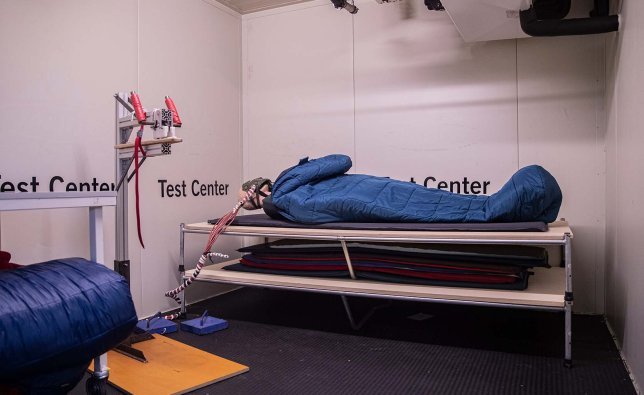
Comfort, limit and extreme temperatures of a sleeping bag are determined under controlled conditions, like those here at VAUDE's in-house test centre. © bc GmbH
For your sleeping bag buying decision, only the comfort temperature and the limit value really matter. If you tend to feel the cold, always go by the comfort value! If you're less sensitive to cold, look towards the limit temperature! The extreme value only matters for expeditions and alpinism, where the sleeping bag can literally determine survival until rescuers possibly arrive. Otherwise, it's only good for bar talk.
You typically reach the comfort temperature with the hood closed and the draft collar done up. Sleeping bags with a comfort range around or above roughly 10 °C are also called summer sleeping bags; those with a comfort range between 0 and 10 °C are called 3-season sleeping bags; and thick bags with comfort temperatures well into the negatives are winter sleeping bags.
Assess your sleeping bag use realistically, and don't buy a bag that's far too thick and warm out of a misplaced sense of security! That costs you not only money, packed size, and weight, but also sleep comfort, through heavy sweating. It's best to base your choice on your typical use and factor in a bit of a buffer! If it does get a little colder than expected, there are ways to "tune" your sleeping bag a bit further. More on that in the chapter:
In the standardized measuring procedure just described, close-fitting sleeping bags have an advantage: the test manikin has less air to keep warm inside the bag. But you differ from the test manikin in a few key respects – one of them being that you move around while you sleep. If your sleeping bag is cut so tight that you're constantly compressing its fill with your arms and legs, you'll lose insulation and your sleep comfort will suffer. So generally give yourself a bit of room in the sleeping bag. One exception is sleeping bags with stretch seams: they move with you as you sleep and allow for a tight, weight- and warmth-optimised cut – though in terms of packed size, they can't quite keep up with their siblings that use conventional seams.
Your sleeping bag should also be a few centimetres longer than your height. This stops you compressing the foot box, which gets punished with cold feet. If you sleep with your limbs strongly bent, or move around a lot at night, give yourself a bit of extra room in the sleeping bag! If you're a back sleeper who doesn't move much, you can save on packed size and weight with a tighter cut.
A slightly longer, roomier sleeping bag gives you the space to take things into the warm bag with you. How about a water bottle filled with hot water as a makeshift hot-water bottle, tomorrow's clothes, or a power bank that performs better at body temperature than in the frost?
The best sleeping bag in the world is worthless without a good sleeping pad. Together, the two are also called a sleep system. Wherever you flatten the sleeping bag's insulation under your body weight, it can't keep you warm. So even with a -40 °C expedition sleeping bag, you'll still get cold lying directly on bare ground on a cool summer night. A pad's insulating performance is given as its so-called R-value. The higher it is, the better the insulation and the warmer you'll sleep. You can read about how to find the right sleeping pad for bikepacking here.
Tip: with a slightly warmer sleeping pad, you can often still sleep comfortably even in a sleeping bag that's a touch too "cold" for the conditions.
If you'd like to complete your bikepacking setup, our guide to bikepacking tents has helpful tips for choosing the right tent.
With proper handling, a sleeping bag is an extremely robust piece of gear that will stay with you for a long time. There are a few things you should definitely keep in mind, though. With a few extra tricks, you can also squeeze a few extra degrees out of its comfort range.
With simple tips and tricks you can easily extend the life of your sleeping bag. There gives you an extra dose of comfort. © bc GmbH
In bikepacking, three things matter in particular: low weight, small packed size, and a temperature range that matches your travel dates. In practice, that usually means a mummy sleeping bag with down or high-quality synthetic fill. As a rule of thumb for 3-season trips in Central Europe, a comfort temperature of around 0 to 5 °C works well; in high summer, a light summer sleeping bag is enough. It's also important to choose a high-quality, well-matched sleeping pad.
Sleeping bags are rated with three values under the EN ISO 23537 standard. The comfort temperature is the temperature at which an average woman is just not yet cold and can sleep well. If you tend to feel the cold, you should definitely stick to the comfort range. If you're not very cold-sensitive, you can go by the limit temperature. The extreme temperature is a pure survival figure and isn't relevant for planning a bikepacking trip.
On warm midsummer nights, a light summer sleeping bag with a comfort temperature of 15 degrees is usually enough. For cooler summer nights or classic 3-season use from spring to autumn, you should choose a sleeping bag with a comfort range of roughly 0 to 7 °C; for cold nights or higher altitudes, go below 0 °C. It's better to plan in a bit of a buffer, since being cold is usually more unpleasant than a few extra grams of luggage. A liner and the right sleeping pad add extra warmth on top.
Both materials have their place. Down offers the best warmth-to-weight ratio and the smallest packed size, is long-lasting, but more expensive and loses its warmth when wet. Down sleeping bags need to be kept as dry as possible and should never be stored compressed long-term. Synthetic fiber is cheaper, still keeps you warm when damp, dries quickly, and is easier to care for. Synthetic-fill sleeping bags, however, are heavier and bulkier. For ambitious, weight-conscious bikepacking, down is usually the first choice; if you're often out in wet conditions or keeping an eye on your budget, synthetic fiber serves you well.
Modern synthetic fills ("synthetic down") have become significantly better and come closer to real down. However, for the same warmth rating, they don't quite match the low weight and small packed size of a down sleeping bag. The big advantage of synthetic down is that it still insulates even when it gets damp, and it also dries faster. For consistently dry conditions and minimal luggage, real down remains ahead. Synthetic fiber scores points on moisture resistance, easy care, and price.
For bikepacking, a mummy sleeping bag is almost always the better choice: it's cut close to the body, so it insulates more efficiently, and packs down lighter and smaller. A blanket-style bag offers more freedom of movement and can often be fully unzipped, but is heavier and bulkier. It's better suited to car camping. If you don't like the snugness of a mummy bag, a quilt (blanket-like, open underneath) is an ultralight middle ground.
As a rough guide: a good 3-season down sleeping bag often weighs under one kilogram and can be compressed to about the size of a small melon; ultralight models come in even smaller. Synthetic fiber weighs a bit more for the same warmth and has a larger packed size. What matters most is that it fits into your bikepacking bag.
The most common reason is cold coming from below: without a well-insulating sleeping pad (high R-value), even the best sleeping bag won't help much. More tips: eat something before going to sleep (your body needs fuel to generate heat), wear a hat, put on dry clothing, use a liner, and don't climb into the sleeping bag with a cold body – warming up briefly beforehand helps. A hot water bottle (e.g. your water bottle filled with warm water) also works wonders.
The common advice that "you sleep warmest naked" is a myth when stated that broadly. What's true is this: thick clothing inside a sleeping bag compresses the fill from the inside and weakens exactly the insulating layer of air that keeps you warm. Ideal is dry (!) thin base layers (e.g. merino), together with dry socks and a hat – sweaty clothing will cool you down.
On tour, you should air out your sleeping bag well in the morning so the moisture from your body can escape. At home, never store your sleeping bag permanently in its compression sack – instead, keep it loosely in a large storage bag. Wash your sleeping bag as often as necessary and as rarely as possible. For a down sleeping bag, you need a special down detergent, and after some air-drying it should be tumble dried with a few tennis balls so the down lofts back up. Synthetic fiber should likewise be gently washed with a special synthetic-fiber detergent and then dried. This keeps your sleeping bag warm for years to come.
Hydrophobically treated down absorbs moisture more slowly and keeps its
fill power for longer. That's a real advantage on bike trips with rain or dampness in the tent. However, it doesn't eliminate down's biggest weakness: once it gets truly wet, even hydrophobic down barely insulates anymore. In consistently damp conditions, synthetic fiber remains the better choice. For most 3-season trips, hydrophobic down is a good compromise between low weight and somewhat better moisture resistance.
More speed, comfort or grip through tyre tuning? Learn how to find your perfect gravel bike tyre here.
A light and compact camping mat is indispensable for bikepacking. An overview of common technologies and tips on what you need for tours.
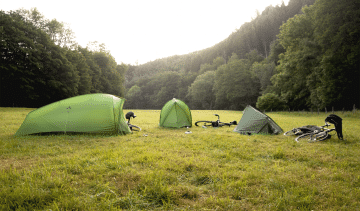
With a tent, you take your home with you on every bikepacking trip. Small packed size, low weight? What really matters when choosing a tent for cycle tours
Gearing for gravel bikes needs to meet specific demands. By now, there's a wide selection of gravel gearings on the market. Here's an overview for you.
Being respectful of nature is a quintessential aspect of bikepacking. Here’s the code of conduct every adventurer and nature lover should abide by.
What could be better than sharing your love of bikepacking with your own children? And what is the best way to do that? A talk with Gunnar Fehlau.
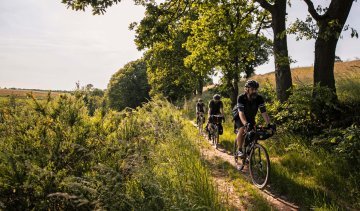
Get on your bike and go! With the right bag setup, nothing stands in the way of a bikepacking adventure. Here’s what you need to know.
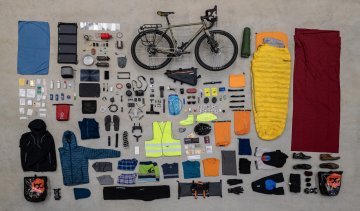
Whether a one-week bicycle tour through France or an extended adventure through South America lasting several months, the question is: What do I pack?
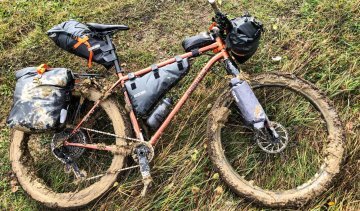
Looking for a bike bag for long bikepacking tours that really put you to the test? Then you’re going to love the Ortlieb Gravel-Pack.
Send your unused goods back within 100 days after purchase and get your money back!
See more