
The Ultimate Gravel Bike Tyre Guide
More speed, comfort or grip through tyre tuning? Learn how to find your perfect gravel bike tyre here.
With a tent, you take your home with you on every bikepacking trip. Small packed size, low weight? What really matters when choosing a tent for cycle tours
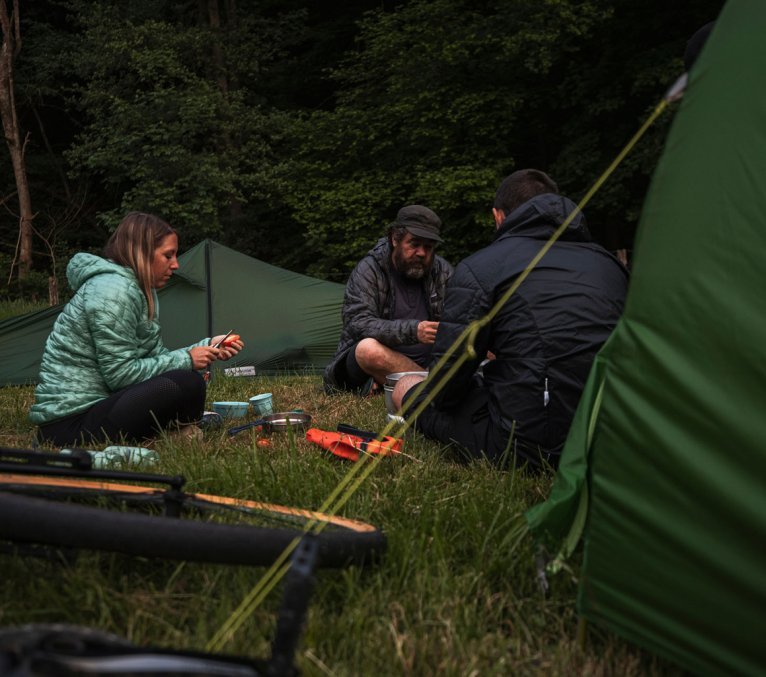
Tents are the pinnacle of sleep systems. With the right tent, you always have your home with you, whether you're on a bikepacking trip or a cycle tour. Tents excel at protecting you from rain, storms or sand, and offer privacy, protection from midges, and excellent sleep comfort. Our buying guide shows you what to look for so you find the right tent for your tour.
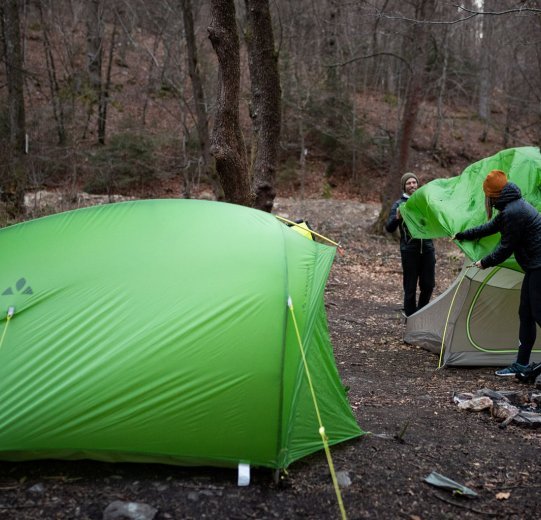
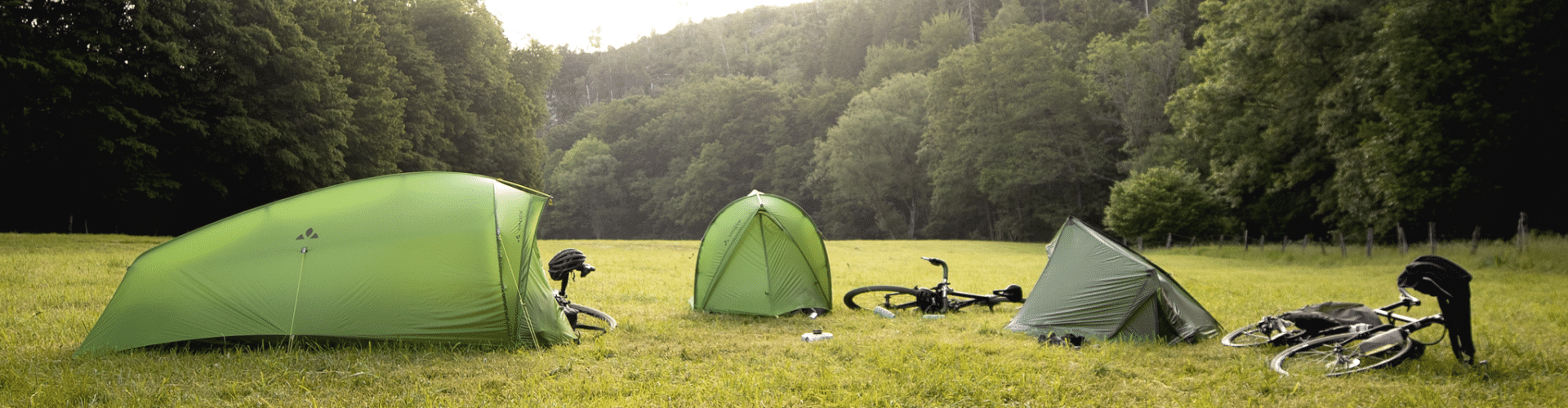
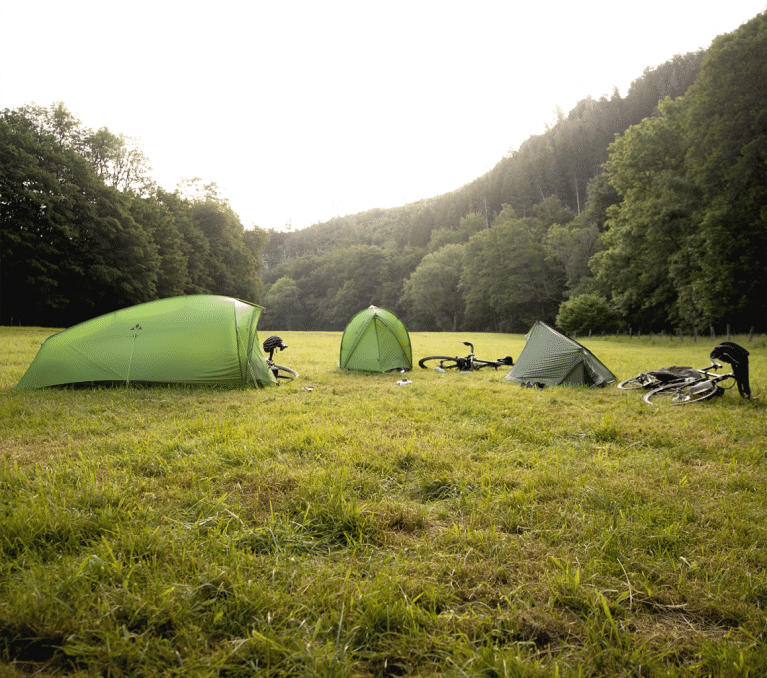
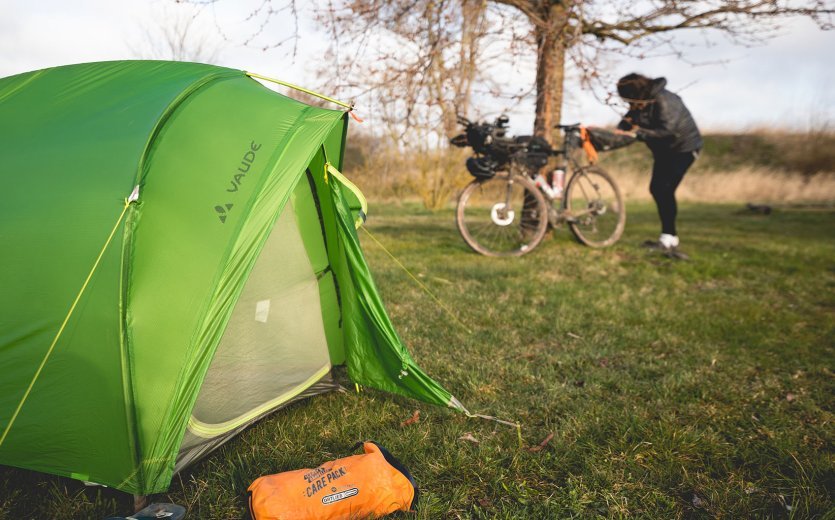
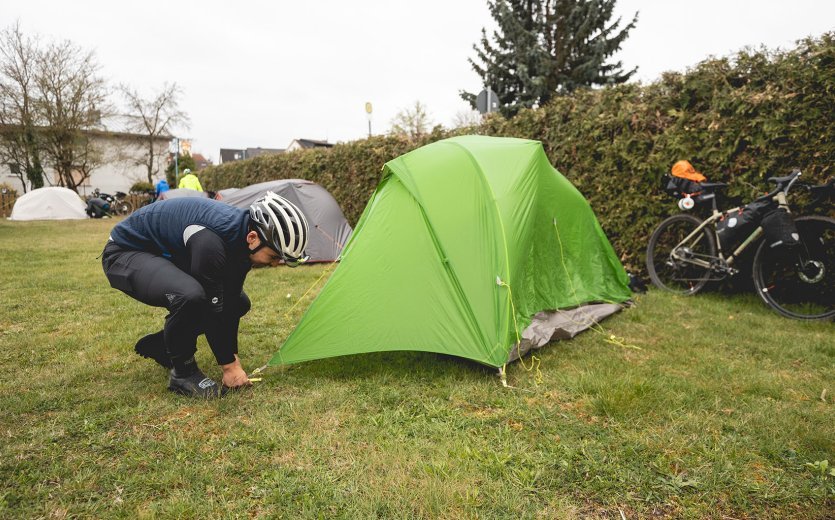
Quick to set up and sturdy: tents are your home away from home.
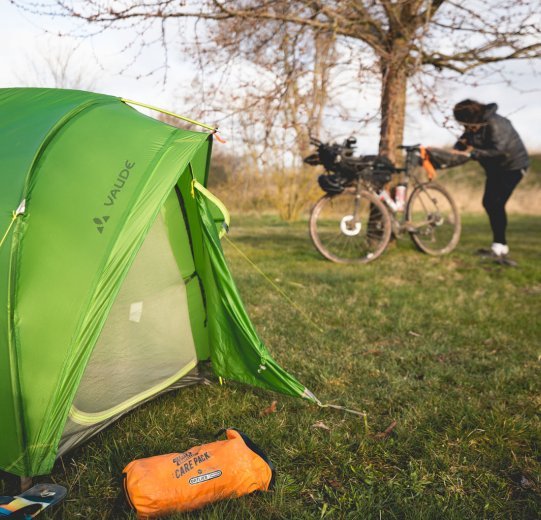
Find out what's important when choosing a tent for your bikepacking trip here.
From music festivals to Arctic expeditions, there's a tent for every conceivable use. On a bikepacking trip or cycle tour, though, a tent needs to meet different requirements than at a festival or the South Pole. We show you what to look for so your tent works brilliantly for your cycling adventure – while still offering enough all-round usefulness for hikes or trekking trips.
Even with a large bag setup, space is limited when bikepacking – especially if you're planning longer trips in cold or wet weather. The smaller your tent packs down, the more flexibility you'll have with the rest of your gear. Tents that pack down small also have big advantages when it comes to mounting them on the bike. If needed, a tent like this will even fit between the drops of a road bike or gravel bike handlebar.
If you're not sure which bag setup works best for you, take a look at our guide to bikepacking bags.
A winter-ready, geodesic expedition tent for three or more people, built to withstand alpine gales, can easily weigh more than five kilograms – weight that can negatively affect how your bike handles. So, when a tent ticks all your other boxes, make sure to check its weight too. If you're travelling through tough terrain or chasing a Fastest Known Time in particular, there's no getting around a minimalist ultralight tent. For a one-person tent, aim for around or even under one kilogram to count it as a lightweight tent.
If you're after adventure, your gear needs to keep up. The more often you head out into the wilderness, the more you should look for robust, sturdy materials – even at the expense of weight, if need be.
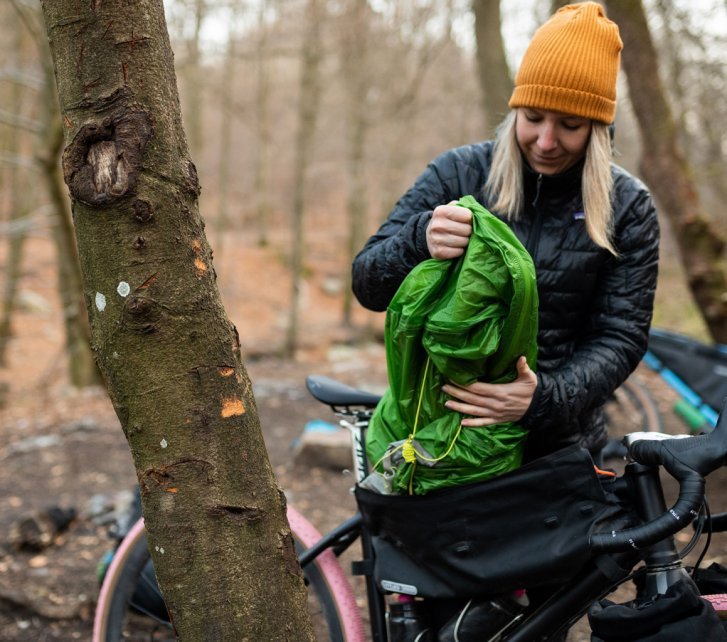
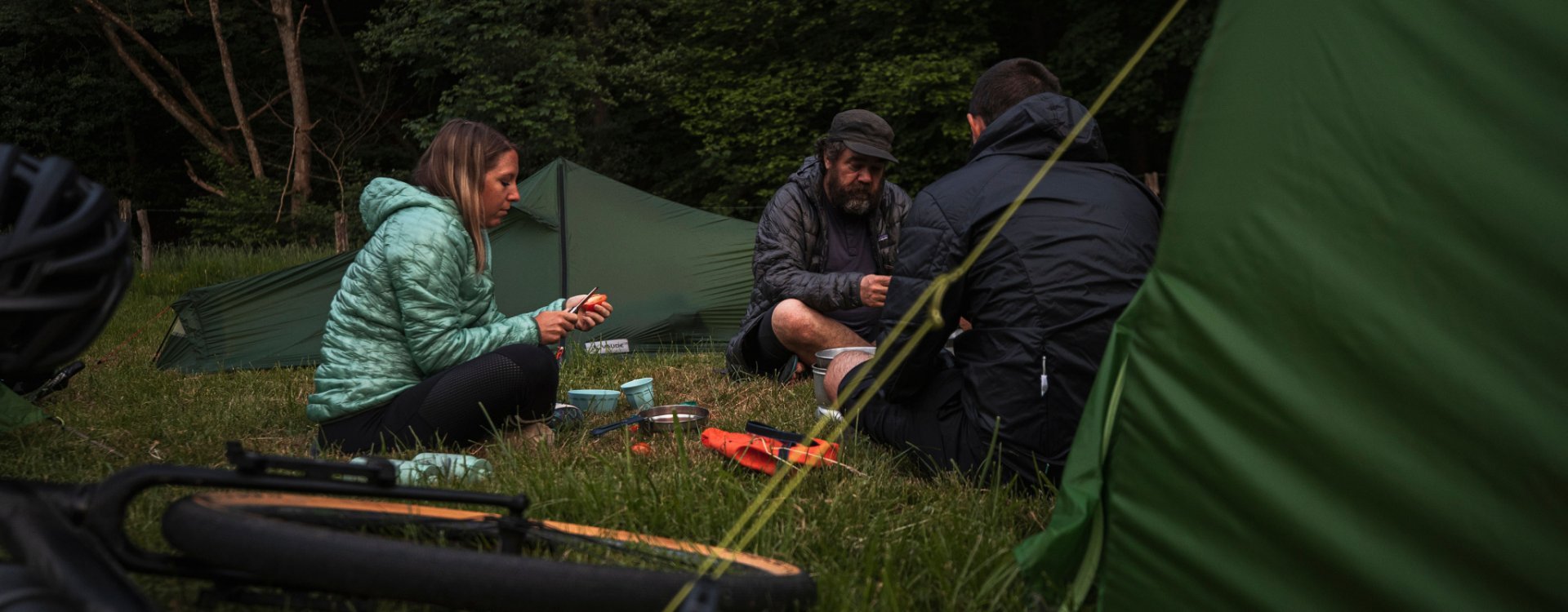
Tents with a small pack size are easy to stow. You can use the extra space for other things, or you can spare an additional bag on your bike. © bc GmbH
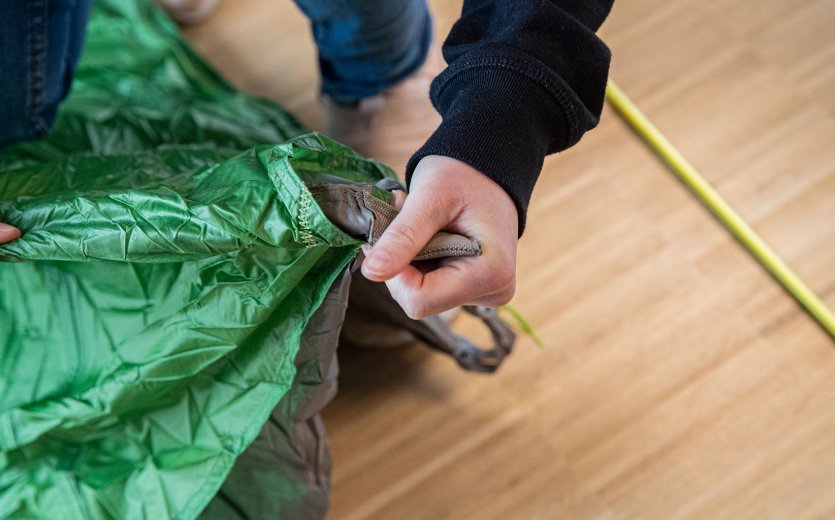
There are basically three fundamental tent construction types, each with specific pros and cons – hybrids are also possible. Not all of these are suited to bikepacking, but we mention them for the sake of completeness. However, (almost) all tents have one thing in common: they're double-walled. The flysheet is waterproof and protects you from rain, wind and snow. Underneath sits an inner tent made from thin, breathable mesh, which protects you from midges and insects. Among other things, this double-walled construction means that moisture inside the tent – your breath, sweat, or ambient or ground moisture (for example, if you're camping near water) – condenses on the flysheet first, keeping your inner tent nice and dry.
Alongside the main living space, many tents also have a porch area for gear, known as a vestibule – if there's more than one, they're called vestibules. A vestibule has no inner tent and is ideal for things you want to keep dry and secure overnight but don't want to bring into the inner tent, such as your cycling shoes.
In a dome tent, at least two pole arcs cross over the groundsheet, forming a dome shape. Dome tents usually need a relatively small pitch and, thanks to their construction, are self-supporting or even fully freestanding. That means you need fewer pegs or guy points to pitch them securely – or, in extreme cases, you can do without them altogether. That's handy on hard ground, for example, where you can't drive pegs in. Thanks to their near-symmetrical shape, dome tents are more or less equally wind-resistant from every direction. That said, we'd always recommend guying the tent out in windy conditions. On hot summer days, with many dome tents you can leave off the flysheet and pitch just the inner tent as an airy (though no longer waterproof or private) shelter. Otherwise, you pitch the inner tent first, then throw the flysheet over it and secure it. Dome tents also typically excel with a good amount of headroom.
In the "friluftsliv paradise" of Scandinavia, tunnel tents are very popular. Here, the pole arcs stand parallel to one another and don't cross. Tunnel constructions have the edge, above all, in (typically Scandinavian) foul weather, because the inner tent can stay permanently attached inside the flysheet, sheltered from the elements, and pitching is extremely quick and easy. Wind isn't a problem, and the inside stays dry. Tunnel tents often come out ahead on the weight-to-space ratio, too. They're also very wind-resistant – though in a storm, you should always pitch them with the front end facing into the wind. That said, tunnel tents need a larger pitch than their dome-tent siblings and are, fundamentally, not freestanding.
Cross-forms between dome and tunnel tents are also known as hybrids. One example is the "Tripod" layout from outdoor specialist VAUDE, where the two poles don't cross in the centre of the tent. A hybrid is therefore a freestanding tent in which the inner tent can stay attached. Clever.
Mentioned only for completeness: geodesic tents play (almost) no role in bikepacking. Geodesic tents are a variant of the dome tent. In these, at least three pole arcs cross at multiple points, which gives them extremely high storm stability and lets them cope with heavy snow loads. Which brings us straight to where geodesic tents are used: expeditions or extreme winter trips. Unless you're planning to ride a fat bike in the Iditarod Trail Invitational, you can safely ignore these very heavy geodesic tents for bikepacking.
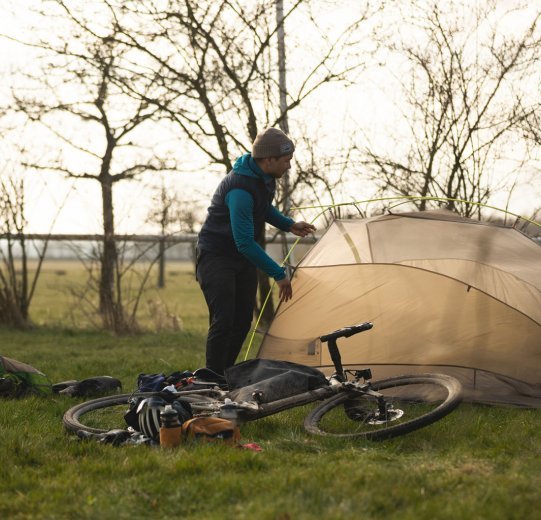
The inner tent is breathable and protects you from insects.
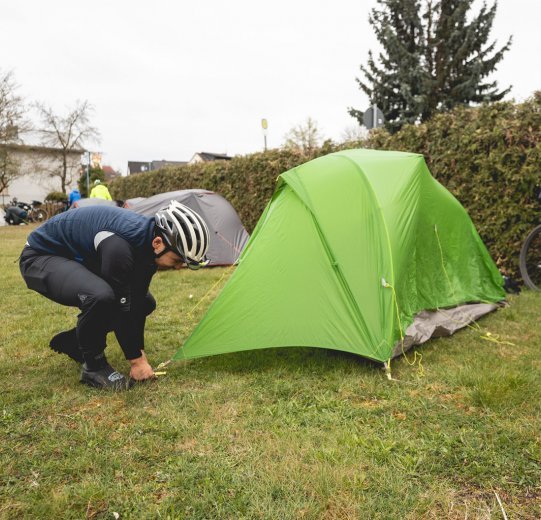
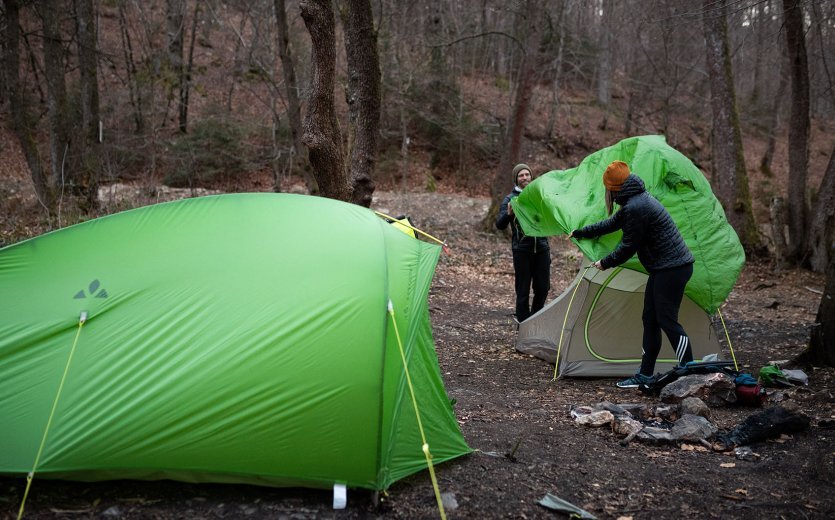
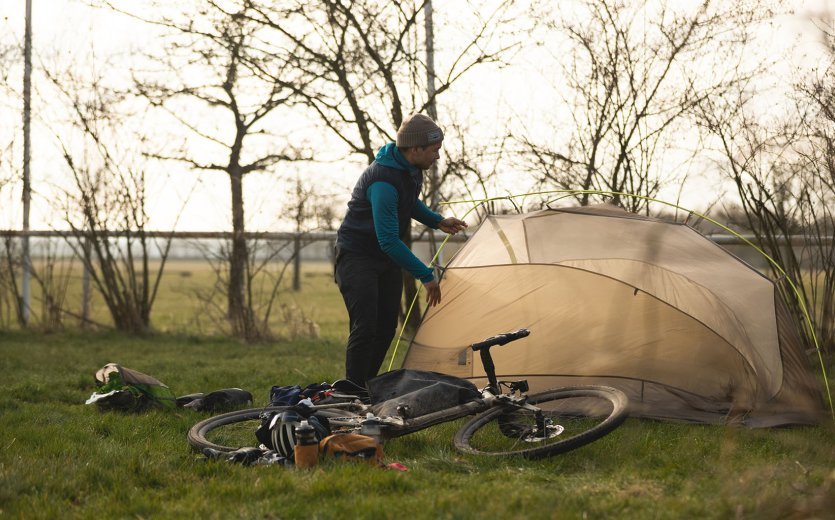
The outer tent protects you from rain and wind. Just a quick unwind: Ready for the night!
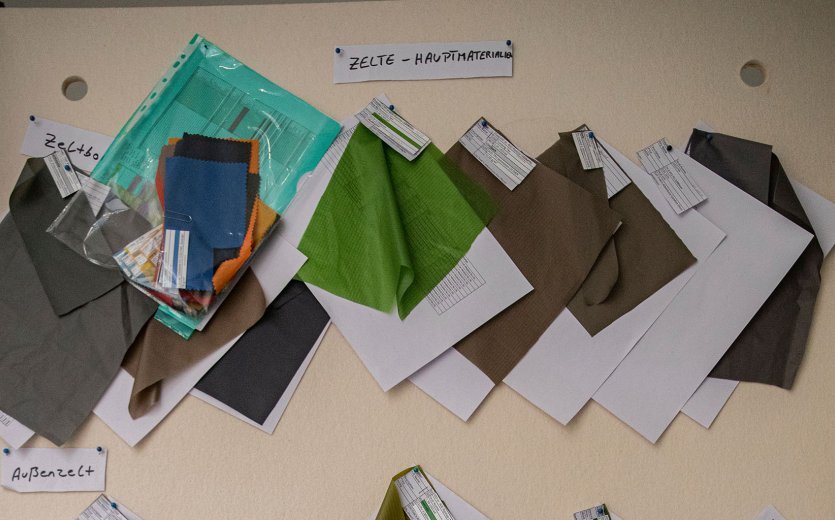
Your tent needs to be waterproof – that much is clear. To achieve this, there are essentially two approaches. First, a waterproof polyurethane (PU) coating. Second, siliconising.
The waterproofness of tent fabrics – just like rainwear – is given as a hydrostatic head in millimetres. The hydrostatic head is a standardised way of measuring pressure, in which water is stacked up over a given area. The figure tells you the column height up to which a material remains waterproof. This test method isn't entirely uncontroversial in the outdoor world, incidentally, since it ignores real-world variables. For tents, two different hydrostatic head figures are usually given. First, the figure for the groundsheet. Because you exert a lot of very concentrated pressure on the material here with your body weight – say, when kneeling on the groundsheet – this figure should be higher than for the flysheet. A hydrostatic head of 5,000 millimetres puts you on the safe side for the groundsheet; for the flysheet, figures around 3,000 millimetres are typical and sufficient, since no concentrated force is pressing water through the material there. More is, of course, always welcome.
Here, a waterproof PU layer is applied to the inside of the flysheet. The seams are sealed – similar to rainwear – with a waterproof tape (seam sealing). PU-coated tent fabrics are reliably waterproof, abrasion-resistant, crease-resistant, and stay dimensionally stable even when wet. They're also easy to process, making them cheaper than siliconised materials. Downsides include lower UV resistance and the resulting faster ageing, the lower tear strength of the polyester base fabric, plus a slightly larger packed size and higher weight.
With silnylon, an especially light, tear-resistant nylon is siliconised on both sides. This produces a very lightweight tent material that's reliably waterproof and comparatively UV- and ageing-resistant. In conventional constructions, the seams are treated with a liquid seam sealant, which you should reapply from time to time. bc supplier VAUDE also uses technologies alongside the tried-and-tested sealing method, in which different layers of silnylon are bonded together with silicone without seams (Siliconized Bonding), or the seams are taped with silicone (Silicone Seam Seal), making them virtually maintenance-free for you. Compared with PU-coated polyester, silnylon offers advantages in weight, longevity, robustness and tear strength, but is more expensive due to its more complex processing.
More and more manufacturers are switching to silicone-coated polyester. Here, a thin polyester fabric is siliconised on both sides. Silpoly is likewise reliably waterproof, absorbs almost no water compared with silnylon, and therefore dries faster. In damp or wet conditions, the material stays dimensionally stable and doesn't need re-tensioning. Polyester is also generally more UV-stable, and therefore more resistant to ageing, than nylon. Downsides include slightly lower tear strength and robustness compared with silnylon, plus a usually higher price. As with other tent materials, the seams here also need to be sealed to prevent water ingress.
DCF is the highest-quality and lightest of the tent materials presented here. Dyneema fibres are 100% waterproof and absorb virtually no water. This means DCF stays completely dimensionally stable even when wet. Besides its very low weight, DCF is also extremely tear-resistant. However, the material doesn't pack down quite as small as nylon or polyester, and it's significantly more expensive. That's why you'll mainly find DCF in especially lightweight premium tents.
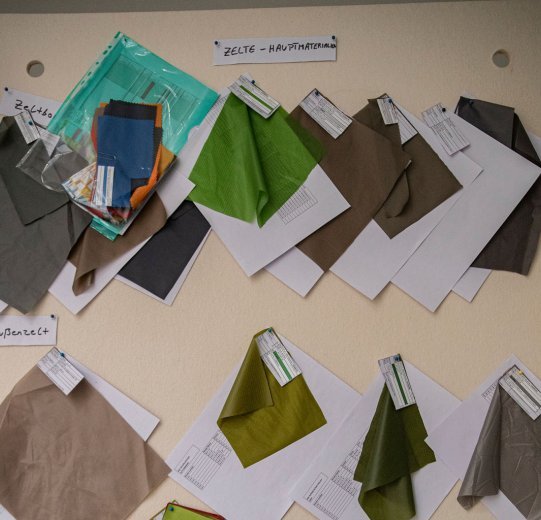
An important factor in the choice of material: waterproof ability.
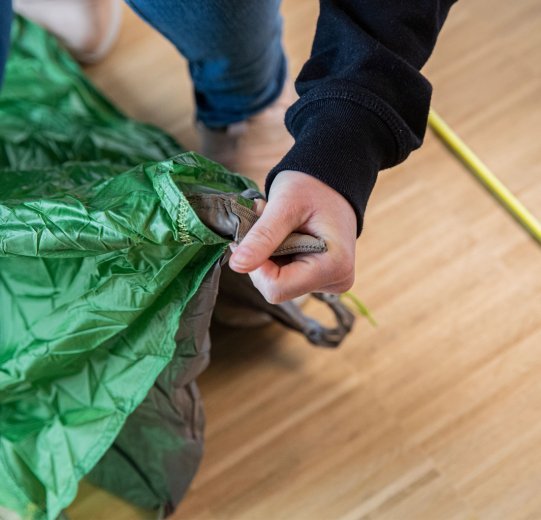
To prevent water from penetrating through the seams, VAUDE uses seams taped with silicone (Silicone Seam Seal).
Tent size is usually given as an estimate of how many people fit inside – so a one-, two-, or three-person tent. More precise, of course, are the figures for inner length, width and height that you'll find in the product descriptions. Alongside your own measurements, the length and width of your sleeping pad and sleeping bag will also help you get your bearings.
A one-person tent will always give you flexibility when travelling solo – and the peace of mind of not lugging around unnecessary weight. A good compromise is a tent that offers (tight) space for two people in a pinch, while serving as a comfortable one-person tent when you're on your own. For bikepacking, tents for a maximum of two people have become the norm, thanks to their compact packed size. Larger tents come into their own if you occasionally have to spend a bad-weather day holed up inside one. You can also split the load between several riders – for example, one person carries the poles in a frame bag while another carries the inner and outer tent in a handlebar roll. Otherwise, three-person or larger tents are usually too big for bikepacking. Smaller tents also give you more peace and privacy after a hard day in the saddle.
Tip: your tent should always be long enough that your sleeping bag doesn't press the inner tent against the flysheet, where it could get wet from condensation collecting there. That will cost you warmth. More on this in our buying guide to bikepacking sleeping bags.
These days, there are several one-person tents made from DCF or silpoly weighing under a kilogram. That sounds tempting, but alongside weight, you should also consider packed size: DCF tents often don't pack down as compactly as silpoly models.
And one more important point: some ultralight DCF trekking tents are designed to be pitched using trekking poles as tent poles. The trekking poles aren't included and therefore aren't factored into the tent's stated weight. For bikepacking, you should therefore check whether suitable additional poles are available, choose a model where your bike serves as the tent pole, or pick a model that includes its own tent poles.
Among extreme bikepackers, tent alternatives such as tarps, bivvy bags and hammocks – or a combination of these – are also popular. They offer (at least in theory) lower weight, high flexibility and better legal certainty when it comes to where you can pitch up. What all these constructions have in common is a loss of visual screening and privacy, along with reduced weather protection. As all-rounders, tents therefore can't be beaten.
A bivvy bag is a waterproof, windproof outer shell for your sleeping bag. It originally comes from alpinism, where it serves as emergency shelter on mountain tours where there's no room to pitch a tent anyway. In a bivvy bag, you sleep directly under the open sky and are exposed to the elements without any buffer. Bivvy bags also tend to get damp inside quite quickly, since your overnight sweat condenses directly above your sleeping bag – which can also affect its insulation.
Verdict: an option for emergencies, or for absolute gram counters.
Hammocks are extremely trendy in the outdoor world right now. You string one up between two suitable anchor points, usually trees. Sleep comfort is divisive: some people love hammocks, others hate them. The fact is, a hammock isn't much use in an alpine wasteland or on open grassland. On the plus side, you're not sleeping on the ground and you're safe from insects. However, airflow underneath can make things chilly quite quickly.
A tarp is a waterproof sheet with eyelets along the edges that you can pitch over your sleeping spot. In its simplest form, a tarp is rectangular. It's often used alongside a bivvy bag or hammock and protects against wind and weather – though not as well as a tent. That said, a tarp preserves the unique feeling of sleeping directly under the open sky.
If you add up the weight and packed size of a tarp together with a bivvy bag or hammock, the result is usually barely lighter or more compact than a tent. The tent, then, remains the near-perfect all-rounder, while bivvy bags, hammocks and tarps are a niche choice for individualists.
With good care, high-quality tents are reliable companions for many years. There are, however, a few things you should keep in mind both on the road and at home.
Found the perfect tent for your needs? Congratulations! Before you head off, bear in mind that so-called "camping" is almost universally prohibited in Germany, whereas a bivouac – spending a night in the open without any special set-up – is usually tolerated. The legal situation is complex, however, varying slightly from state to state within Germany and completely differently again in neighbouring countries. Nature reserves and national parks should generally be off-limits, given their importance for conservation.
We've put together a code of conduct for treating nature with respect while bikepacking here.
The best bikepacking tent is light, has a small packed size, and reliably protects against the weather. In practice, that usually means a one- or two-person tent weighing somewhere between about 1 and 1.8 kg. Which tent type suits you best depends on your tour: freestanding dome tents are flexible to pitch, while tunnel tents offer plenty of space for relatively little weight. Pay attention to weight, packed size, and the level of weather protection you need!
As a rule of thumb, anything under about 1.8 kg is well suited to bikepacking. A tent weight of around or under 1 kg counts as ultralight (realistically achievable mainly with one-person tents). What matters isn't just the weight, though, but also the packed size: the tent needs to fit in your handlebar or saddle bag. 1.8 kg is perfectly fine for a weatherproof two-person tent; it's really only worth reaching for an ultralight model if you're a dedicated gram counter riding solo.
If you're travelling solo with little gear, a one-person tent is enough. Many solo riders, however, deliberately choose a two-person tent to have enough room for their bags. If you're travelling as a pair, go for a roomy two-person tent, or a three-person tent if you'd like more comfort. Be sure to check the weight and packed size closely too!
Dome tents are usually freestanding, quick to pitch, and flexible. They're all-rounders, ideal if you sometimes camp on rock, wooden platforms, or gravel, where pegs won't hold. Tunnel tents offer plenty of space for relatively low weight. However, they need pegs and decent ground. Hybrids combine the advantages of both tent types. Geodesic tents are extremely storm- and snow-resistant, but also heavier. Their classic use case is high-mountain tours or expeditions – not your typical cycle tour.
The lightest commonly used material for bikepacking is silicone-coated nylon (silnylon). It's very light and tear-resistant, though it stretches slightly when wet. Waterproofness is given as a hydrostatic head: a flysheet should have around 1,500–3,000 mm (1,500 mm counts as waterproof). For the groundsheet, aim for 3,000 mm or more. With very lightweight fabrics, you should also pay attention to clean, well-sealed seams and the overall construction.
A good bikepacking tent is designed to fit into a handlebar or saddle bag. Tip: you can pack the poles and pegs separately to distribute the packed volume flexibly across your bags. When buying, pay close attention to the stated packed size – for bikepacking, it's often more important than shaving off the last gram!
The lines are blurred: many lightweight trekking tents also work well for bikepacking. The main difference lies in the packed size: bikepacking tents are optimised for a short packed length, so they fit crosswise into a handlebar bag. If you already own a lightweight trekking tent with a small packed size, you can usually take it along on the bike without any problems too.
The price range is wide: affordable, usable entry-level tents (for example, from the budget segment) are available in the low hundreds, solid mid-range models sit above that, and ultralight premium tents can easily run into four figures. For bikepacking, the rule is: price alone shouldn't decide it – what matters is the balance between weight, packed size, and weather protection. A look at independent reviews can help you find the right model for your budget.
More speed, comfort or grip through tyre tuning? Learn how to find your perfect gravel bike tyre here.
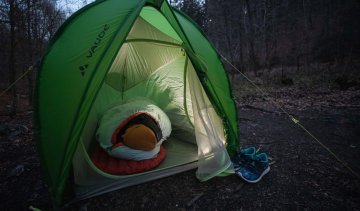
There are some things to consider when buying a sleeping bag. Low weight, comfortable temperature, synthetic fibres or down. An overview of sleeping bags.
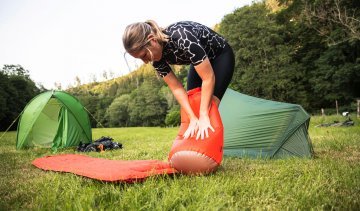
A light and compact camping mat is indispensable for bikepacking. An overview of common technologies and tips on what you need for tours.
Gearing for gravel bikes needs to meet specific demands. By now, there's a wide selection of gravel gearings on the market. Here's an overview for you.
Get on your bike and go! With the right bag setup, nothing stands in the way of a bikepacking adventure. Here’s what you need to know.
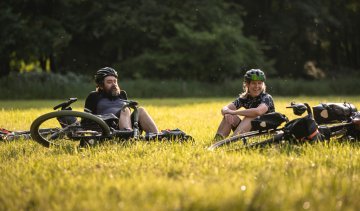
Being respectful of nature is a quintessential aspect of bikepacking. Here’s the code of conduct every adventurer and nature lover should abide by.
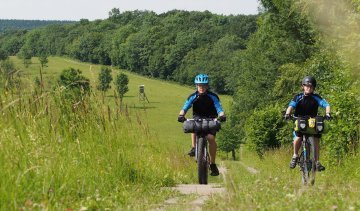
What could be better than sharing your love of bikepacking with your own children? And what is the best way to do that? A talk with Gunnar Fehlau.
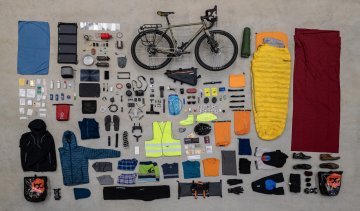
Whether a one-week bicycle tour through France or an extended adventure through South America lasting several months, the question is: What do I pack?
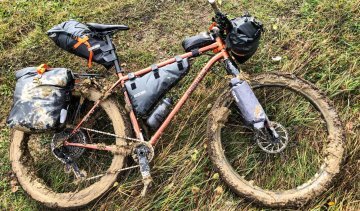
Looking for a bike bag for long bikepacking tours that really put you to the test? Then you’re going to love the Ortlieb Gravel-Pack.
Send your unused goods back within 100 days after purchase and get your money back!
See more