
MTB Suspension Glossary: All Terms Explained!
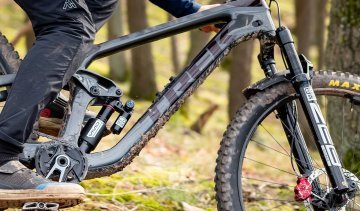
Spring curve, negative chamber and shim stack – clear so far? If not, our mountain bike suspension glossary has you covered.
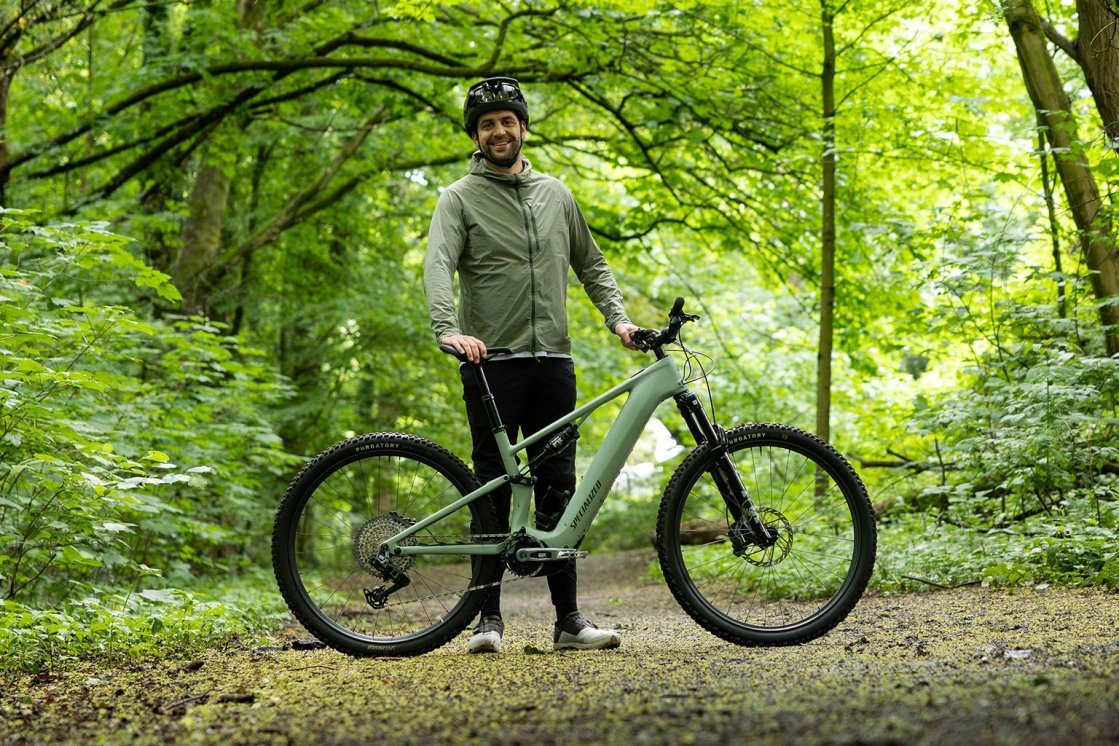
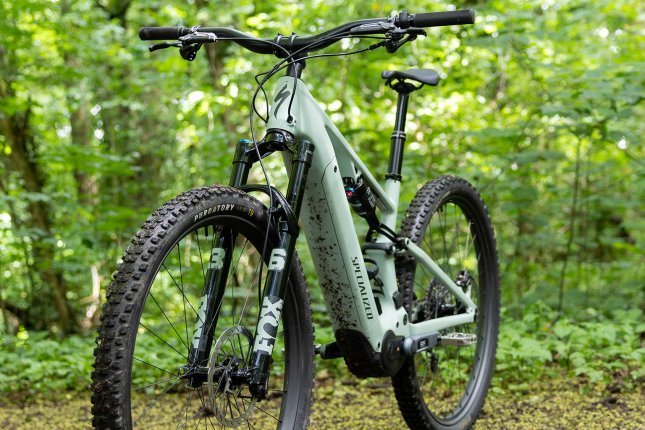
Specialized Turbo Levo R Expert in the bc comparison test: Berno tested the Levo R extensively and shares his findings.
With the Turbo Levo R, Specialized expands its full-power E-MTB range with a lightweight, agile trail bike. But does it actually feel more lively and direct than the Turbo Levo 4? How does it perform when the terrain gets more demanding? How big are the differences between the two bikes in practice? And which model is right for whom?
To find out, our colleague Berno put the Levo R Expert through an extensive long-term test. At bike-components, he is our in-house specialist for Specialized E-MTBs: he already spent plenty of time in the saddle for our Turbo Levo 4 comparison test, and privately he rides a Specialized Turbo Levo 3 Alloy LTD. Berno therefore knows the differences between these bikes very well and shares the results of his real-world test here.
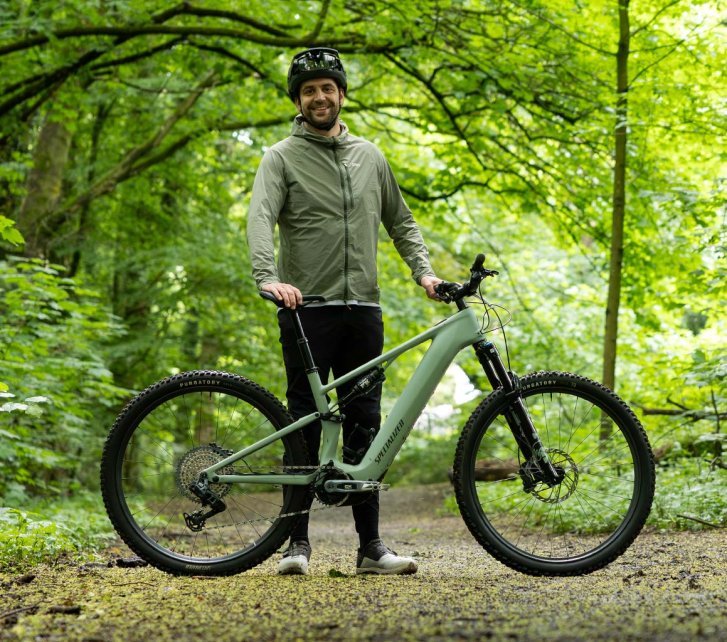
Berno and the Specialized Turbo Levo R Expert © bc GmbH
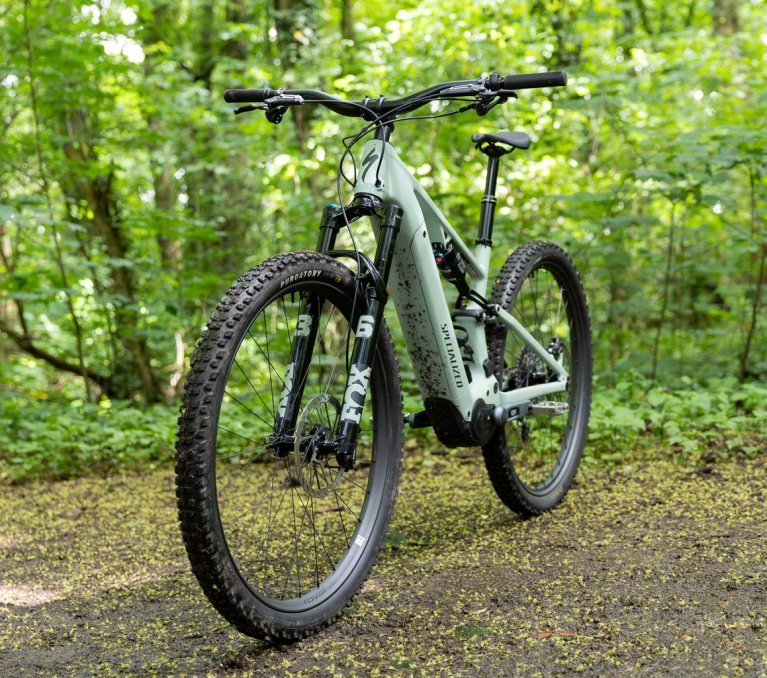
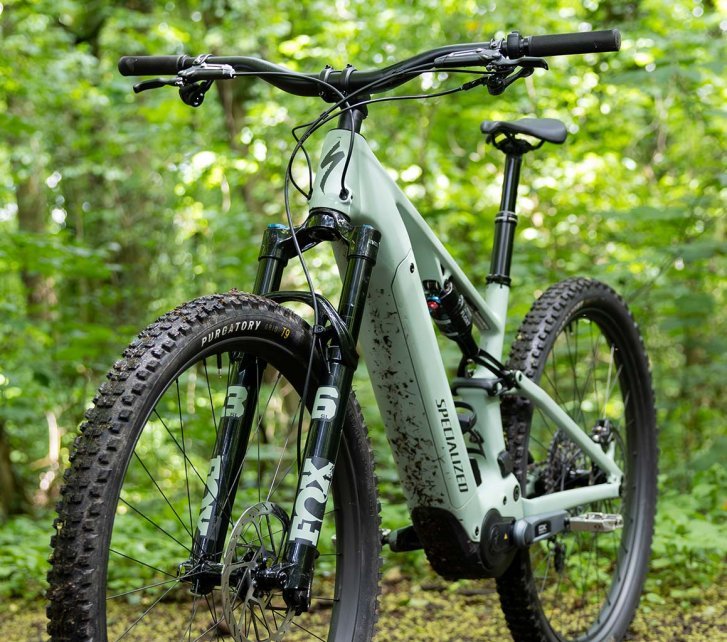
Specialized Turbo Levo R © bc GmbH
Yes, I was absolutely delighted. I've been mountain biking for many years and privately ride a Forbidden Druid as my non-electric bike and a Specialized Turbo Levo 3 Alloy LTD. My home trails are short and steep low-mountain trails – sometimes rooty, sometimes rocky, sometimes flowy. If I'm short on time or want to extend my riding radius, I take the E-MTB; otherwise, I'm just as happy riding my non-electric bike.
I've been working at bike-components in online marketing since January 2024 and lead the Customer Engagement team. Together, we continuously develop the customer experience in the bc shop and make sure our customers enjoy a simple, well-designed and pleasant shopping experience.

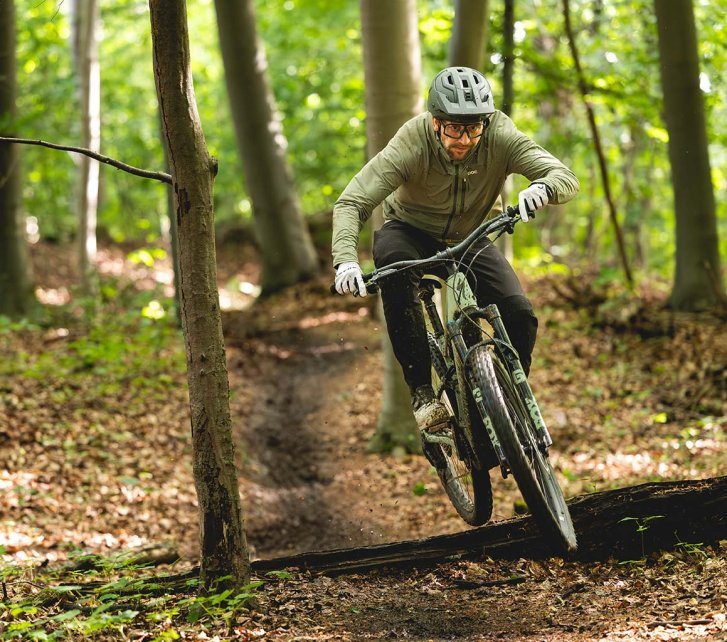
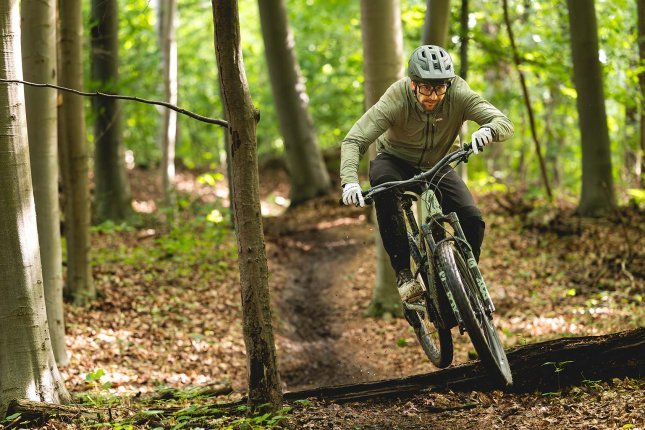
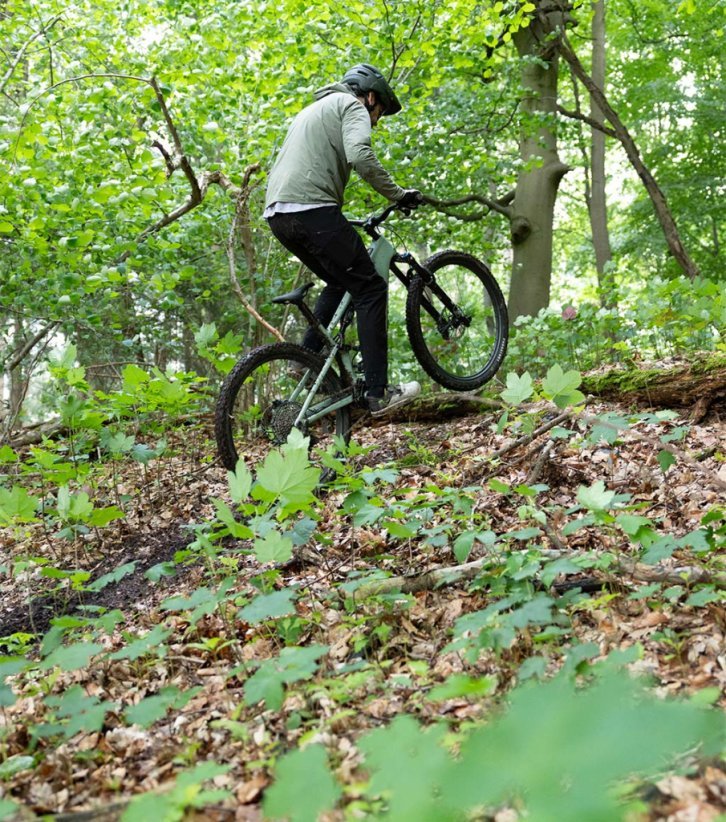
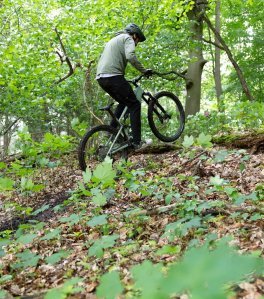
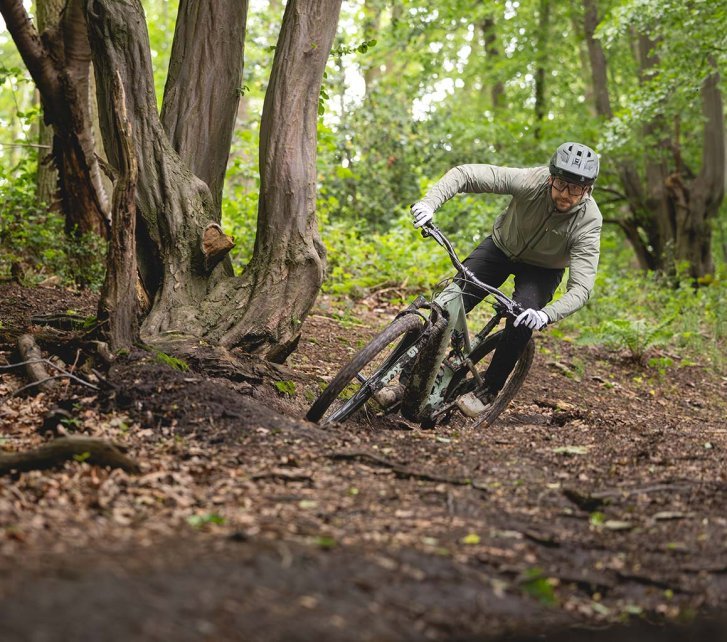
Berno tested the Levo R on his home trails in the Teutoburg Forest. © bc GmbH
Compared with the Turbo Levo 4, the Levo R – with the exception of size S1 – uses 29-inch wheels. According to the manufacturer, it is around 2.6 kilograms lighter than comparable Levo 4 models and offers slightly less suspension travel. Specialized therefore positions it as a lightweight, direct downcountry or “rally bike” – hence the “R” in the name.
Around 500 grams of the weight saving comes from the frame, with the rest coming from the components. On the Levo R Expert, Specialized uses a lighter suspension setup as well as lighter tyres and brakes, plus carbon wheels.
The geometry also differs from the Levo 4: the Levo R has a shorter reach and wheelbase, a lower stack, a lower bottom bracket and a slightly steeper head angle. The chainstays are also slightly longer due to the larger rear wheel. Together with 140 millimetres of travel at the front and 130 millimetres at the rear, this is intended to make the bike more agile and precise, although it offers slightly fewer reserves in rough terrain. The familiar geometry adjustments remain: chainstay length and bottom bracket height can each be adjusted in two positions via a flip chip, while the head angle can be adjusted in three positions using headset cups.
The Levo R is available as a Comp-Alloy-, Comp-, Expert and S-Works model. The Expert we tested, as well as the aluminium and carbon Comp models, use the Specialized 3.1 motor, which is also fitted to the Levo 4 Expert. Since my Levo 4 test, however, Specialized has increased performance with an “over-the-air” update: the motor now delivers up to 810 watts and 105 newton metres. At the time of my Levo 4 test, it produced 666 watts and 101 newton metres. The S-Works model uses the more powerful S-Works 3.1 unit with up to 850 watts and the same 111 newton metres.
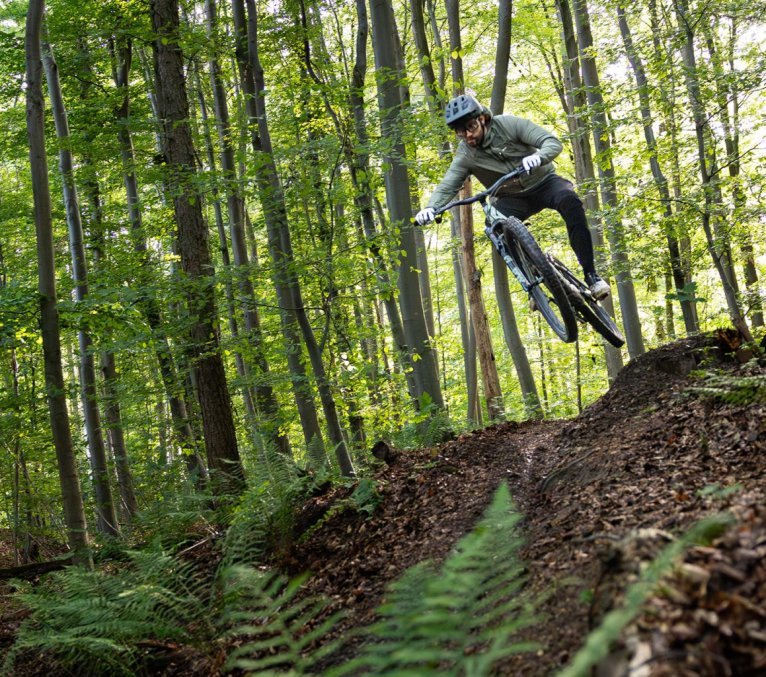
With 140/130 millimetres of suspension travel, Specialized positions the Levo R as a sporty trail bike. © bc GmbH
The Turbo Levo R really impressed me – it's an incredibly fun bike. It rides exactly as Specialized promises: lighter, more direct and more agile than the Levo 4. That suits my active riding style perfectly. Instead of simply ploughing over small roots, the bike encourages me to unweight the wheels briefly or actively use small trail features. That makes it feel very playful. It also gives me more feedback from the ground. That's exactly what makes it so appealing to me. At times, the Levo R feels more like a non-electric bike than a full-power E-MTB.
My home trails don't require a long-travel trail bike, and a 29er with less travel is almost made for them. They start out steeper and more technical, then become flatter and rootier. That's exactly where the Levo R plays to its strengths. With an active riding style and clean line choice, you can get through the demanding sections very well. On flatter, rooty sections, the 29er carries an enormous amount of speed, feels playful on the trail and gets hung up less between roots. There was no noticeable pedal kickback and I even managed to set a few new personal best times.
What surprised me was how late the Levo R reaches its limits. Of course, at high speeds and on rough trails, you notice the lower weight, shorter travel and slightly smaller reserves compared with the Levo 4. In return, the bike rewards an active riding style with huge amounts of fun. Anyone who mainly rides in low mountain ranges, likes to actively work the bike and deliberately play with the trail will probably find the Levo R more suitable than the Levo 4.
Uphill, the Levo R rides with the same confidence you'd expect, and I always had plenty of traction. Thanks to the lower weight, it feels even more lively, while the slightly steeper head angle and more aggressive riding position make it easier to handle in tight switchbacks.
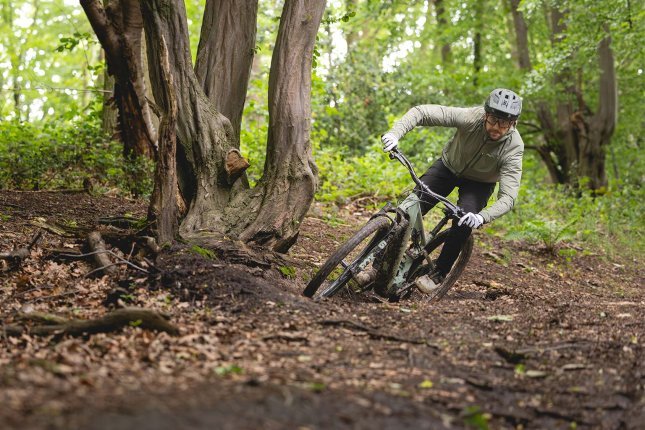
In the real-world test, the Turbo Levo R impressed with its playful and direct handling. © bc GmbH
For my height and my home trails, the Levo R's full-29 concept really works in my favour. Especially on flatter, rooty sections, the larger rear wheel noticeably rolls better and carries more speed. Important to know: the smallest size (S1) of the Turbo Levo R comes with a mullet setup featuring 29 inches at the front and 27.5 inches at the rear.
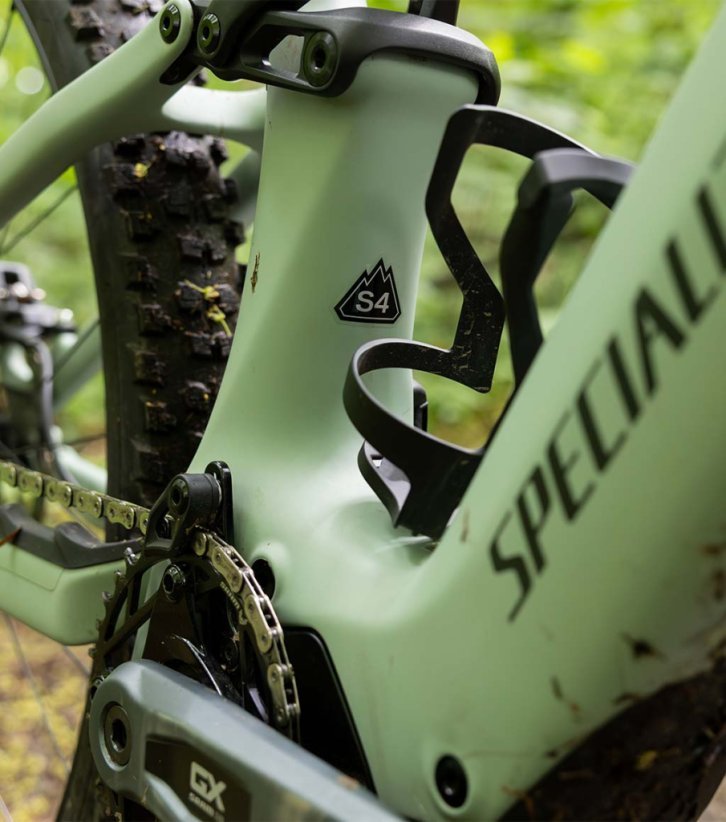
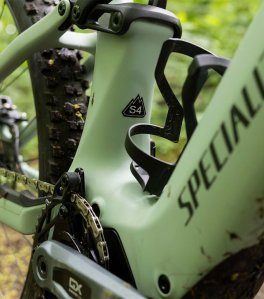
I'm between sizes S4 and S5 and rode the Levo R in S4 and the Levo 4 in S5. That means the comparison isn't completely like-for-like: the size difference emphasises the more agile, poppy feel of the Levo R and the composure and stability of the Levo 4. I rode both bikes with a neutral head angle. On the Levo R, I chose the lower bottom bracket position and long chainstays, while on the Levo 4 I used the higher bottom bracket position and short chainstays. This reduced the difference in wheelbase between the two bikes slightly, although it remains noticeable.
If I were to buy the Levo R – which I'm definitely considering – I'd choose size S5 with the short chainstay setting. That would give me a little more composure without losing the playful character of the bike. The front end would also be slightly higher, which would suit both my height and my preferred riding position.
For anyone unfamiliar with Specialized S-Sizing: unlike traditional frame sizing, Specialized trail bike sizing isn't based solely on rider height, but also on the desired handling characteristics. Smaller sizes provide more agility, while larger sizes offer more stability. S-Sizing ranges from S1 to S6 and covers rider heights from around 150 to 203 centimetres.
Berno tested the Levo R in size S4. © bc GmbH
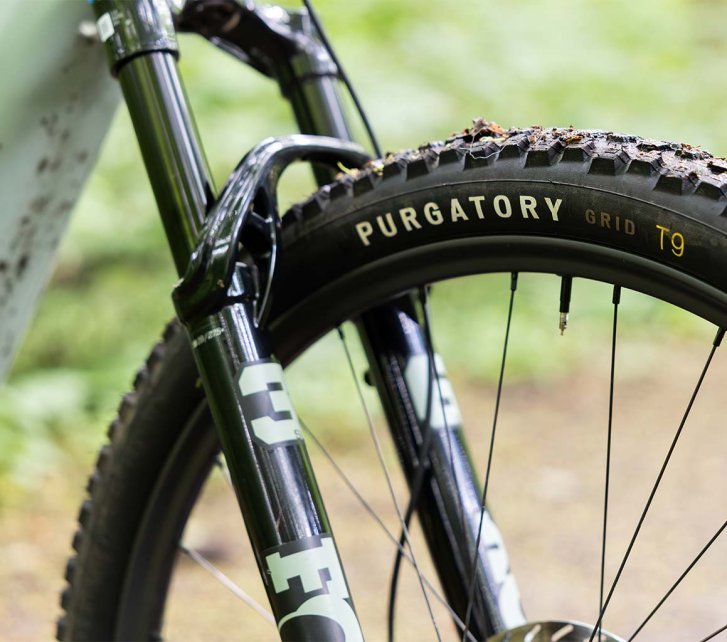
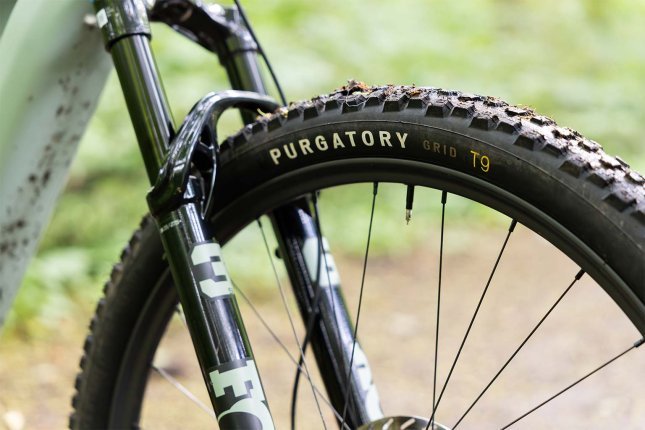
With the spec, Specialized consistently follows the Levo R concept: less weight, more direct handling and a clear focus on trail riding. The biggest contribution comes from the Roval Traverse SL II carbon wheels. Together with the lighter Purgatory tyres with Trail casing in 29 × 2.4 inches, Specialized significantly reduces rotating mass. I noticed this particularly when accelerating and in the playful handling on the trail.
For suspension, Specialized uses a Fox 36 SL Performance Elite with 140 millimetres of travel at the front and a Fox FLOAT Performance Elite GENIE air shock with 130 millimetres at the rear. Shifting is handled by the SRAM GX Eagle AXS Transmission, while SRAM Motive Bronze brakes with 200-millimetre rotors front and rear provide stopping power. An X-Fusion Manic dropper post and an aluminium cockpit complete the build.
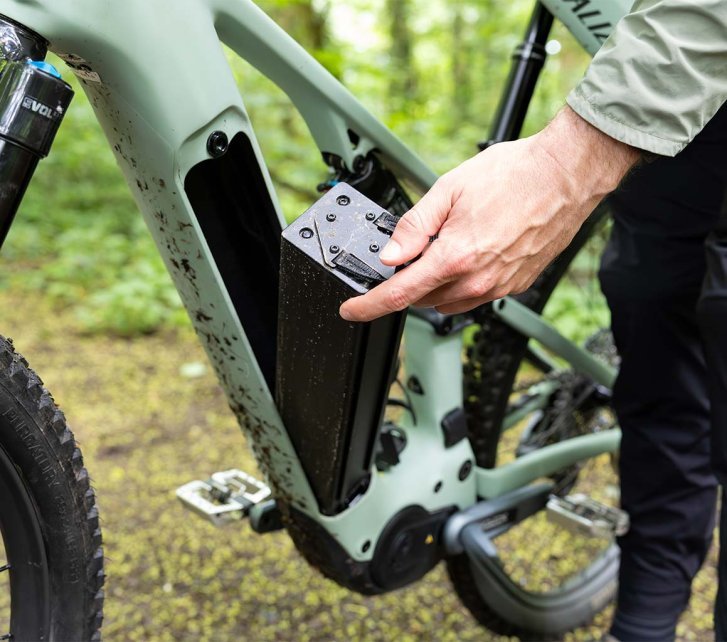
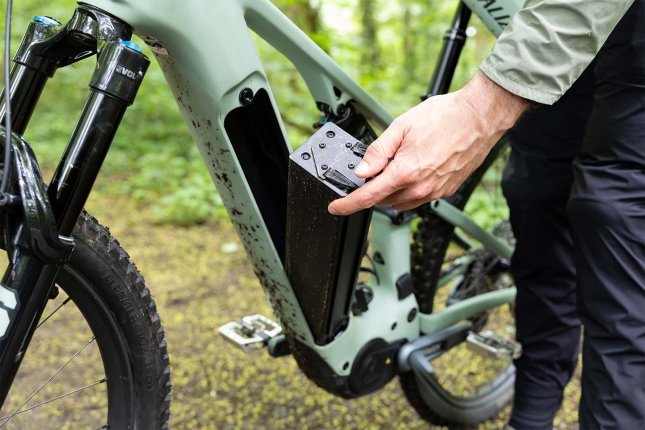
Typical for Specialized, the Turbo Levo R also features a SWAT storage compartment in the down tube. Depending on the battery size used – more on that below – it offers enough space for the essentials: an inner tube, tyre levers and a CO₂ cartridge, or even a lightweight jacket.
The Levo R's modern system also includes practical safety and connectivity features. The motor system can be electronically locked using a code. It also supports Apple's “Find My” function, making it easier to locate the bike if necessary.
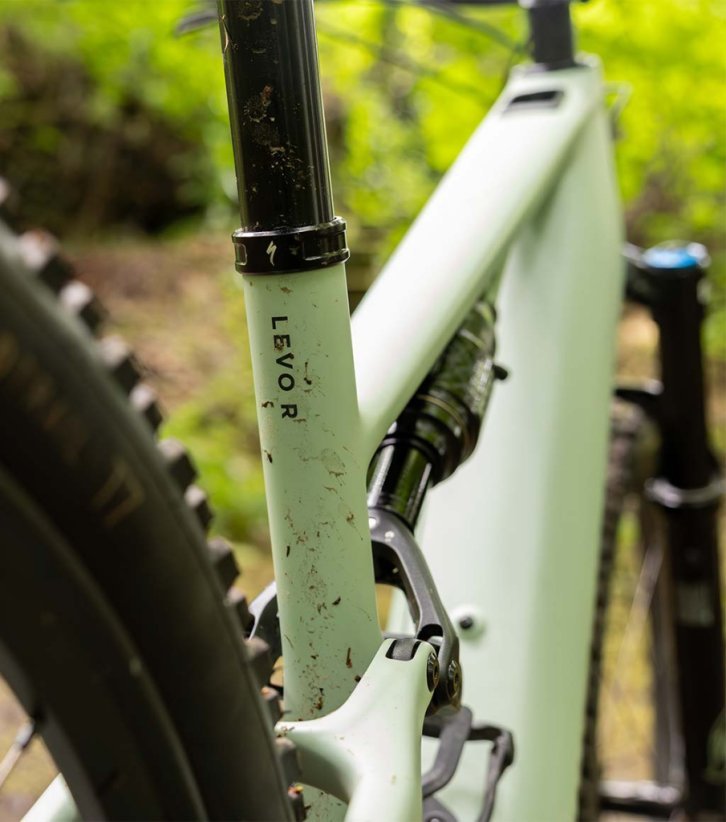
Lightweight Roval carbon wheels and Purgatory tyres with Trail casing contribute significantly to the Levo R's low weight. © bc GmbH
As speeds increased in rough terrain, I eventually noticed that it wasn't so much the suspension that reached its limits, but the tyres – particularly in wet conditions. The Purgatory-Reifen work really well in dry conditions and on flowy trail sections and underline the lively character of the bike. On wet roots and rocks, however, I would have liked a little more grip. I would therefore switch to the Specialized Butcher with a more robust Gravity casing – following the Levo 4 spec.
The brakes surprised me positively. For my riding style, body weight and a full-power MTB, however, I would still choose slightly more powerful brakes or at least pads with more bite and larger rotors.
The suspension impressed me a lot: contrary to what I expected, the fork and shock offer significantly more reserves than the 130 and 140 millimetres suggest. Only on harder impacts or drops did I notice the shock becoming noticeably more progressive towards the end of its travel. Overall, though, the suspension was excellent and perfectly suited to the bike and intended use, so I wouldn't change anything there.
Since our Levo 4 test, Specialized has not only given the 3.1 motor more peak power and torque via an over-the-air update, but has also improved the software in several other areas.
I was particularly impressed by the new Dynamic Micro-Tune (1xYou). The motor reacts noticeably more sensitively to my input and dynamically adjusts the assistance accordingly. This makes the motor even easier to control precisely. At the same time, motor overrun – how long the motor continues providing assistance after a pedal input – has been optimised. This allows me to give short, deliberate pedal inputs without the motor continuing to assist longer than I want. Both points make a real difference for me on technical trails, because I can use the assistance more deliberately and tackle edges or steps with more control.
In addition, the motor now reduces assistance more gradually as I approach the legally permitted support limit. This makes the transition feel less abrupt. Also new are three different walk modes, allowing me to fine-tune the walk assistance to the terrain and my own preferences.
Overall, I'd say the additional power isn't the highlight of the update for me – it's the more precise ride feel as a whole. So anyone who already owns a Turbo Levo 4 or R should definitely install the update. The improvements are noticeable on the trail and make riding a full-power E-MTB feel even more natural.
During my test, I stuck with the factory settings. If I decided to buy the bike, I would tune the Trail mode to be slightly more powerful and use Turbo mode exclusively for longer, steeper climbs.
Especially on descents, I ride almost entirely in Trail mode because the overrun in Turbo mode feels a little too imprecise when I use short pedal inputs on technical trails. With a customised setup, I could use Trail mode for most of my rides and only activate Turbo when I really need maximum assistance uphill.
I would also set Eco mode a little stronger. I barely used it during the test, except on one big ride of around 50 kilometres and 1,700 metres of climbing in the Harz. At the end, I still had more than 25 percent battery left, so there would have been room for a little more assistance.
Precise uphill control thanks to the new motor update. © bc GmbH
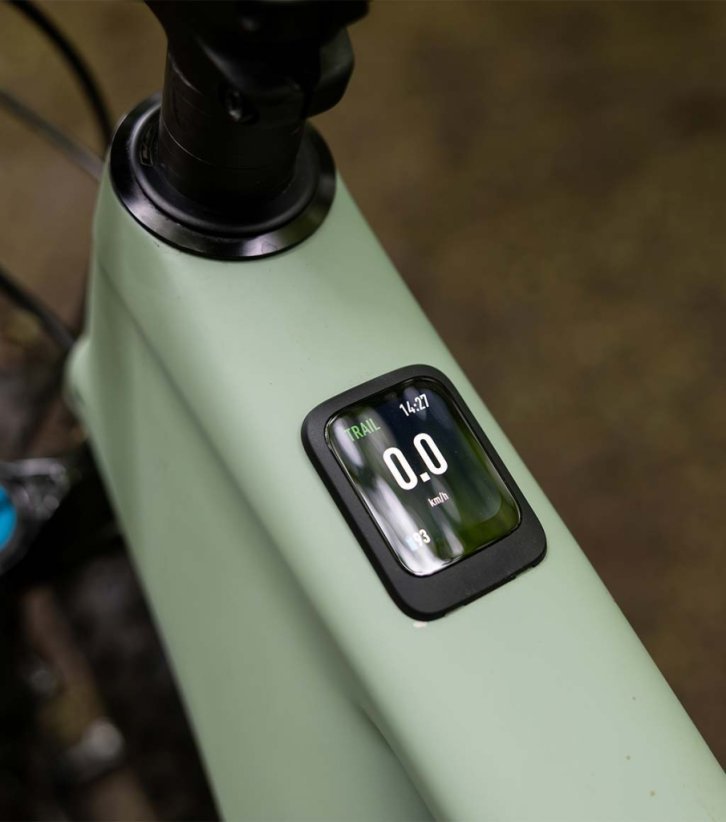
Specialized continues with its concept of a display integrated into the top tube. As on the Levo 4, it's large enough, sharp and high-contrast. The same handlebar remote is also used. In particular, the walk-assist button on the new remote is noticeably easier to reach with your thumb than on the old system. When things get steep and rough uphill, that gives you more control. I do have one small criticism, though: several times I accidentally pressed the upper button when changing assistance levels or even with my knee. That changes the information shown on the display. It's not a major issue, but it can occasionally be a little annoying.
Easy to read: the display of the Specialized 3.1 system. © bc GmbH
During my test, I exclusively used the 840-watt-hour battery. For my typical after-work rides, I'd probably choose the 600-watt-hour battery and use the larger battery at weekends. I like this flexibility because on shorter rides I could save around another 1.2 kilograms according to the manufacturer. Especially if, as mentioned earlier, I switched to grippier and slightly heavier tyres or more powerful brakes, the smaller battery could at least partially offset the additional weight.
Berno tested the Turbo Levo R with the standard 840 Wh battery. © bc GmbH
Specialized offers a 280-Wattstunden-Range-Extender for the bottle cage. According to the manufacturer, it weighs 1.6 kilograms and can be used either in combination with either of the other batteries or on its own. In the latter case, you save 2.8 kilograms. I wasn't able to test it during my time with the bike, but I think it's an exciting concept for rides where you really want to reduce weight, such as short after-work rides or bike park sessions. Or, of course, if you simply want to increase total battery capacity.
I was consistently happy with the range and never had to worry about the battery level. I could ride two sessions on the same charge, and with the supplied four-amp charger, the battery was fully recharged within a few hours.
The Levo R doesn't replace the Turbo Levo 4. Instead, it expands the range with a sportier and more direct alternative for riders who prefer less suspension travel and weight in favour of more agile handling.
Personally, the Levo R really impressed me. The lower weight and more playful geometry suit my riding style and terrain perfectly. Its handling comes closer to that of a non-electric trail bike, it carries plenty of speed, yet it still feels more planted and composed on the trail in typical E-MTB fashion.
More than anything, the Levo R showed me how far full-power E-MTBs have evolved. Full-power no longer automatically means huge suspension travel and a weight somewhere in the mid-20-kilo range. Instead, we're seeing increasingly specialised concepts within this category: from downhill bikes with an “integrated shuttle” to aggressive trail/enduro bikes and lightweight, agile downcountry bikes. I find that development really exciting.
Berno's Levo R verdict: lightweight, agile and incredibly fun. © bc GmbH
If you're looking for a playful, direct trail bike, mainly ride flowier trails or want an E-MTB that feels closer to a non-electric bike, you'll probably be happier with the Levo R. It rolls more easily, carries a lot of speed on flatter trails and responds more sensitively to rider input. It also performs extremely well on technically demanding trails – provided you have good riding skills, choose clean lines and perhaps upgrade the tyres and brakes. Of course, you need to be aware that it offers fewer reserves and gives you more feedback from the ground.
The Turbo Levo 4, on the other hand, is aimed at riders looking for a classic full-power E-MTB with more suspension travel and greater reserves. Anyone who frequently rides demanding trails, alpine terrain or bike parks will benefit from the more downhill-oriented geometry and spec of the Levo 4. It feels more composed and forgiving, although it also requires a little more body input to move the bike around or build speed when the trail becomes flatter and flowier.
By the way: if your focus is clearly on demanding enduro trails, bike park sessions without lifts or shuttles and maximum downhill performance, it's also worth taking a look at the Turbo Levo Evo. With 180 millimetres of travel at the front, 170 millimetres at the rear and correspondingly robust components, it's designed for hard-hitting trails.
The Specialized Turbo Levo R Expert is a lightweight full-power E-MTB with a carbon frame. With 140 mm of travel at the front and 130 mm at the rear, it falls into the trail bike category and rides very agilely and directly. It comes as standard with an 840 Wh battery and a Specialized 3.1 motor (105 Nm, 810 W peak).
The Levo R is particularly suitable for riders looking for a lightweight, playful trail E-MTB with direct handling. Riders who spend more time in alpine terrain or on very demanding trails, on the other hand, will benefit from the greater suspension travel and increased composure of the Turbo Levo 4.
The Levo R Expert is an agile trail bike with less suspension travel (140/130 mm) and lower weight. The Levo 4 is a longer-travel trail bike with more suspension travel (160/150 mm) and greater stability. Both models use the Specialized 3.1 motor and belong to the full-power E-MTB category.
The Specialized Levo R Expert is equipped with Fox suspension (36 SL Performance Elite, Float Performance Elite Genie), a SRAM GX Eagle AXS Transmission, SRAM Motive Bronze brakes and Roval Traverse SL II carbon wheels. Compared with the Turbo Levo 4 Expert, these components save a considerable amount of weight.
According to the manufacturer, the Specialized Turbo Levo R Expert weighs 21.76 kilograms in size S3. That makes it around 2.6 kilograms lighter than a comparable Levo 4 model and reinforces its playful character.
Following the latest update, the Specialized 3.1 motor delivers up to 810 W and a maximum torque of 105 Nm. Its response is very direct, the assistance can be modulated very precisely and the motor runs very quietly. Like its predecessors, the motor was developed in close cooperation with Brose.
Spring curve, negative chamber and shim stack – clear so far? If not, our mountain bike suspension glossary has you covered.
Inner tube or tubeless tyre? Butyl, TPU, or latex? Find out here which system is best for you and your bike.
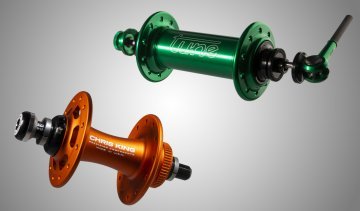
Which thru axle is the right one for your hub? We give you an overview of the common dimensions of hubs and axles on MTB, road bike and gravel bike.
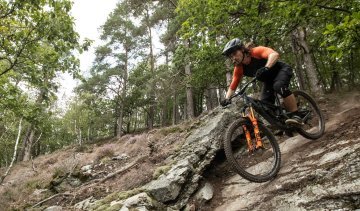
Perhaps you’re familiar with the basics, but do you want to learn more about the physics behind a wheel? Allow us to give you an in-depth explanation.

Is it worth building a custom wheelset for a road bike when there are so many good system wheels available? Absolutely! Read on to learn more.
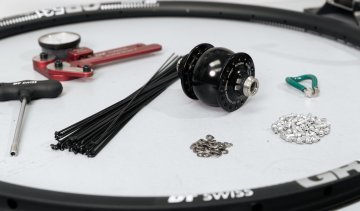
A hub dynamo provides power for lights and charging smartphones and GPS on the bike. We’ll show you what to look out for when building a dynamo wheel.
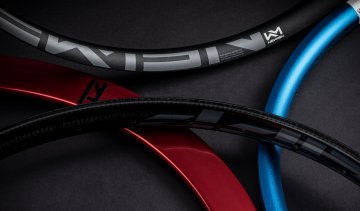
Looking for a new rim for your bike? We’ll show you what to look for when choosing the right rim for your MTB, road bike or gravel bike.
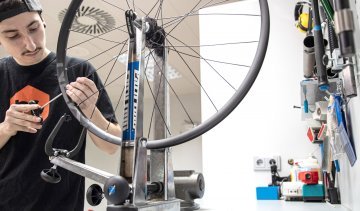
The question: system wheelset or build your own wheel? We explain the basics for picking out rims, spokes and hubs.
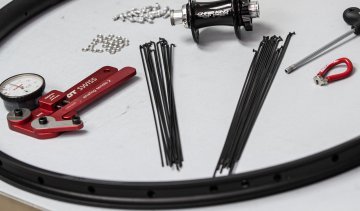
Have you ever thought about building your own MTB wheelset? We’ll give you ten reasons to build your own custom wheelset.
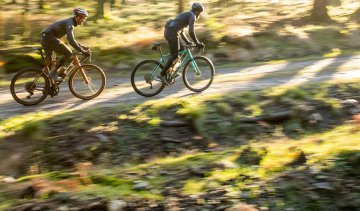
A gravel wheelset has to withstand a lot of hard use. Can't find the right one? Build it yourself! We’ve put together some tips to help you get started.
Send your unused goods back within 100 days after purchase and get your money back!
See more