

How To: Inspect Your Bike
Ready for the season? We’ll show you how to prepare your bike for the upcoming season and which parts require special attention.
For biking to be fun, the chain must run cleanly. This means you should check it regularly for wear! Find out here how to do it!
The wear and timely replacement of drivetrain components is a hotly debated topic among cyclists. Some riders simply keep going until the chain eventually starts skipping – but by then, chances are the entire drivetrain will need replacing. Others meticulously check for wear every three rides. Both approaches have their merits.
But how can I tell when my drivetrain is worn if I don't want to wait for the unpleasant experience of a skipping chain? At what point does adjusting the gears become almost pointless because the chain has developed so much lateral play that it can barely follow the commands of the derailleur?
In this article, we want to give You a few indicators that can help You assess the wear of Your chain and determine when it may be time for a replacement.
When you pedal, the chain is put under extreme tensile load. This causes chains to stretch out over time. The more stretched a chain is, the morn out it is. Chain wear indicator tools use this stretch value to gauge the degree of wear.
But the chain wears out not only due to the force applied when pedalling, but also due to skewing and jumps over sprockets or chainrings when shifting gears. When upshifting, the chain is pressed against the next larger sprocket by the rear derailleur and guided onto the sprocket via ramps. Due to this coaxial load in the skew, the functional play between the chain links and the pins increases over time.
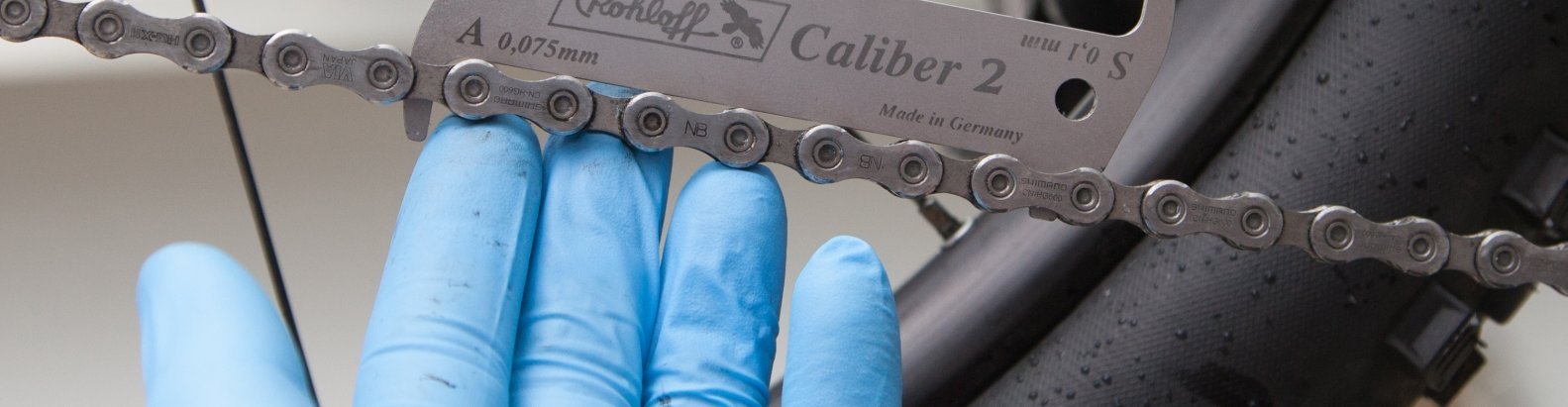
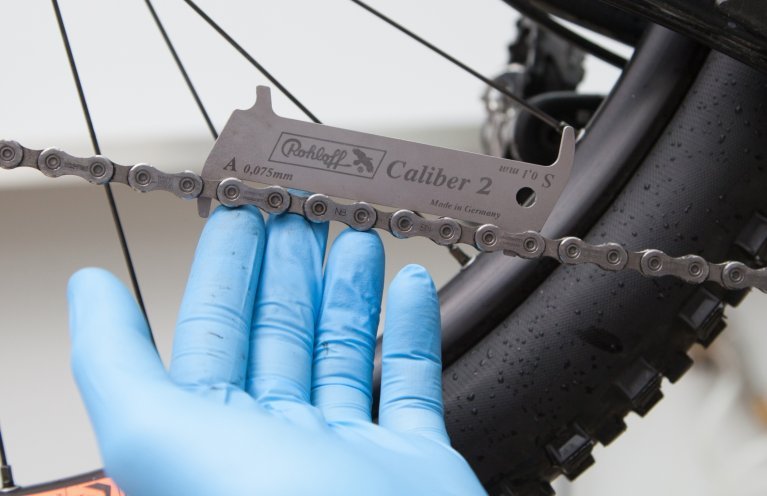
The Rohloff chain wear indicator, the Caliber 2, uses the stretch length to gauge the amount of wear a chain has. The Caliber has 2 sides, and both sides show you when you should replace the chain to protect your sprockets and chainrings from wearing out. The S (steel) side shows a greater amount of chain stretch than the A (aluminium) side. If your cassette is made of two materials, e.g. aluminium and steel, you should use the softer material.
Chains for freeride and downhill use are a special case. These disciplines require relatively little pedalling, but you ride a lot through hard terrain. Here the chain swings in all directions. Due to the increased horizontal movement of the chain, the bearings often fail laterally before the chain can stretch out enough to gauge the wear with an indicator.
If you want to measure the amount of stretch a chain has, first place the small tip with the notch on one roller of the chain.
Then guide the chain wear indicator down towards the chain. If the long tip doesn’t drop in, you can continue to ride the chain, but if the tip drops through, you should change the chain to prevent premature sprocket wear. The length should be measured at several points along the chain to avoid inconsistencies.
However, pay attention to exceptions!
This rule does not apply to Campagnolo chains, which should not be measured with chain wear indicator tools. To gauge the wear of Campagnolo chains, you measure the distance between the rollers over 6 outer plates. If this is 132.6 mm or more, you must replace the chain. The value applies to 10 and 11-speed chains and the measurement should be made on 5 different chain segments.
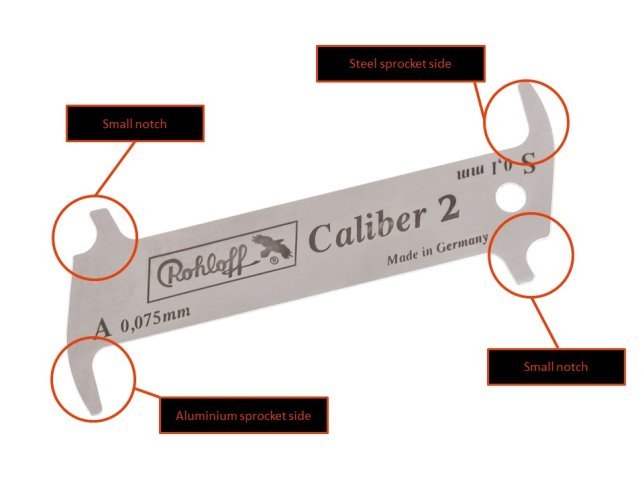
The Rohloff Caliber 2
If the A-side gets caught in the chain, then you can continue riding with it.
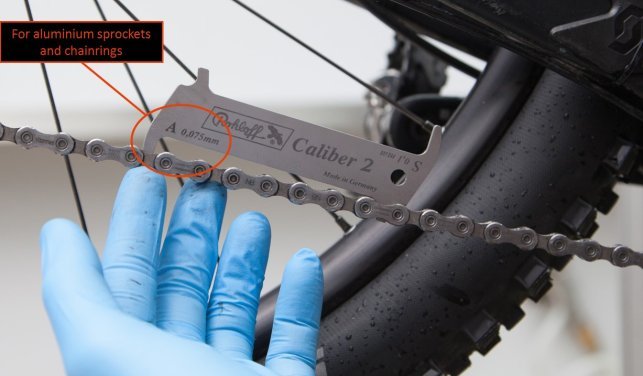
This chain can still be ridden.
Is the A-side falling through? If you ride with aluminium or titanium sprockets, you should replace your chain now to protect your sprockets from premature wear.
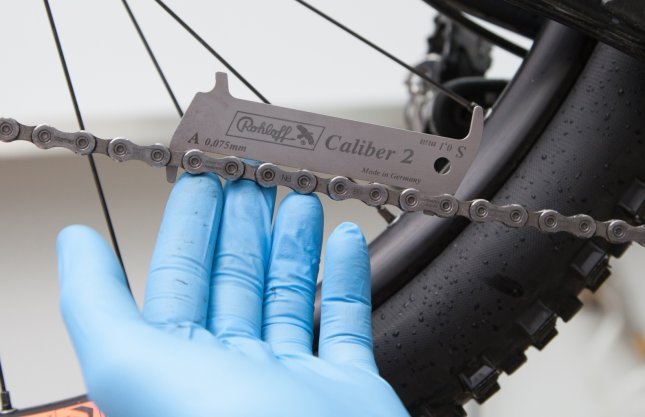
If you have aluminum or titanium sprockets you need to change the chain.
If the S-side gets caught in the chain, then you can continue riding with it.
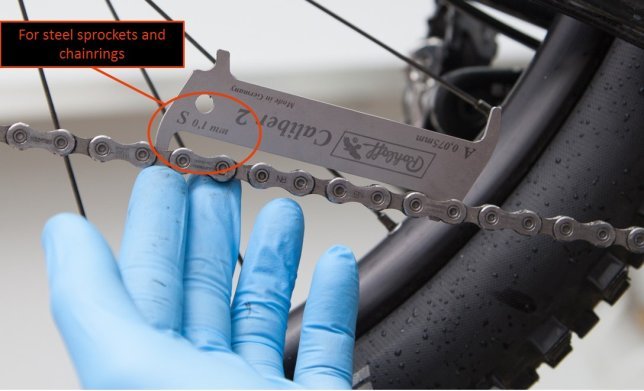
This chain can still be ridden.
Is the S-side falling through? If you ride with steel sprockets, you should replace your chain now to protect your sprockets from premature wear.
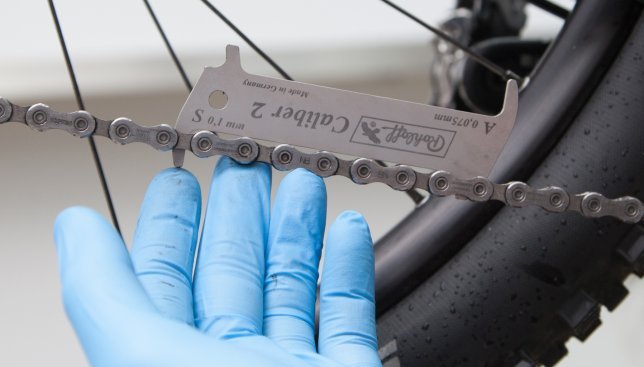
If you ride steel sprockets, its time to change the chain.
Ready for the season? We’ll show you how to prepare your bike for the upcoming season and which parts require special attention.
Is the chain on your gravel or road bike worn out? Do you want to install a new one? With our how-to guide, replacing the chain is a piece of cake.
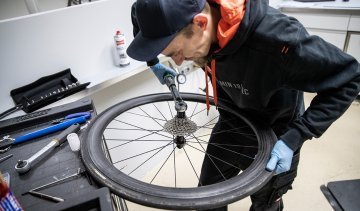
A cassette on a road bike or gravel bike can be changed quickly. We’ll show you how to replace the cassette with just two tools.
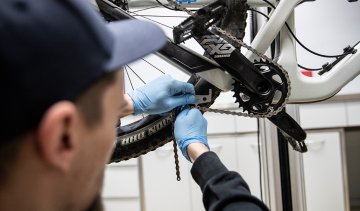
Is the chain on your MTB worn out? Do you want to fit a new one? No worries. We’ll explain how you can replace your chain on your bike.
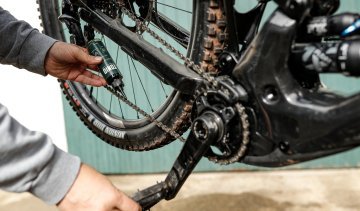
Well-greased chains are smooth, quiet, and shift with precision. But which lubricant is the best? Here are some tips for proper chain care.

XTR, XX1, X01, Deore, etc. – The choice of shifters & derailleurs for MTBs is huge. Find out which is the right one for you here.

Choosing the right chainring for your single-speed setup is crucial. We'll show you what's important so you can pedal efficiently.

With the right tools, replacing the cassette on your MTB is a quick and easy task. We’ll show you how it’s done.
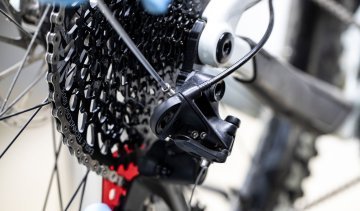
Whether you ride a Shimano or SRAM drivetrain, properly adjusting the derailleur on your MTB or e-MTB should be part of every rider’s basic maintenance.
Send your unused goods back within 100 days after purchase and get your money back!
See more