
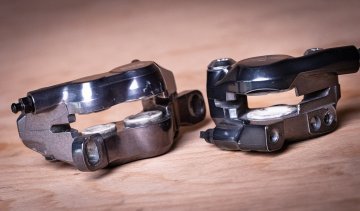
2 or 4-piston brake?
Disc brakes are now standard on most bikes and e-bikes. Here’s how to decide whether a 2- or 4-piston brake is right for you.
How are the brake rotors on your bike attached? What do you need to know? We give you a brief introduction to the world of rotor mounting.
Why should you know how your bike's brake rotor is attached? It's simple: brake rotors can wear out, they can bend due to a crash or carelessness, and they're a popular upgrade part on a bike. So that you can replace them, you should know which system you're using – because brake rotors can be mounted to the hub either via a splined lockring or via several bolts. What sets the two systems apart and how they differ in detail is explained here.
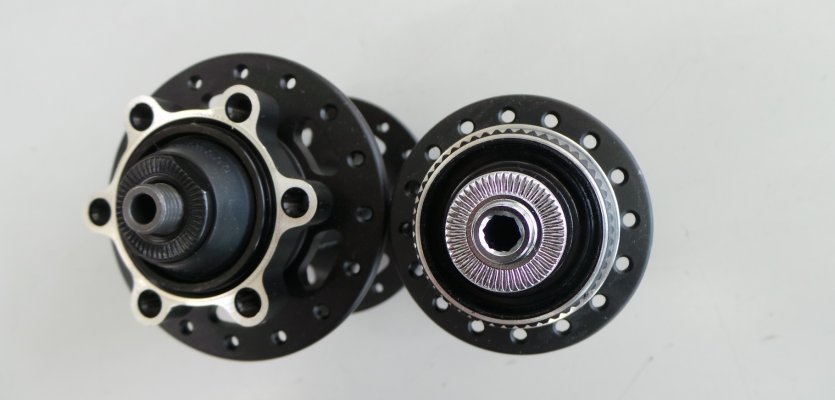
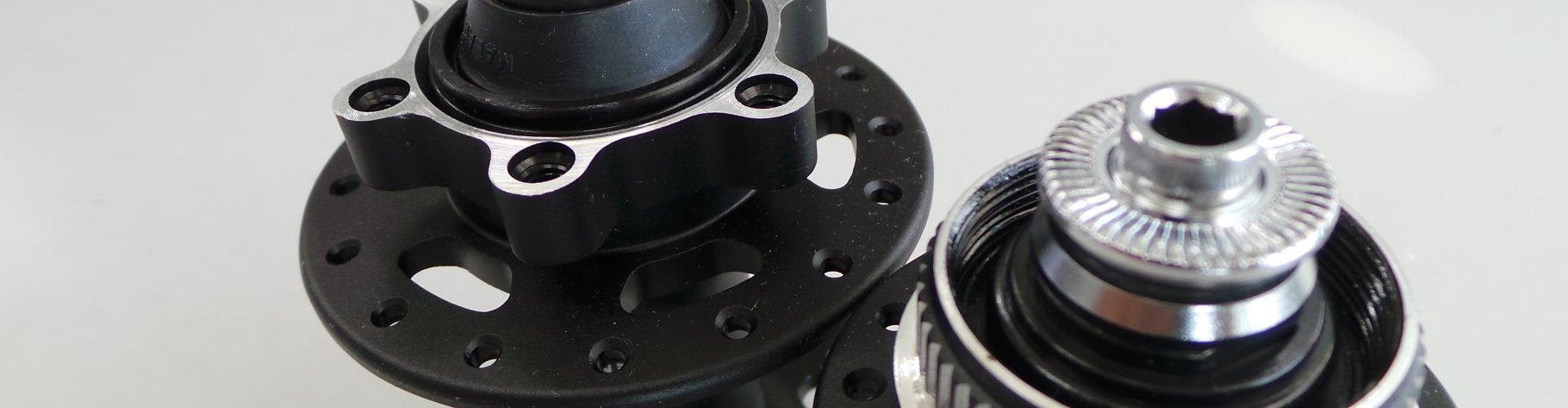
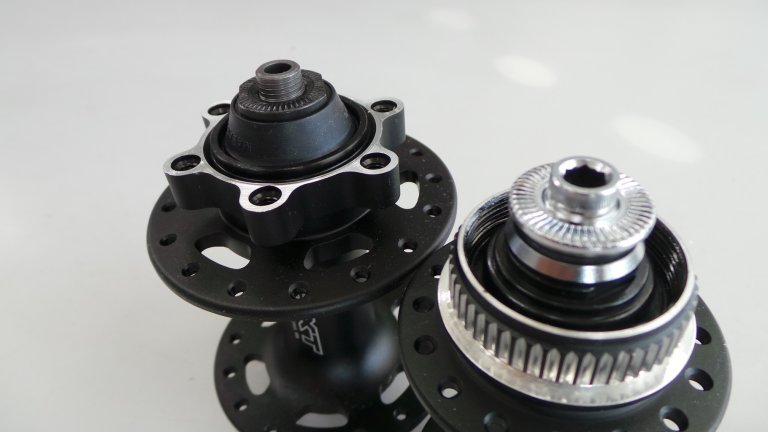
Hubs (left: 6-bolt, right: Center-Lock)
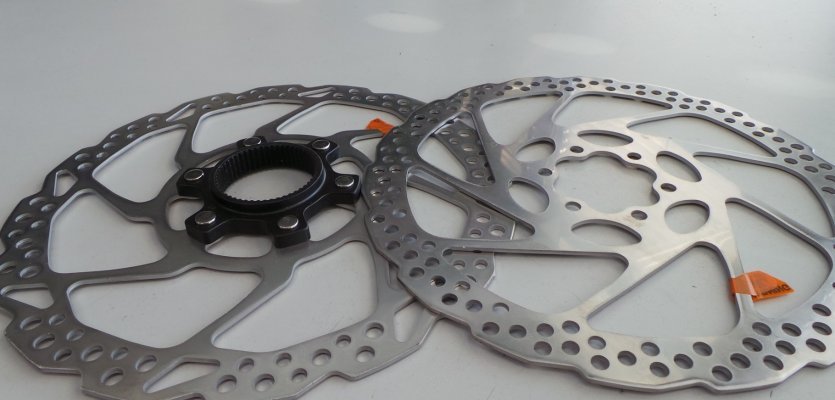
Brake rotors (left: Center-Lock, right: 6-bolt)
The two most widespread mounting standards for brake rotors are 6-bolt and Center-Lock. Almost every hub and brake manufacturer offers 6-bolt and Center-Lock mounts and rotors across all price segments. On complete bikes, Center-Lock dominates in the road bike and gravel bike segments, while in the mountain bike segment both standards are commonly found.
The systems are not inherently compatible with one another. Only a 6-bolt rotor will fit directly onto your 6-bolt hub, and only a Center-Lock rotor will fit directly onto your Center-Lock hub. However, adapters exist to mount 6-bolt rotors onto Center-Lock hubs. Installing such an adapter is quick and easy with the necessary tools. The reverse, however – going from a 6-bolt hub to a Center-Lock rotor – has no simple solution.
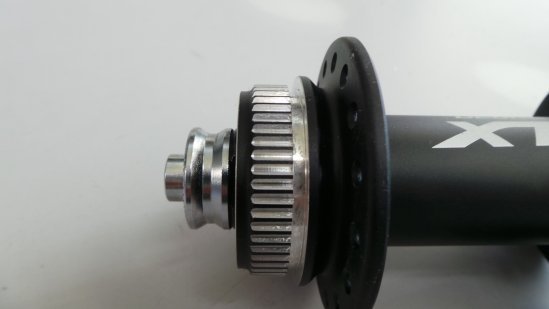
The splines of a Center-Lock mount
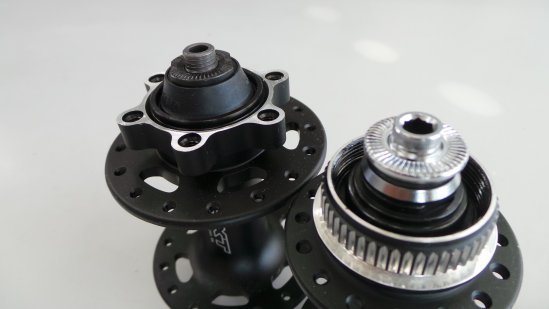
6-bolt, right: Center-Lock
As the name suggests, 6-bolt brake rotors and hubs each have six holes where the bolts sit that connect the rotor to the hub. To mount the rotors, you'll need a torque wrench and, in almost all cases, a Torx bit. By the way: contrary to what you might assume, the rotor isn't held in position while braking by the bolt threads, but by the static friction between the rotor and hub. For this static friction to develop properly, you need to tighten the bolts to the correct torque.
With a 6-bolt rotor, you'll need to loosen or tighten six bolts. This takes a bit longer than with the Center-Lock system, but it hardly matters since rotors are typically changed only rarely. It's crucial to always tighten the bolts in a crosswise pattern while observing the correct torque. You'll find the required torque values on the respective components or in the manufacturer's specifications.
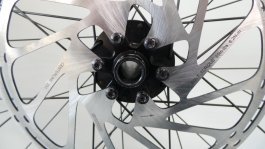
6-bolt attachment
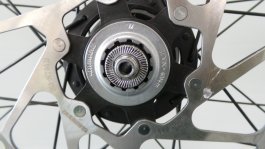
Center-Lock attachment
With the Center-Lock system, the rotor sits directly on the splined section of the hub and is secured with a central lockring. The lockring has either internal or external splines as the interface for the tool. For a lockring with external splines, you'll need a corresponding lockring tool. Some bottom bracket tools are also compatible. For internal splines, you can usually use a cassette lockring tool. Note that oversized Center-Lock lockrings require a special tool.
Mounting Center-Lock brake rotors is simple and super fast, since you only need to open one lockring. Here too: always be sure to observe the correct torque. You'll find the required torque values on the respective components or in the manufacturer's specifications.
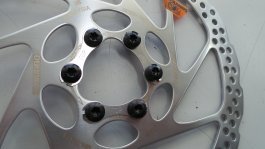
6-bolt attachment with locking tabs
Both systems are very well secured: the bolts of a 6-bolt rotor are protected against loosening by thread locker. Shimano even offers additional locking tabs that prevent the bolts from loosening due to vibration. If you remove the rotor, for example for travel, we recommend reapplying thread locker before reinstalling the rotor. And speaking of safety: we recommend mounting bolts made of steel or titanium – with the latter, you'll even save a few grams of weight.
With Center-Lock, there are built-in, manufacturer-dependent locking mechanisms. For these to work properly, the correct torque is essential.
Tip: Regularly check the correct torque of your lockring or bolts to make sure everything stays exactly where it should.
Disc brakes are now standard on most bikes and e-bikes. Here’s how to decide whether a 2- or 4-piston brake is right for you.
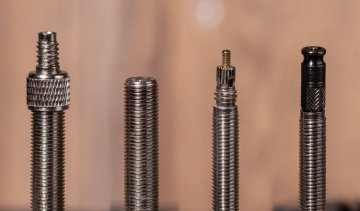
Our guide explains the main bicycle valve types and their differences – from classic Presta to the innovative Schwalbe Clik Valve.
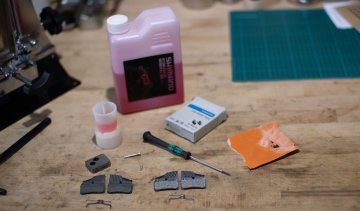
Brakes are one of the most critical safety component on your bike, so you should pay close attention to them during maintenance.

Ready for the season? We’ll show you how to prepare your bike for the upcoming season and which parts require special attention.
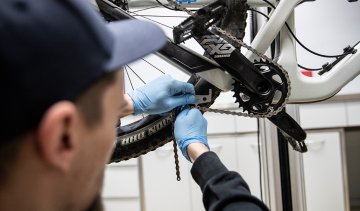
Is the chain on your MTB worn out? Do you want to fit a new one? No worries. We’ll explain how you can replace your chain on your bike.
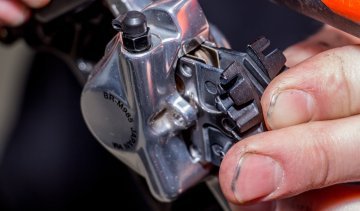
Changing brake pads on bicycle disc brakes? Easy. Take out the old pads and put in the new ones. But is it really that simple?
Send your unused goods back within 100 days after purchase and get your money back!
See more