
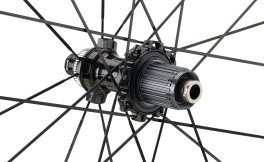

How To: Inspect Your Bike
Ready for the season? We’ll show you how to prepare your bike for the upcoming season and which parts require special attention.
How does the freehub on a bike work? What should you pay attention to when converting shifters & derailleurs, which freehub is compatible with which models
In front of you the trail, behind you a cloud of dust – and in between, a soundtrack of tyre noise, birdsong and the hum of your hub. Or more precisely: the freehub on your bike. When you pedal, the freehub body transfers the power from the sprocket to the hub. When you stop pedalling, it allows you to roll effortlessly. Some riders even appreciate it for its distinctive sound – like a catchy tune.
Here we give you an overview of which freehub body is compatible with which drivetrain and explain how the freehub on your bike works. This is helpful when choosing a new cassette, rear hub or wheelset, or when replacing the freehub body during a drivetrain upgrade.
When buying a new bike, a rear hub or a wheelset, choosing the right freehub is a key factor – when converting, upgrading or tuning, the freehub body even plays the main role. It transfers the power from the cassette to the hub and rear wheel. There are various standards for this interface. The freehub body must meet two important criteria:
Most hub manufacturers offer conversion kits for the mounting standards of different cassette or drivetrain brands. If you upgrade your drivetrain within the same brand range, for example from a Shimano 10-speed to an 11-speed drivetrain or from SRAM 11-speed to 12-speed, you can often avoid replacing the freehub body. However, the key factor is the freehub compatibility of the cassette you want to use. That’s why in our shop you can filter cassettes by freehub compatibility and hubs or wheelsets by freehub type.
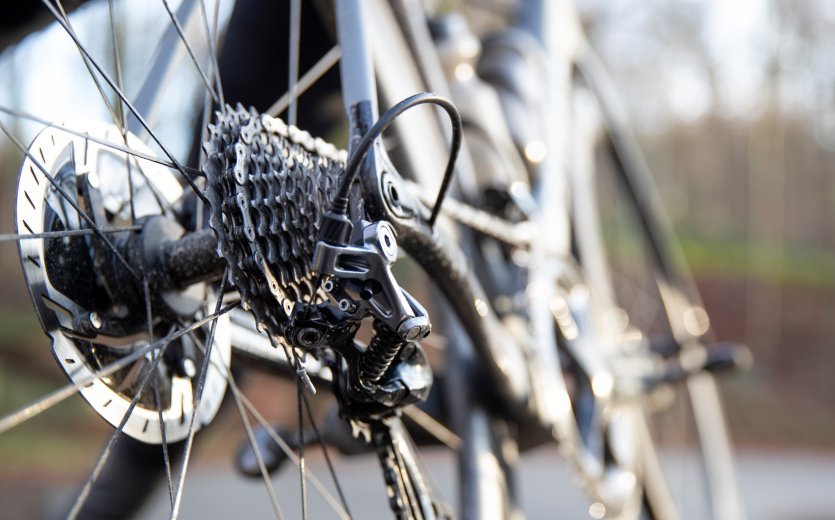
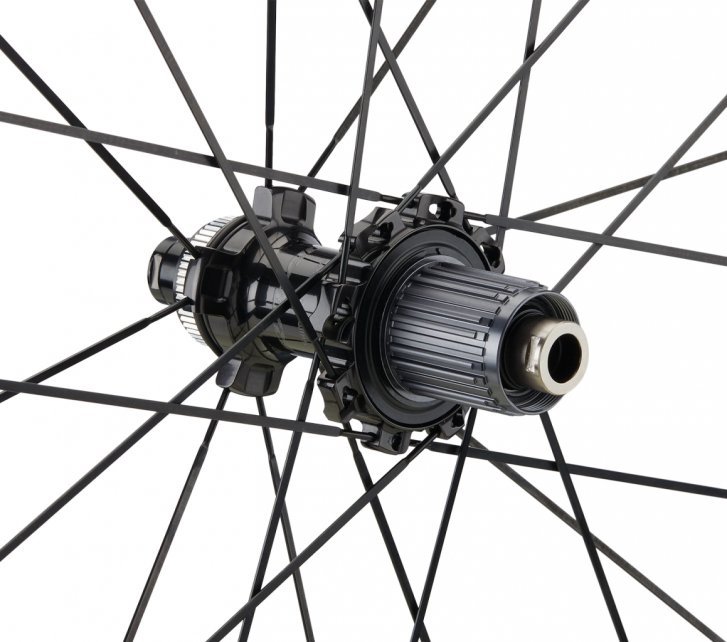
A central component on your bike: you may not see much of the freehub, …

… but you feel its work with every metre you roll without pedalling.
How exactly the freehub body is replaced varies from one hub manufacturer to another. Many manufacturers such as Hope, DT Swiss, SRAM or Shimano allow tool-free replacement: the freehub body is simply pushed on. Whether this is also the case for your hub or how the replacement works instead can be found in the user manual or by contacting our service team.
You will need some tools beforehand to remove the wheel and take off the cassette. You can find out how this works in our dedicated guides: How To: change an MTB cassette / How To: change a road bike cassette
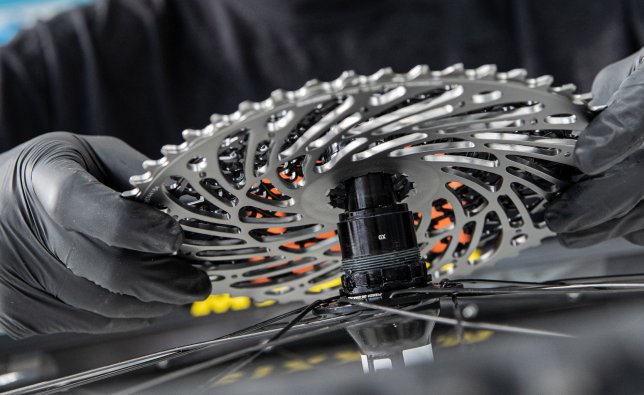
When converting, you must ensure that the freehub body and cassette fit together. © bc GmbH
To help you keep track when shopping, we have briefly summarised the most common mounting standards and cassette compatibilities. If you are looking for a quick overview, you will find it further below.
Shimano Hyperglide (HG) has long been the most widely used standard. As of January 2026, there are three variants:
Note: HG freehub bodies are not compatible with SRAM XD/XDR or Campagnolo cassettes.
Shimano Hyperglide MTB © bc GmbH
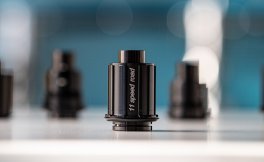
Shimano Hyperglide Road © bc GmbH
© bc GmbH
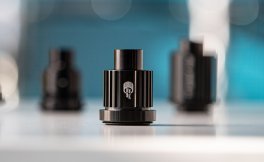
© bc GmbH
Shimano Micro Spline is compatible with 12-speed MTB and gravel cassettes from Shimano and allows the use of a smallest sprocket with 10 teeth. The cassette sits on 23 splines that are 26 millimetres long. Shimano licenses the use of Micro Spline technology to other cassette and rear hub manufacturers.
Note: not compatible with HG, SRAM XD or XDR cassettes.
The XD standard was introduced by SRAM to enable the use of cassettes with a smallest sprocket of 10 teeth or less (e.g. e*thirteen with a 9-tooth sprocket). It is compatible with 11- and 12-speed cassettes from SRAM and various third-party manufacturers.
SRAM XDR is an adaptation of this standard for road bikes and features a freehub body that is 1.85 millimetres longer. It is compatible with 12- and 13-speed cassettes from SRAM road and gravel groups. When using a 1.85 mm spacer, it is also compatible with SRAM XD cassettes.
Note: not compatible with Campagnolo or Shimano (HG) cassettes.
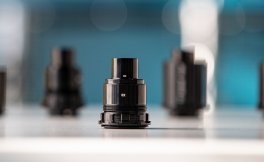
© bc GmbH
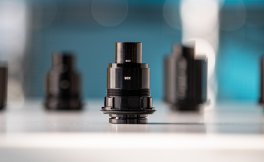
© bc GmbH
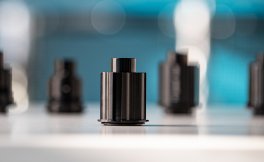
© bc GmbH
The Italian manufacturer Campagnolo uses two different standards:
Classic Campagnolo freehub bodies have eight splines with different shapes on which the cassette sits. They are compatible with Campagnolo cassettes from 9-, 10-, 11- and 12-speed road groups.
Campagnolo N3W has the same spline pattern as the classic Campagnolo freehub with eight splines. However, N3W is shorter to make room for the smallest sprockets (9 and 10 teeth) of 13-speed cassettes. With an adapter, N3W is compatible with older Campagnolo cassettes.
Note: not compatible with Shimano or SRAM cassettes.
For singlespeed and trial bikes, there are special hubs with narrow freehub bodies designed to mount a single sprocket and usually offering enough space to adjust the chainline with spacers. The narrow freehub allows wider hub flanges, enabling the construction of more symmetrical and stable wheelsets. However, converting such hubs to a geared drivetrain with a cassette is not possible. On the other hand, you can convert Shimano road, MTB and SRAM freehub bodies to singlespeed use with appropriate spacers and singlespeed sprockets. Some singlespeed sprockets feature a wider interface to protect the freehub body.
Another option is singlespeed hubs with a threaded interface. This design requires a sprocket with an integrated freewheel, i.e. a freewheel sprocket.
Track bikes and fixies do not have a freehub at all. Here, the sprocket is screwed directly onto the hub body or mounted via an adapter and secured with a lockring. When the rear wheel rotates, the sprocket and crank rotate as well.
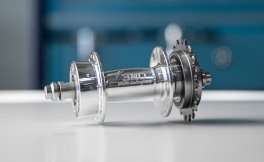
© bc GmbH
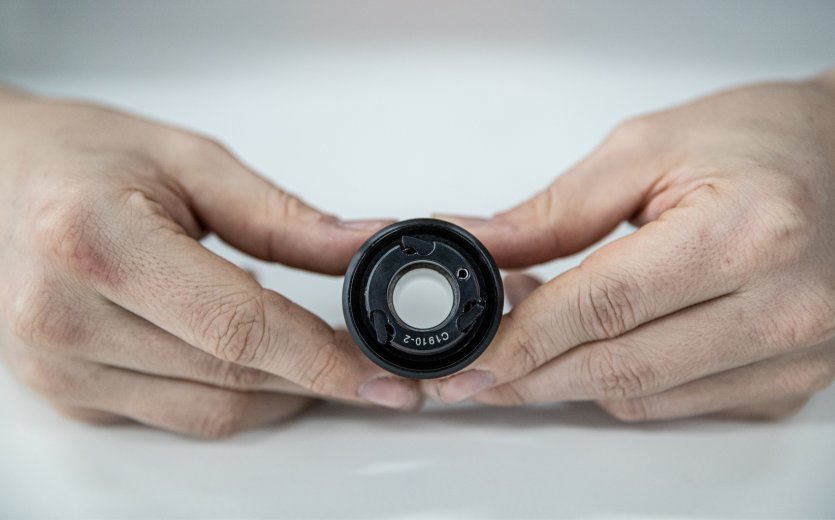
There are two basic design principles for freewheeling: There is the pawl freehub.
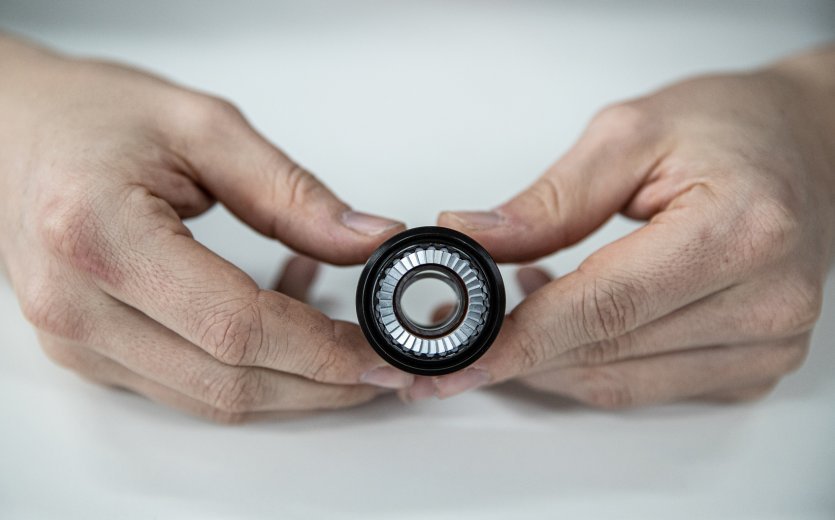
And there's the ratchet freehub.
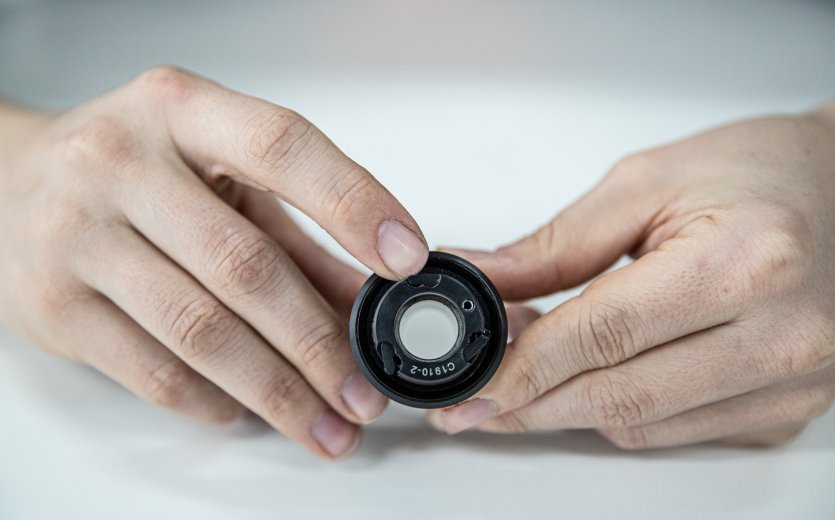
With the pawl freehub, small, spring-loaded pawls provide the frictional connection or freewheel.
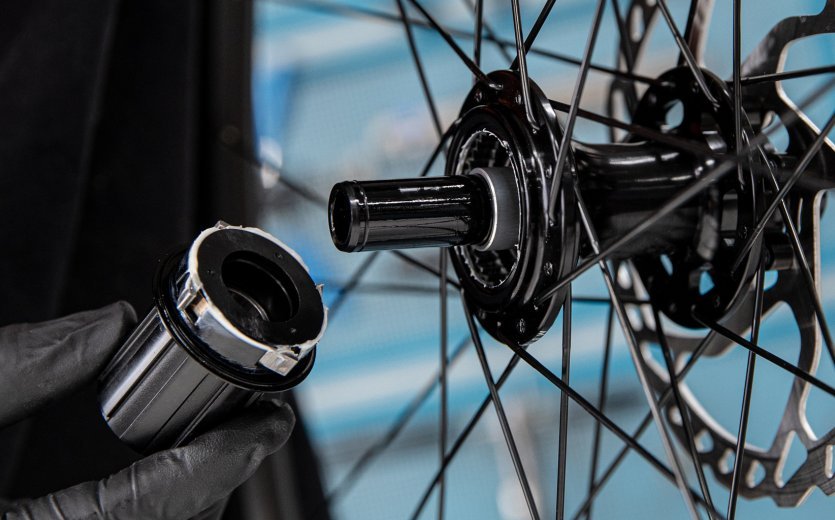
These pawls engage in a grid inside the hub and thus transfer the pedalling force to the wheel.
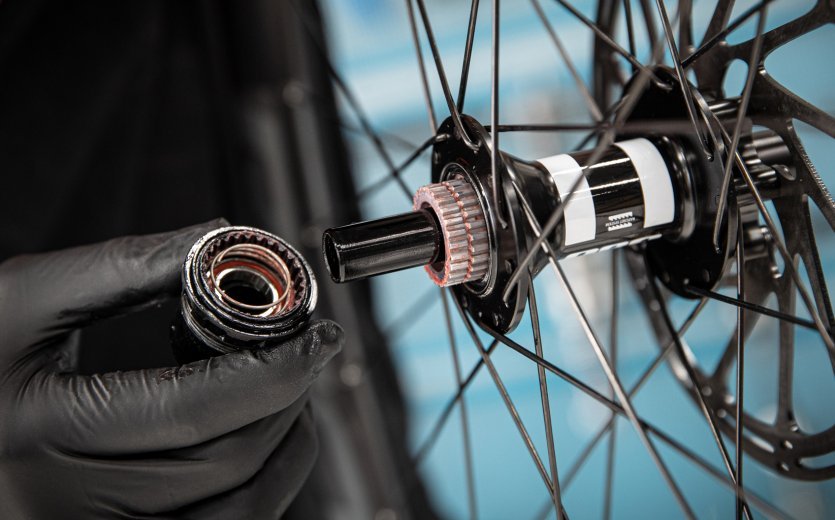
With ratchet freehubs, two ratchets mesh with each other.
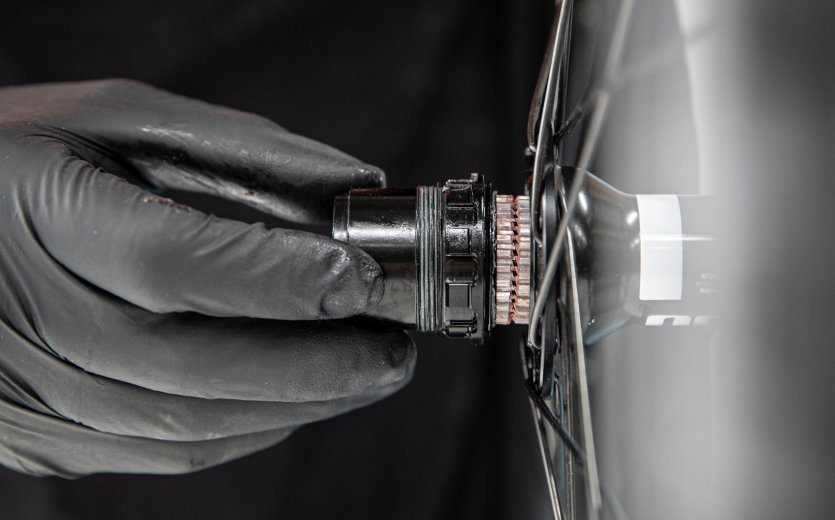
In the case of ratchet freehubs, the contact surface is significantly larger and the freehub is very robust even with a large amount of input force.
Free in one direction and locked in the other – how does that actually work? On most bikes, freehubs are either built with so-called pawls or as ratchet systems.
A pawl freehub has several small pawls on the part of the freehub that sits inside the hub, which are pushed outward by springs. A toothed ring in the hub body forms the counterpart. When you pedal, the pawls engage firmly with the teeth and drive the hub forward. Since the pawls and teeth only mesh in one direction, the hub can rotate forward even when the freehub body remains still (when you coast without pedalling). In this case, the pawls slide over the teeth in the hub body – usually with an audible clicking sound. There are differences in design regarding the number of pawls and how many engage simultaneously. Well-known examples of high-quality pawl freehubs include models from the British manufacturer Hope.
The second important design principle is the ratchet freehub. Manufacturers such as DT Swiss and Chris King rely on this system, which offers low maintenance requirements and high mechanical durability. Here, two toothed discs engage with each other while pedalling, pressed together by springs. One sits in the hub body and the other in the freehub body. Unlike pawl systems, all teeth engage simultaneously in ratchet systems. This creates a very large contact surface and makes the freehub extremely robust even under high loads. As with pawl systems, the teeth only mesh in one direction. In the opposite direction, the discs slip over each other with a characteristic sound. There are differences in the number of teeth.
The finer the engagement of the pawls or ratchet teeth, the more engagement points are available per hub revolution. This reduces the engagement or pickup angle when pedalling. In other words: the crank’s free movement decreases and after coasting you regain drive almost immediately. This is especially important for trial, mountain and gravel riders. On road or triathlon bikes, where you aim for a constant cadence anyway, this is less critical. Here, fewer but larger pawls can offer greater robustness and resistance to pedalling forces.
The engagement system is also responsible for the sound you hear when coasting. The more engagement points your hub has, the higher-pitched the buzzing sound becomes. How defined and loud your freehub sounds depends on details such as how the manufacturer designs the ratchet rings or pawls – and on lubrication. The cassette, rims and even the frame can further amplify the sound as resonance bodies. This gives every bike its own unique road or trail soundtrack.
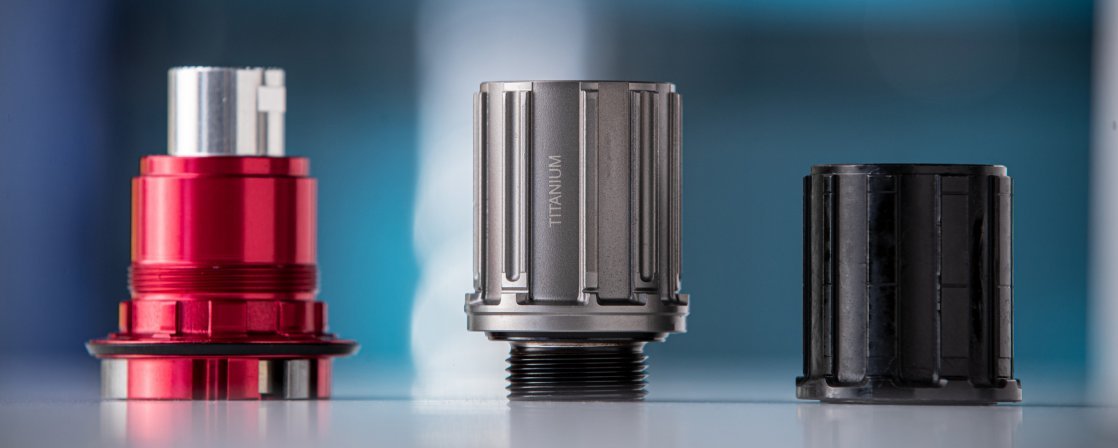
Three materials are used for freehub bodies (from left to right): aluminium, titanium or steel. © bc GmbH
Freehub bodies are typically made from one of three materials, each with its own advantages and disadvantages:
| Type of Freehub | Which cassettes fit the profile? | How many sprockets can the cassette have? | Spacer needed? |
| Shimano MTB (HG spline M) | Shimano, SRAM (except XD/XDR) and third-party (SunRace, OneUp Components, etc.) | 11-speed-MTB (plus CS-HG800 und CS-HG700) | No |
| Selected 10-speed Road: CS-7900 / CS-7800 / CS-6700 / CS-6600 / CS-5700 / CS-5600 | 1,85 + 1 mm | ||
| 8-/9-/10-speed (Road and MTB) | No | ||
| Shimano Road (HG spline L) | Shimano, SRAM (except XD/XDR) and third-party (Rotor, Miche, u. a.) | 12-speed-Road | No |
| 11-speed-Road (except CS-HG800 and CS-HG700) | No | ||
| 11-speed-MTB (plus CS-HG800 und CS-HG700) | 1,85 mm | ||
| Selected 10-speed Road: CS-7900 / CS-7800 / CS-6700 / CS-6600 / CS-5700 / CS-5600 | 1 mm | ||
| 8-/9-/10-speed (Road and MTB) | 1,85 mm | ||
| Shimano 12-speed | Shimano | 12-speed-Road | No |
| Shimano 12-speed Micro Spline | Shimano | 12-speed-MTB | No |
| SRAM XD | SRAM and third-party (e*thirteen, KCNC, u. a.) | 11-/12-speed (MTB) | No |
| SRAM XDR | SRAM | 12-speed (Road) | No |
| 11-/12-speed (MTB) | 1,85 mm | ||
| Campagnolo | Campagnolo Ultra-Drive | 9-/10-/11-/12-speed Ultra-Drive | No |
| Campagnolo N3W | Campagnolo N3W | 13-speed | N0 |
| 11-/12-speed | Adapter (Item No. 78166) |
Ready for the season? We’ll show you how to prepare your bike for the upcoming season and which parts require special attention.
Is the chain on your gravel or road bike worn out? Do you want to install a new one? With our how-to guide, replacing the chain is a piece of cake.

A cassette on a road bike or gravel bike can be changed quickly. We’ll show you how to replace the cassette with just two tools.
Is the chain on your MTB worn out? Do you want to fit a new one? No worries. We’ll explain how you can replace your chain on your bike.
Well-greased chains are smooth, quiet, and shift with precision. But which lubricant is the best? Here are some tips for proper chain care.

XTR, XX1, X01, Deore, etc. – The choice of shifters & derailleurs for MTBs is huge. Find out which is the right one for you here.

Choosing the right chainring for your single-speed setup is crucial. We'll show you what's important so you can pedal efficiently.

With the right tools, replacing the cassette on your MTB is a quick and easy task. We’ll show you how it’s done.
Whether you ride a Shimano or SRAM drivetrain, properly adjusting the derailleur on your MTB or e-MTB should be part of every rider’s basic maintenance.
A freehub body must 1. be compatible with the cassette you want to mount on it and 2. fit your hub. You can check 1. using the table above, and 2. depends on what your hub manufacturer offers.
Many freehub bodies can be replaced without tools, as they are simply pushed on. It’s best to check the documentation from your hub (or wheel) manufacturer to confirm whether this applies or if tools are required. In any case, the cassette must be removed beforehand, which does require tools.
Yes, Shimano 11-speed road cassettes fit on the HG Road freehub body (HG spline L). Some models (CS-HG800 and CS-HG700) require a 1.85 mm spacer. Note: some 11-speed road cassettes from other manufacturers are not HG-compatible.
Yes, currently (as of January 2026), Shimano 12-speed MTB cassettes are only available for Micro Spline freehubs.
Yes, 11- and 12-speed XD cassettes can be mounted on XDR freehubs using a 1.85 mm spacer.
N3W freehub bodies are shorter than classic Campagnolo freehubs to allow space for smaller sprockets. With an adapter, you can also mount older Campagnolo cassettes.
Singlespeed: yes. Fixed: no. Singlespeed means one sprocket with a freehub (either a threaded freewheel sprocket or a single sprocket with spacers on a freehub body). Fixed refers to a rigid drivetrain where the sprocket is fixed directly to the rear hub (usually threaded).
The noise comes from the freehub mechanism. Teeth that lock together in one direction slip over each other in the other direction, creating the sound. Engagement, lubrication, design and even other bike components all influence the sound and its volume.
Send your unused goods back within 100 days after purchase and get your money back!
See more